
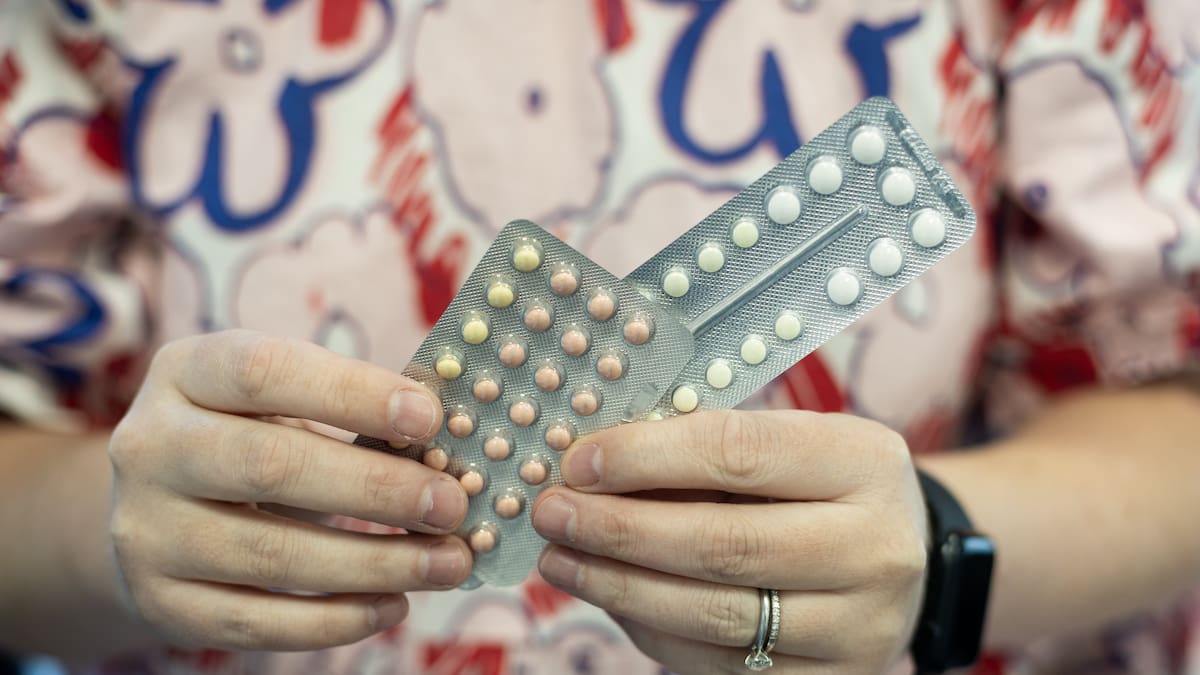
Pill use in New Zealand is trending downwards alongside growing concerns being voiced online by wellness influencers. Photo / Dean Purcell
The Herald on Sunday spoke to three Kiwi sexual health experts about four issues women have experienced, or have questions surrounding, when it comes to the impact of the contraceptive pill.
Can the pill cause you to “lose your personality” or experience major mood changes or depression?
At the Auckland Gynaecology Group in Newmarket, gynaecologist Dr Praveen De Silva helps women with a variety of problems, ranging from difficulties with contraception to severe pelvic pain, endometriosis and heavy bleeding.
He says he always acknowledges that low mood can be a very rare side effect of the pill, but the results aren’t consistent across an extensive number of studies.
“I think my opinion is that overall, I haven’t seen a clear trend that the pill causes depression, but I am a lot more careful about women who already have a history of depression or are prone to depression. I do counsel them that there can be side effects,” De Silva says.
The pill has become one of the most widely studied medications since its introduction in the 1960s, he says, and across these studies incidents of women getting a dulled or flattened mental state from taking the pill are not common.
Dr Beth Messenger in consultation with a patient at a Sexual Wellbeing Aotearoa clinic.
Sexual Wellbeing Aotearoa – formerly Family Planning – medical director Dr Beth Messenger says the pill does not cause depression but there still are some people who experience significant low mood using hormonal contraception.
“My big thing is that an individual can have a really negative experience with any medication or procedure, even if the research doesn’t tell us that that’s likely or to be expected,” she says.
“But we have to allow that to not affect our clinical judgment for other people – it doesn’t mean it isn’t a valid treatment.”
Hobsonville Family Doctors GP Kate Richardson, who has been a GP for over 10 years and has a special interest in women’s health, says most people tolerate the contraceptive pill well but there is a small subset of women who experience low-mood symptoms or anxiety, and it is difficult to predict who will be affected.
“I just tend to say that there is a small risk if someone is feeling different on the pill, whether that’s feeling flatter, more anxious or not like themselves. That’s valid and we need to take that seriously.”
“Women want to feel heard, respected and understood”: Dr Kate Richardson inside her clinic at Hobsonville Family Doctors, Auckland. Photo / Dean Purcell
De Silva says a change in mood can typically improve as a person continues taking the contraceptive pill. However, if someone is experiencing a severe mood disruption, the effects are essentially reversible because the pill will wash out of their system quickly once they stop taking it.
“I think that social media in particular over-calls the chance of mood being affected on the pill, and I personally feel that most women and most people are not affected,” he says.
Messenger says at the other end of the spectrum, there are also people with Premenstrual Dysphoric Disorder (PMDD), a mood disorder associated with severe distress, for whom the pill can act as an effective treatment in some cases.
Does the pill cause women to lose their sex drive?
De Silva has noticed concerns about a lowered sex drive from the pill being raised by people on social media, but says there is no clear evidence this is the case.
In some studies, a slight decrease in sex drive has been recorded in a small number of people but there are just as many studies showing an increased sex drive in women taking the pill, he says.
“Even though we haven’t been able to prove a link with the pill reducing your sex drive, I think for those who do find their sex drive is affected, in theory it could make some sense,” he says.
Dr Praveen De Silva at the Auckland Gynaecology Group in Newmarket. Photo / Michael Craig
“Women have a bit of testosterone that is produced by their ovaries and that is probably the hormone that is responsible for libido and sex drive. Some scientific studies show a reduction in testosterone levels for women who take the pill.”
However, he says at a population level, the data isn’t strong enough for doctors to confidently say the pill will reduce sex drive.
Richardson says some women have told her they have experienced a noticeable change in libido after starting to take the pill, but it’s not a common experience.
“I do also remind women that obviously libido is influenced by many things. Relationship factors, stress, sleep, mental health, so not just hormones. So I think it’s really important that we look at their whole context,” she says.
De Silva says for women who are experiencing other gynaecological symptoms like pelvic pain or irregular vaginal bleeding, the pill can help to fix those things and can give them a more positive view of sex.
Can the pill change who you are attracted to?
Messenger says she is aware attraction can change during the menstrual cycle and it’s possible that when some women are on the pill, it could cause variation in sexual attraction; however, it is very difficult to identify whether the pill is the reason behind any changes.
“Apparently around the time of ovulation, women are typically more attracted to slightly rougher, tougher-looking male types. And towards just before their period they’re more attracted to slightly softer, more gentle-looking male types,” Messenger says.
A study from Newcastle University in 2013 that is often referenced in online debate involved one group of women who were non pill-users being tested against a group of women on the pill about how they perceived the attractiveness of different male faces.
It found a significant decrease in women on the pill selecting faces with strongly masculine traits.
De Silva says there is no strong evidence the pill changes who you’re attracted to and this falls more into the realm of online clickbait.
Richardson agrees that evidence around the pill altering personal attraction is weak and inconsistent, and says the few studies that do show changes in attraction to certain face shapes or pheromones’ are mostly conducted in a lab setting and lack the complex factors that shape real-world relationships.
Is staying on the pill for a long time safe?
De Silva says the pill is extremely safe to take for long periods of time.
“I would be comfortable with most people being on the pill for over a decade with no adverse effects,” he says.
In fact, a reduction in ovarian cancer and uterine cancer has been recorded for people who are on the pill.
“We are slowly learning that the true magnitude could be as much as 50% reduction in ovarian cancer for people who are long term on the pill. So there is a massive advantage,” he says.
Dr Beth Messenger says if women feel dismissed or unheard about their contraceptive issues they should seek advice from other health practicioners.
Messenger says the pill reduces the risk of ovarian cancer because it stops a woman from ovulating, which decreases the likelihood of ovarian cysts and cancer developing.
“And this is the bit that often goes missing, is that actually there are health benefits to going on the pill,” she says.
The pill can be used as a treatment for heavy and painful periods, acne and premenstrual syndrome (PMS), she says.
De Silva says there is a slight increase in the risk of breast cancer with long-term use of the pill, but the outright chance of getting breast cancer from the pill is so low that there is little for women to fear.
There are also very rare cases of younger women having a stroke or blood clot from the pill, and women over 40 can be at risk of stroke if taking the combined pill, but doctors ask patients about their family history out of caution around these risks, he says.
Across Sexual Wellbeing Aotearoa’s 29 clinics in New Zealand, Messenger says it is witnessing a move away from oral contraceptives and towards long-acting, reversible contraceptives such as an IUD. However, she is uncertain whether this trend is happening across the whole population because oral contraceptives are easier to access in the community.
“I think one of the key messages for people is if you think something bad is happening to you because of your contraception, whether it’s the pill or not, you need to go and talk to somebody about it,” she says.
“If you feel dismissed and unheard, try to find someone else to talk to.”
Richardson suspects a high level of interest in wellness and holistic health could be driving some of the fears around the use of the contraceptive pill, and she has seen discussions framing the pill as pumping artificial hormones into the body.
“The wellness sphere is really great because it’s getting people to look at their lifestyle holistically, but I do think it’s creating a feeling of people needing to be worried,“ she says.
“I think social media and the internet is great because there is a lot of good information out there, but it can be a bit of a minefield for women figuring out what’s credible and reliable.”
Ultimately, it’s absolutely vital that there is an open line of communication between a GP and a patient, she says. If a contraceptive option is not working for a patient, changes should be made and alternative options explored.
De Silva says he doesn’t believe enough attention is paid to women in their late 20s or early 30s who have stopped taking the pill because they want to become pregnant but are dealing with symptoms such as pelvic pain, irregular bleeding or a lack of enjoyment of sex.
“People become very used to the pill that they’re on and so either changing pills or coming off a pill is a nightmare,” he says.
The pill is not only used for contraception and can be prescribed to women to help with debilitating pelvic pain or heavy irregular bleeding, and De Silva says for these women, the results can be life-changing.
“I feel there’s a real stigma, that a lot of families don’t talk about these things … and it’s quite an isolating feeling when you get these problems.“
Richardson says she doesn’t see her job as being to tell someone to come off the pill or stay on it, but rather to support patients in choosing the contraceptive medication they feel comfortable using that also supports their needs.
“Women want to feel heard, respected and understood,” she says.
De Silva urges people to request to see a GP who has a special interest in women’s health – or to ask to be referred to a specialist – if they are struggling with side effects from contraception or dealing with pelvic pain, heavy bleeding or a lack of enjoyment of sex and feel they haven’t been listened to by their doctor.
Sign up to The Daily H, a free newsletter curated by our editors and delivered straight to your inbox every weekday.