
Today, a coroner has found the 29-year-old was subject to bullying by other inmates and felt like there was nothing he could do about it.
It was his first time in prison after he was convicted and sentenced on a sixth charge of driving with excess breath alcohol.
The coroner found that bullying by other prisoners resulted in assaults, his possessions being taken and misconduct charges.
Coroner Alexandra Cunninghame said the incidents were distressing and that Nicholls-Braddock believed nothing could be done to assist him.
Nicholls-Braddock had a long history of addiction and poor mental health, which had brought him before the courts. He had been diagnosed with attention deficit hyperactivity disorder (ADHD) and oppositional defiant disorder (ODD) as a child.
At the Greymouth District Court on February 10, 2021, he was sentenced to 11 months’ imprisonment, with leave to apply for home detention if a bed became available at Odyssey House.
Alexander Nicholls-Braddock was moved to the Christchurch men’s prison on February 12, 2021.
He arrived at Christchurch men’s prison on February 12, where a nurse recorded that before he came to prison, he had been drinking up to 40 units of alcohol a day and regularly smoking cigarettes.
According to the findings, he was deemed at risk because he was detoxifying from alcohol, and he was prescribed diazepam, omeprazole, vitamins and sertraline.
He was also prescribed nicotine replacement therapy in the form of nicotine lozenges.
Nicholls-Braddock was placed in an intervention and support unit, where it was recorded that his anxiety was “through the roof”, but with no thoughts of self-harm.
He was given paperwork relating to Odyssey House, and gave verbal consent to entering the programme.
The coroner said the prisoner told staff he was anxious about being moved to a mainstream unit because it was his first time in prison and he didn’t want to be “bashed”.
He was moved to a special treatment unit on February 18, where a case manager recorded that he might require some guidance to prevent other prisoners from taking advantage of him.
The case manager undertook a process to explore the possibility of Nicholls-Braddock completing a drug treatment programme in prison, and to start the process to have him referred to Odyssey House.
On February 25, he was moved to another unit, where it was anticipated he would start a six-month treatment programme on its next intake on March 22, while his referral to Odyssey House was being progressed.
He was assigned a new case manager, who said Nicholls-Braddock seemed quite naive and vulnerable to exploitation by other prisoners.
He was then seen by the manager socialising with prisoners described as “heavy hitters”, who were influential over others in the unit, and described it as a “red flag”.
An officer who gave Nicholls-Braddock nicotine lozenges on February 27 recorded “a steady stream of prisoners” calling by his cell door in the minutes after.
The officer became suspicious and asked him to produce his lozenges. Nicholls-Braddock could only show an empty card.
He said he hadn’t been stood over when asked and offered no explanation for the missing lozenges.
There was no further investigation.
On March 15, a routine inspection of his cell turned up a tattooing needle, ink and tobacco scattered through his bed.
Nicholls-Braddock did not explain, and no investigation was undertaken. He was charged with misconduct.
A series of phone calls in the following days showed him saying he was not responsible for the items in his cell.
In another call, his mother asked him if she should come and visit soon.
The coroner said he told her that after what had happened to him over the past week, he was “not hanging around” and would not be there.
He wouldn’t tell her what had been happening, and said that if he talked about it, he would get himself “in more s**t”, but then said he had “been beaten the f**k out of the other day” and that his watch had been stolen.
On March 19, he was recorded in a phone call saying he was “f****n’ s**t” because he had not been given his “antidepressants and all that” and that he had been “losing his head all morning”.
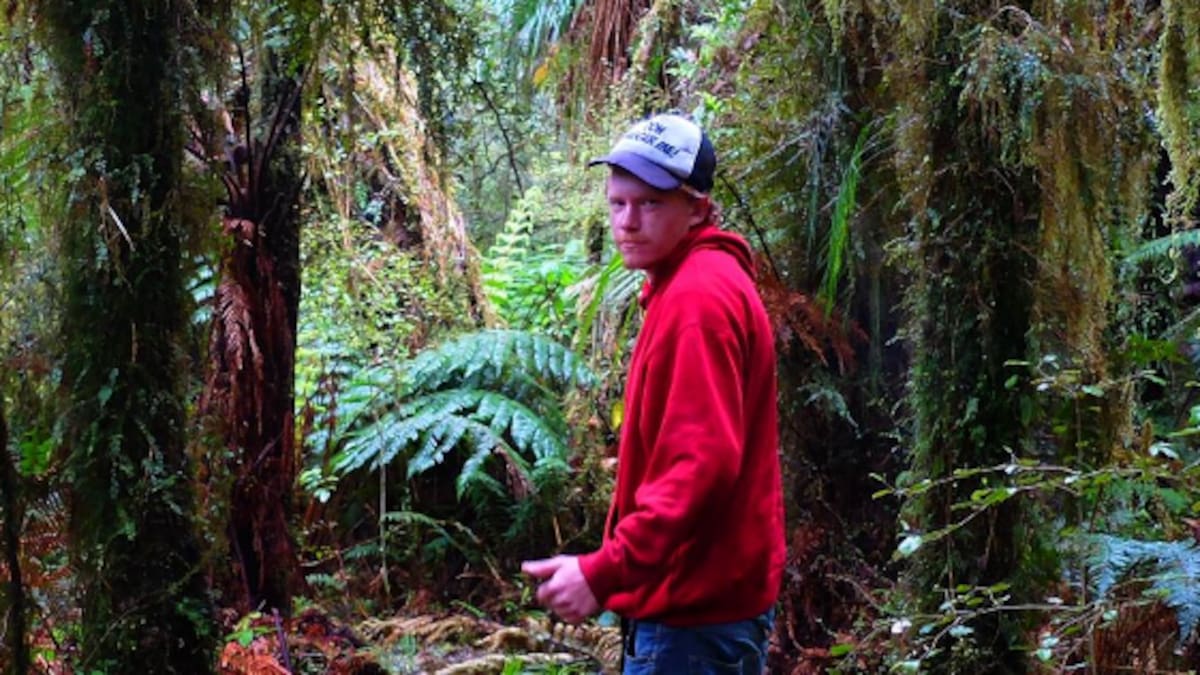
Alexander Nicholls-Braddock enjoyed the outdoors.
He repeatedly said that no one would listen to him or do anything about it, and that “they don’t give a f**k”.
He spoke about his new cell neighbour being a “nut case” and said, “I’m at a point where I’m in my own head space, I don’t give a f**k any more and if [the neighbour] comes around to my cell or has another go I’m going to tell him, ‘go on, stab me’.”
Nicholls-Braddock died later that day.
A consultant forensic physiatrist who gave evidence at the inquest said Nicholls-Braddock had fears for his safety, persisting anxiety and distress while isolated from his family in custody, which “likely overwhelmed his limited coping skills” and contributed to his death.
The doctor considered it unfortunate that records from Nicholls-Braddock’s GP and the West Coast District Health Board were not requested when he was received into prison, and that the New Zealand prisons mental health screening tool triage process was not followed.
His opinion was that had those processes been followed, information about symptoms of depression, anxiety and suicide preoccupations, which Nicholls-Braddock had not disclosed on arrival, would “likely have come to light”.
Because the information was not obtained, the conclusion was reached that he did not present with an acute risk of self-harm or suicide.
Coroner Cunninghame recommended that Corrections develop a process that ensures probation officers and others who deal with prisoners before sentencing upload important health information, and that custodial and health staff who assess prisoners on arrival and on subsequent occasions be notified about the documents so they can be considered as part of the assessment process.
Coroner Cunninghame said Corrections didn’t adequately recognise or manage the risk other prisoners posed to Nicholls-Braddock.
The coroner made recommendations to Corrections in 2024 calling for audits and reviews of how prisoner information is managed and communicated, and said they remained relevant.
“It is a tragedy that he was overcome by his ADHD and addiction, and that he ended up in prison, which everyone recognised was an unsuitable place for him. May he rest in peace.”
Christchurch men’s prison general manager Jo Harrex said Corrections accepted the coroner’s findings and recommendations.
Harrex said Corrections had made multiple changes to help support prisoners with their mental health and wellbeing since Nicholls-Braddock’s death.
Harrex said additional training packages had been implemented for custodial and case management staff, with the focus on improving the quality of offender notes and reinforcing the critical role of accurate documentation.
Lead roles had been established to support staff capability by identifying training needs and ensuring key processes, such as staff induction and onboarding.
Harrex said the process for completing and forwarding mental health referrals was updated in March 2023 and supported referrals to both internal mental health services and regional mental health services.
“Acknowledging there is a need to improve access to support, we are currently collaborating with Health NZ, the Ministry of Health, the Ministry of Justice and other partners to ensure people in prison who have severe and acute mental health needs, or an intellectual disability, are receiving timely support.
“While the causes of suicide are multifaceted and complex, we are committed to doing everything we can to prevent deaths in custody.”
Al Williams is an Open Justice reporter for the New Zealand Herald, based in Christchurch. He has worked in daily and community titles in New Zealand and overseas for the past 16 years. Most recently, he was editor of the Hauraki-Coromandel Post, based in Whangamatā. He was previously deputy editor of the Cook Islands News.