
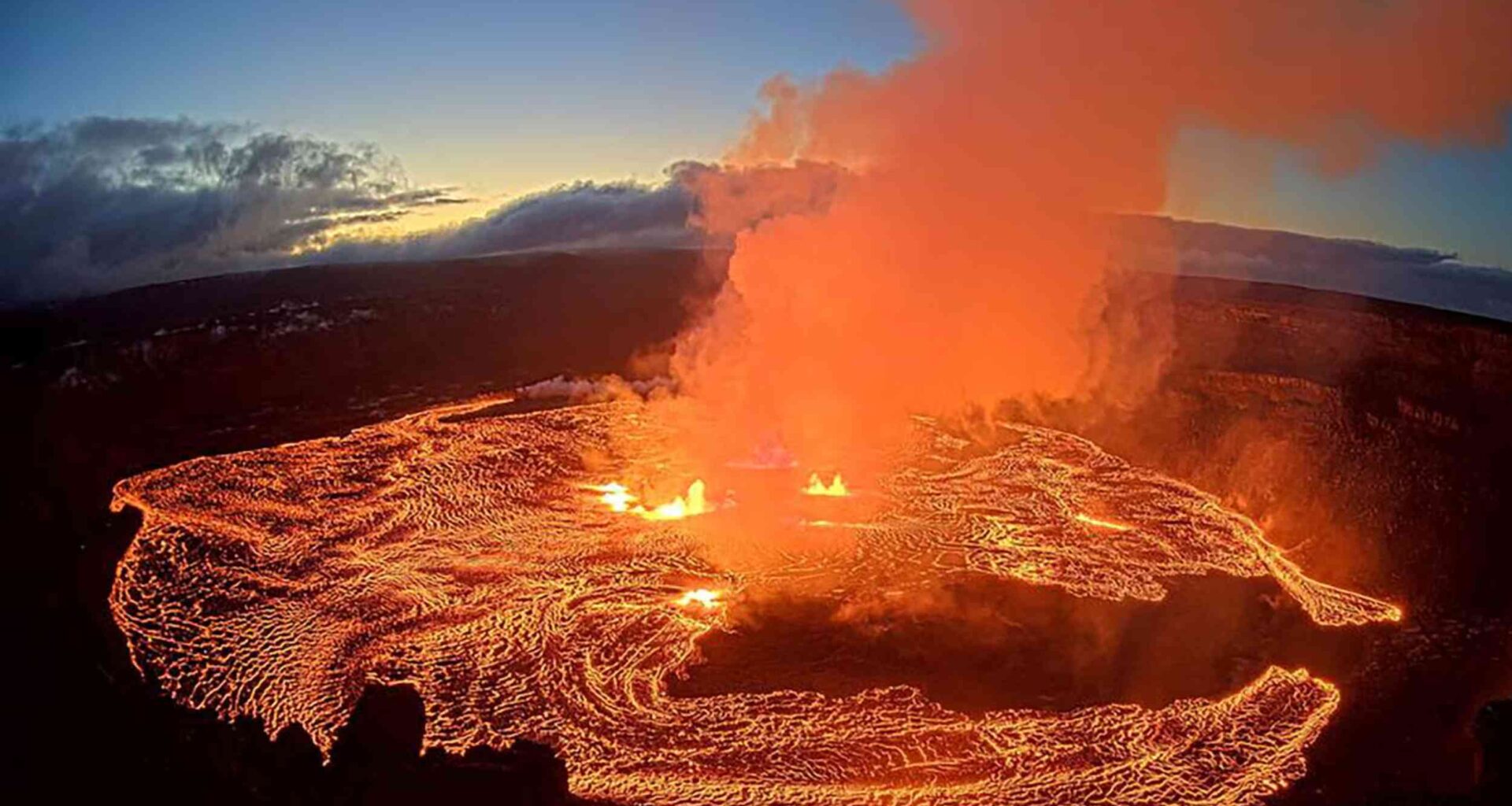
Kīlauea, one of the most active volcanoes on Hawaii’s Big Island, had a series of violent steam explosions in 1924. A new study shows the explosions started when groundwater penetrated hot rock beneath a drained summit lava lake, triggering the chain of steam-driven blasts.
That finding reframes one of the volcano’s most dramatic events as the product of a hidden buildup, sharpening how scientists interpret similar unrest today.
Kīlauea explosion clues in ash

Across the ground south of Halemaʻumaʻu, the summit crater within Kīlauea where lava often pools and erupts, thin ash bands and rock fragments preserved 17 days of explosions that eyewitness accounts never fully captured.
By matching those bands, Drew T. Downs of the U.S. Geological Survey (USGS) showed how 50-plus blasts built toward the peak.
Higher in the sequence, deposits carried more fresh magma bits, showing magma joined the explosions more often as days passed.
Even so, most layers stayed close to the crater, which makes the eruption look smaller today than it felt then.
Crater lost pressure
Before any ash rose, the lake inside Halemaʻumaʻu had drained away, leaving an empty crater that kept collapsing.
By the first night of explosions, the floor sat about 590 feet below the rim, removing weight that had helped keep water out.
An earthquake swarm down the East Rift Zone showed magma had moved away from the summit, leaving hot walls and new cracks behind.
That combination set the stage for groundwater to slip downward, which is where the new explanation begins.
Kīlauea explosion fingerprints
Around Halemaʻumaʻu, some layers held fine ash and tiny wet pellets, clues that the erupting cloud carried more than dry dust.
Those details point to phreatic, steam-driven explosions from heated rock and water, rather than blasts powered by magma alone.
Even the crater walls mattered, because collapsing rock could trap steam and raise pressure before each burst.
Water alone did not explain everything, but it clearly helped turn collapse into violent steam-driven bursts.
Models test timing
Modeling pushed the story underground, where the key question was how water reached rock hot enough to explode.
The model worked only if water entered a short-lived conduit, the underground passage for magma, during the 11 weeks before the first blast.
An earlier mechanism had proposed groundwater as the trigger, and the new modeling finally gives that idea a workable clock.
That timing fits the gap between the drained lake in late February and the first explosions in mid-May.
Magma joined later
Fresh bits of newly erupted magma appeared in tephra, the ash and rock thrown out, and became more common higher up.
Scientists call those fragments clasts, solid pieces thrown from the vent during an explosive event.
“Juvenile clasts are more abundant higher in the tephra profiles,” wrote Downs. That increase means more blasts involved both steam and magma, which helps explain why the strongest explosions arrived later.
Deposits vanish fast
Nearly all the surviving deposits held on only within about 2 miles of the vent. Rain, later eruptions, loose soil, and foot traffic can erase thin ash beds, especially around a wet summit.
That helps explain why geologists found the best record close to Halemaʻumaʻu, while many downwind traces have faded away.
Missing layers are therefore part of the story, because they hide past impacts and can make small eruptions seem harmless.
Blasts aimed unevenly
Many explosions did not spread material evenly around the crater but fired it into favored sectors.
Shifting vent geometry and repeated wall collapse likely redirected the force, so matching one layer across the summit proved difficult.
Farther downwind, fine ash still traveled tens of miles, even when nearby ground kept only a thin layer.
Hazard maps therefore cannot treat these blasts like tidy circles expanding from a center point.
Communities felt fallout
In downwind towns, the eruption turned daylight dim and sent ash far beyond the summit. USGS records place ash and dust columns more than 2 miles high, with Pāhala, about 20 miles away, hit especially hard.
One photographer died after moving too close between bursts, and falling rock showed how fast the danger could change.
Historical accounts from USGS make the larger point clear: thin deposits on the ground can still mark a crisis for whole communities.
Lessons from 1924
For many people, Kīlauea still means slow lava, not sudden ash and rock falling from the summit.
This fuller account shows water, falling rock, and magma feeding the same sequence, not separate kinds of eruptions.
That mixed story also helps explain why 1924 remained hard to classify for nearly 100 years. Future unrest at a drained summit crater may deserve extra attention even before large plumes appear.
Why this matters
The 1924 eruption now reads as a chain reaction: a drained lava lake lowered pressure, groundwater seeped in, and steam shattered rock.
Future work can test how often that sequence repeats, but the new paper already restores a missing cause to a famous eruption.
The study is published in the Journal of Volcanology and Geothermal Research.
—–
Like what you read? Subscribe to our newsletter for engaging articles, exclusive content, and the latest updates.
Check us out on EarthSnap, a free app brought to you by Eric Ralls and Earth.com.
—–