
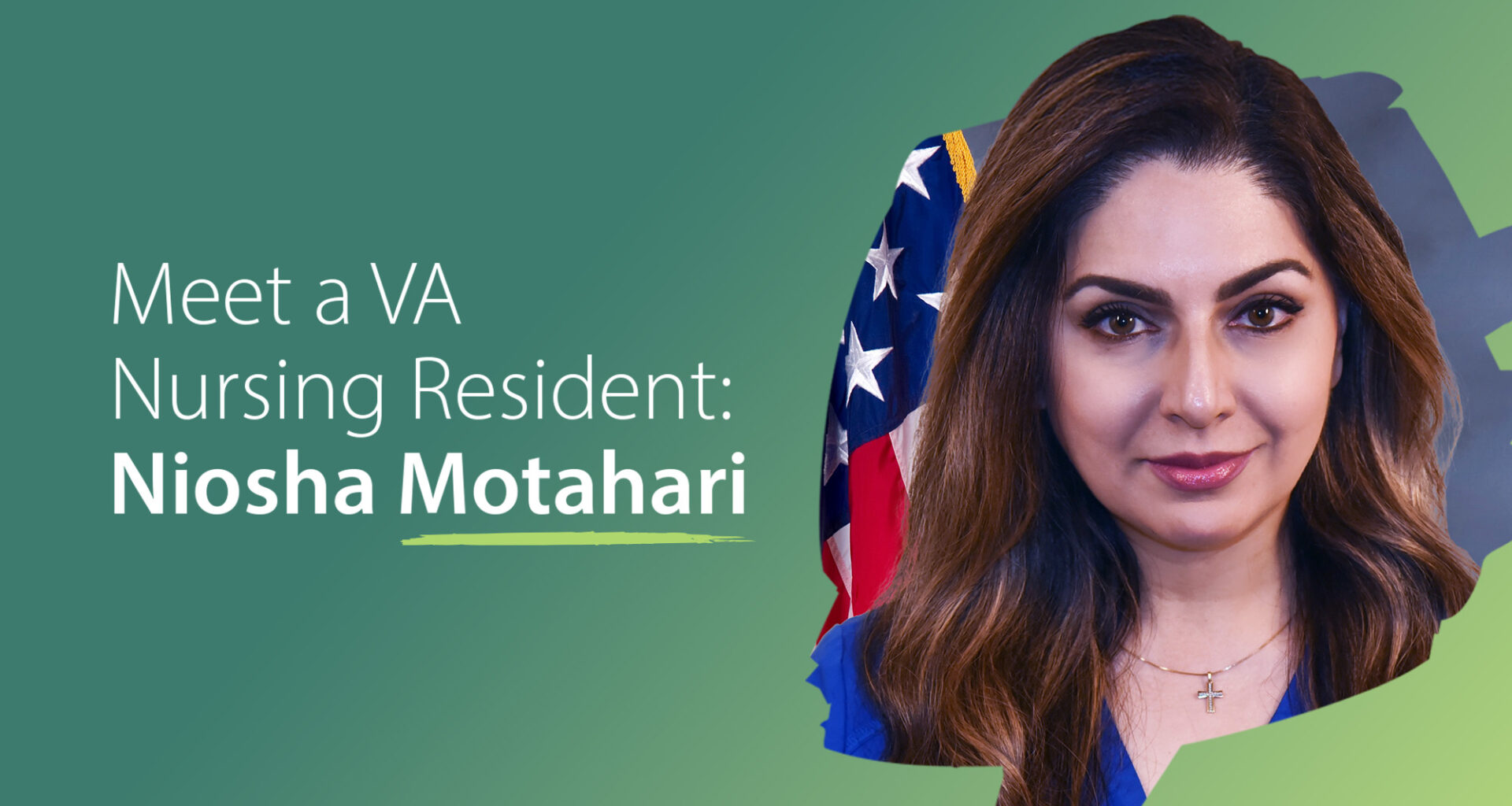
Access to high quality, timely health care requires a skilled nursing workforce. The Department of Veterans Affairs (VA) provides clinical training to more than 25,000 nursing students annually. Bringing compassionate care to our Veterans is a team of skilled, dedicated nursing residents like Niosha Motahari, a Post Baccalaureate Registered Nurse Resident (PBRNR) at the Michael E. DeBakey VA Medical Center (VAMC) in Houston, Texas. Keep reading as Motahari shares more about her experience with VA.
Why did you choose VA for your residency?
“The main reason for me was our patient population. I’m very passionate about serving those who served our country. These people sacrificed a lot for the freedom that we have today and, for me, the role is more than a job, it’s a mission. Veterans are very appreciative of the care that we provide and that is very fulfilling to me.”
What is the biggest benefit of working for VA?
“The thing that makes the VA nursing residency program unique and exceptional is the opportunity for new graduates to practice the skills and knowledge that they gained during nursing school in a setting with 100% protected time. This means that we are always working alongside an experienced preceptor. In addition to that mentorship opportunity, we have didactic sessions once a week, lectures by subject matter experts, simulation labs and the opportunity to have hands-on practice. The education portion is very important.”
Have you had the opportunity to work with any cutting-edge technology or new methodologies?
“Yes, I had an opportunity to work in an operating room during a robotic laparoscopic procedure, which was amazing. I also had the opportunity to witness a histotripsy, which is a non-invasive radiation procedure to destroy tumor cells, during my interventional radiology rotation. The Houston VAMC is one of the few hospitals in the country that has a histotripsy machine, so I was lucky to see it in action.”
Can you share a Veteran care experience that inspired you?
“The heart of nursing for me is in advocacy. I treat every patient as if they’re my family member. I once performed an assessment on a patient who was initially very withdrawn. So I opened the blinds and started talking to him, asking him, ‘How are you doing this morning?’ He opened up about how he lost his son, who had been living with him, and some of the mental health challenges he had been facing. Looking at his chart, the plan of action was for him to be discharged the next day, which was the Wednesday before Thanksgiving. When I learned more about his story, I ran to the doctor and told him about the situation. The doctor agreed to keep the Veteran in the hospital over Thanksgiving so that he didn’t need to spend it alone at home without his son. I thank God I was there to talk to him in that situation, and it’s one example of how important patient advocacy can be.”
For the full interview and to learn more about how join our team, visit VA Careers.