
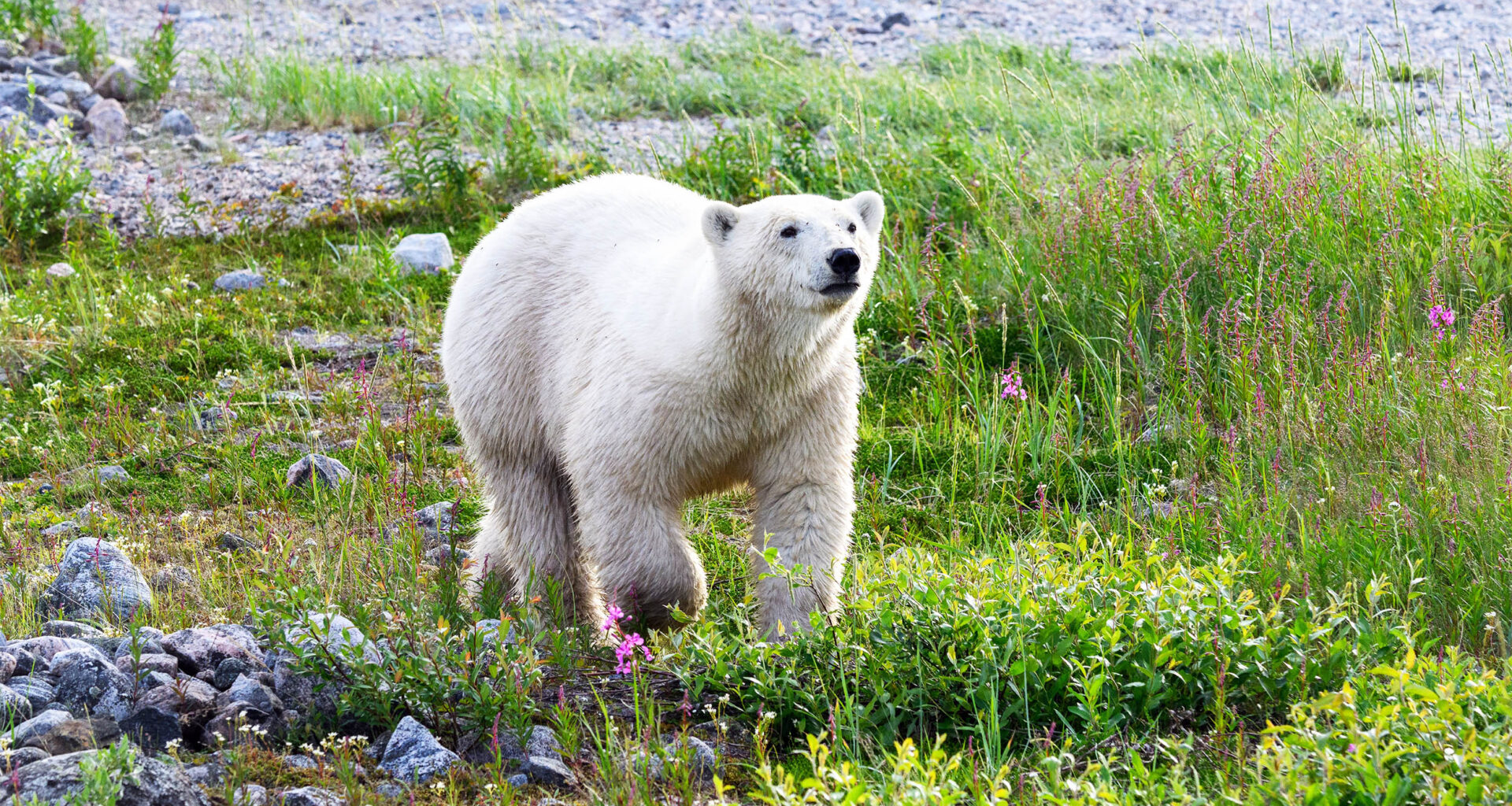
Rapid warming in the Arctic is transforming sea ice in ways that directly affect polar bears, the region’s top predators. Ice now forms later, melts earlier, and provides less stable habitat than it did just decades ago.
For polar bears, this shift disrupts nearly every part of survival, from hunting to movement to reproduction.

New research from the University of Manitoba and long-term observations show that while some bears are adjusting their behavior, these changes may not be enough – offering a clearer view of how climate change is testing the limits of adaptation in the wild.
Arctic ice is disappearing faster
The Arctic is warming at a much faster rate than most regions. Rising temperatures break down sea ice earlier each year. Ice becomes thinner and less stable.
This change reduces the space where polar bears can move and rest. What once felt like a solid world now feels uncertain.
Polar bears depend on ice for almost everything. Without it, movement becomes harder. Finding food becomes more difficult. Waiting for ice to return also brings stress. Nature does not pause, so every lost day matters.
Finding food is a struggle
Polar bears rely on seals for survival. Seals provide high energy food that helps bears stay strong in cold conditions. Hunting happens on sea ice, where seals come up to breathe. When ice melts, this hunting ground disappears.
On land, food options are limited. Bears walk long distances and search for anything edible. However, nothing on land matches the energy seals provide.
As days pass without proper meals, bodies weaken. Cubs suffer first, while mothers struggle to support them.
Polar bears fight to survive on ice
Long periods without food have become more common for polar bears. They build fat reserves during productive seasons, but those reserves now run out sooner as ice-free months stretch longer than before.
Many bears lose weight over time, and some grow weaker with each passing season. Survival becomes uncertain, especially for younger bears. The Arctic offers little chance for recovery, and once strength declines, it is difficult to regain.
Still, polar bears are not giving up easily. Some travel to glaciers where ice remains, while others cover greater distances in search of food. A few adjust their hunting times or explore new areas altogether.
These changes show effort and flexibility, but not every attempt succeeds. Some bears adapt better than others, and survival often depends on chance, strength, and location.
Even with these efforts, the environment is changing faster than the bears can keep up.
Polar bears just can’t keep up
The changes are not only visible on the surface. Inside the body, genetic diversity is also shifting. Genetic diversity acts like a survival toolkit – the wider the variety of genes, the better a species can adjust to new conditions.
In some polar bear populations, that diversity is shrinking. Groups are becoming more isolated as sea ice breaks apart, limiting the mixing of genes and reducing adaptability.
Health risks may increase over time. These changes happen quietly but carry serious long-term consequences.
It might seem like evolution could solve these problems, but evolution takes time. The current pace of environmental change is far too fast for full evolutionary responses.
Most of what we are seeing today are short-term adjustments. Bears are moving differently, hunting differently, and surviving on less food. Some are even smaller due to limited nutrition during growth.
This is not a sign of successful adaptation – it is a sign of stress.
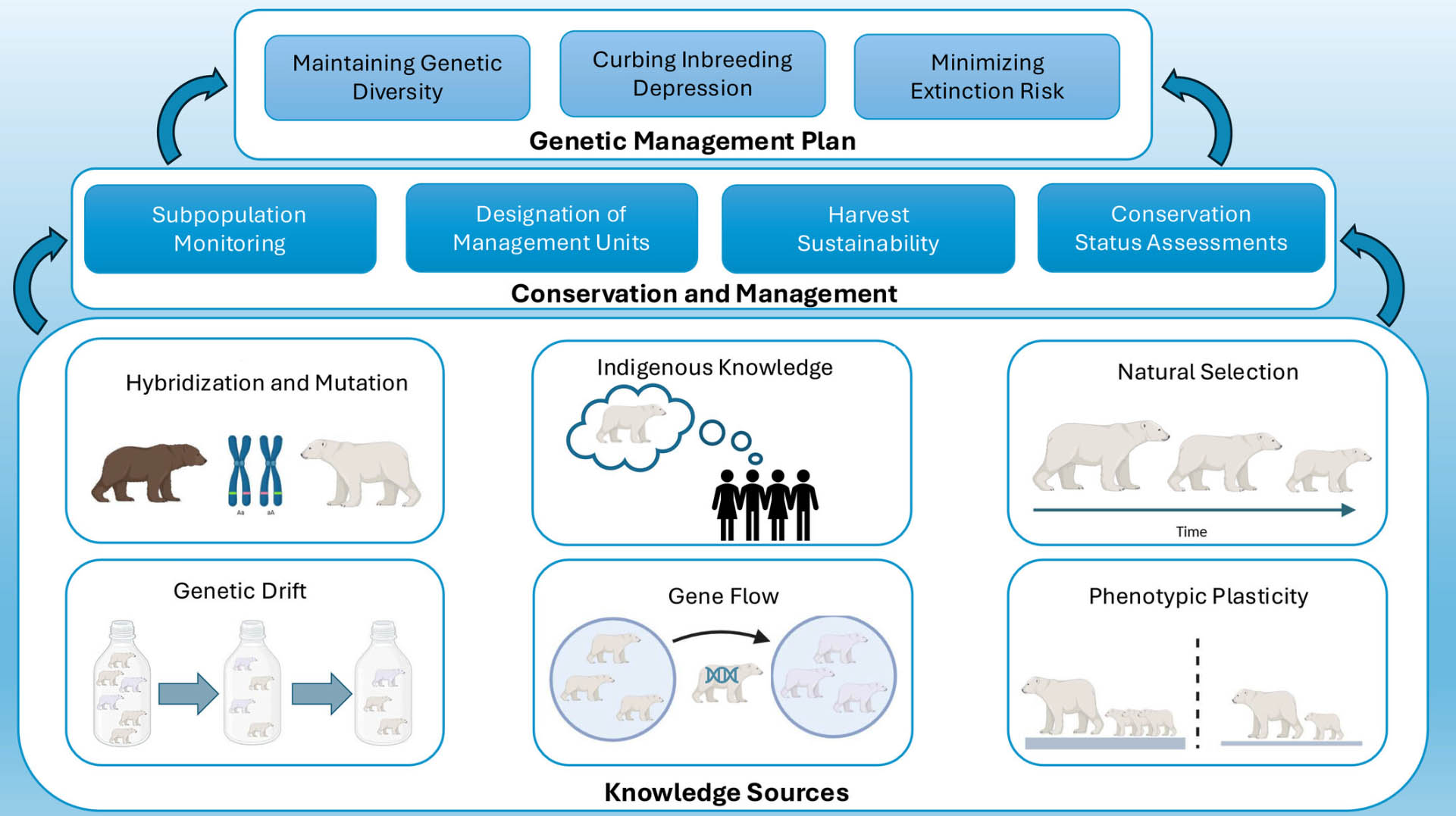 Pathway toward integrating evolutionary genetics research into polar bear conservation and management decisions. Credit: Ecological Monographs. Click image to enlarge.Science and tradition together
Researchers around the world are working to better understand and protect polar bears. Polar Bears International studies behavior and survival patterns across the Arctic.
The Norwegian Polar Institute tracks population changes in different regions, while Environment and Climate Change Canada collects long-term data to monitor trends.
The International Union for Conservation of Nature (IUCN) has listed polar bears as vulnerable, highlighting the growing risks they face. Research continues to expand, but action must keep pace with the problem.
At the same time, Indigenous communities in the Arctic bring generations of knowledge to the table. They have closely observed polar bears, sea ice, and seasonal changes over long periods.
This local knowledge offers valuable insight, helping researchers understand patterns that data alone cannot fully explain. Combining scientific research with lived experience creates a clearer, more complete picture of what is happening in the Arctic.
Uncertain future for polar bears
The future of polar bears depends on climate trends and human action. Some populations may adjust in small ways, but others are likely to struggle as sea ice continues to disappear.
In certain regions, survival may become extremely difficult. The Arctic is approaching a turning point, and what happens next will shape the future of many species – not just polar bears.
A warning for the planet
Polar bears sit at the top of the Arctic food chain, and their struggle reflects deeper changes across the ecosystem. When one part weakens, the effects ripple throughout the entire system.
This story is not just about one species. It is a broader warning about climate change and how quickly it is reshaping the natural world.
The Arctic offers one of the clearest views of these changes. The real question now is whether action will come in time – or whether the ice will continue to fade away.
The study is published in the journal Ecological Monographs.
—–
Like what you read? Subscribe to our newsletter for engaging articles, exclusive content, and the latest updates.
Check us out on EarthSnap, a free app brought to you by Eric Ralls and Earth.com.
—–