
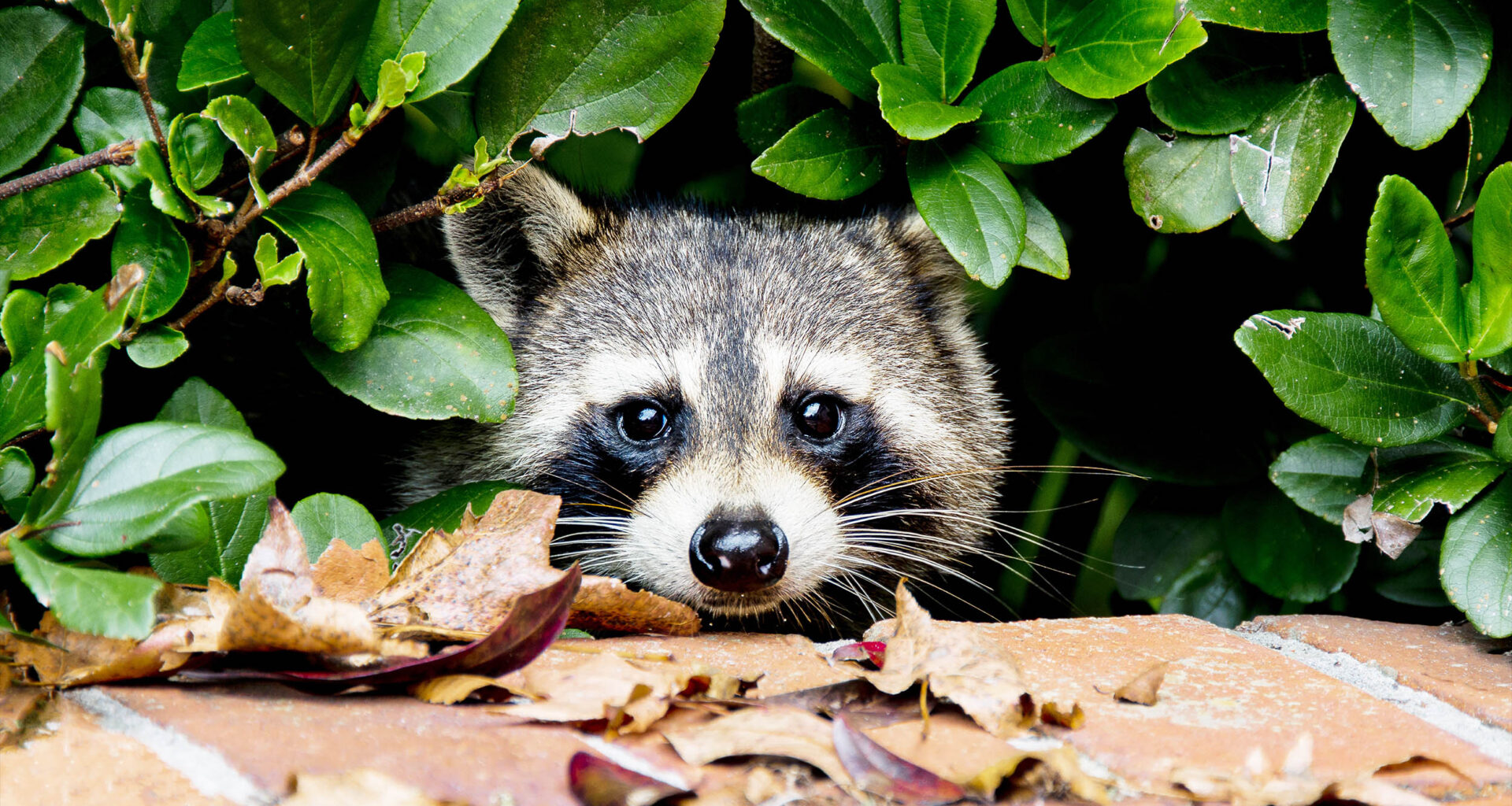
Raccoons often surprise people with clever tricks. A compost bin lid suddenly opens and the food inside disappears.
Many people think raccoons simply search for food wherever they can find it. New research now suggests something more interesting. Raccoons may explore problems because curiosity pushes them to learn.

A study by researchers from the University of British Columbia looked closely at how raccoons solve problems. The study shows that raccoons often keep solving puzzles even after getting food.
This behavior suggests that raccoons search for information and not just food. Scientists call this behavior information foraging.
A look at raccoon intelligence
Researchers Hannah Griebling and Dr. Sarah Benson-Amram designed an experiment to study raccoon thinking and curiosity. The research focused on how animals decide between exploring new options and using solutions that already work.
The optimal foraging theory explains how animals try to gain the most benefit while spending the least energy when searching for resources. Animals must balance effort, time, and reward when making decisions.
Learning and memory play an important role in this process. Animals gather information about their surroundings and use that knowledge later to find food more efficiently.
Scientists wanted to see if raccoons also gather information even when food is no longer available.
Testing raccoons with puzzle boxes
The research team created a special puzzle box to test raccoon problem solving. The box had nine different ways to open it. Each method required a different action, such as moving a latch, sliding a door, or turning a knob.
The puzzle box had three levels of difficulty: easy, medium, and hard. During each trial, the box contained only one food reward.
In most cases the reward was a marshmallow because raccoons preferred it over other foods during tests.
Sixteen raccoons living at a research facility in Colorado participated in the experiment. Each raccoon received several trials with the puzzle box. The animals had up to 20 minutes to interact with the puzzle in each session.
Raccoons kept solving puzzles
One surprising result appeared quickly. Many raccoons continued opening new parts of the puzzle box even after eating the marshmallow.
“We weren’t expecting them to open all three solutions in a single trial,” said Griebling. “They kept problem solving even when there was no marshmallow at the end.”
This behavior suggests that curiosity motivated the raccoons. The animals explored simply to learn how the puzzle worked.
Scientists describe this behavior as information foraging. The animal spends energy to gain knowledge that may help in the future.
Exploration and safe choices
The study also showed that raccoons changed their behavior depending on how hard the puzzle was.
When puzzles were easy, raccoons explored many different solutions. A raccoon might open several doors and latches in one trial. When puzzles became harder, raccoons often used a method that worked before instead of trying something new.
This pattern shows a balance between curiosity and effort. Exploring many options can provide useful information, but it also takes time and energy.
“It’s a pattern familiar to anyone ordering at a restaurant,” said Griebling. “Do you order your favourite dish or try something new? If the risk is high – an expensive meal you might not like – you choose the safe option.”
“Raccoons explore when the cost is low and quickly decide to play it safe when the stakes are higher.”
Why raccoons succeed in cities
These thinking skills help explain why raccoons do so well in cities. Urban environments contain many different food sources and obstacles. Garbage bins, food containers, and compost boxes often require problem solving.
Raccoons have several physical and mental advantages. Sensitive forepaws allow the animal to feel objects and manipulate latches. These paws evolved for searching in streams but also work well for opening human containers.
Raccoons also show strong behavioral flexibility. Innovation means using past knowledge to solve a new problem or using a new method to solve an old one. This ability helps raccoons adapt quickly to changing environments such as cities.
Curiosity can also cause trouble
Curiosity can sometimes create problems for humans. A raccoon that explores new objects may learn how to open garbage bins or food containers.
Researchers suggest that this behavior could create what scientists call a “cognitive arms race.” Humans build stronger containers to keep animals out. Raccoons learn new ways to open them.
Curiosity increases the chance that raccoons will discover these solutions. Even when food does not appear immediately, exploration helps raccoons learn useful tricks for later.
What the study tells us about animals
The results support a long standing idea about raccoons. Many stories describe raccoons as clever animals. Scientific studies now provide strong evidence for this reputation.
“Raccoon intelligence has long featured in folklore, yet scientific research on their cognition remains limited. Studies like this provide empirical evidence to support that reputation,” said Dr. Benson-Amram.
Curiosity may be one of the most important reasons raccoons succeed in many environments. A small animal with a strong desire to explore can discover many new opportunities in the world around it.
The study is published in the journal Animal Behaviour.
—–
Like what you read? Subscribe to our newsletter for engaging articles, exclusive content, and the latest updates.
Check us out on EarthSnap, a free app brought to you by Eric Ralls and Earth.com.
—–