
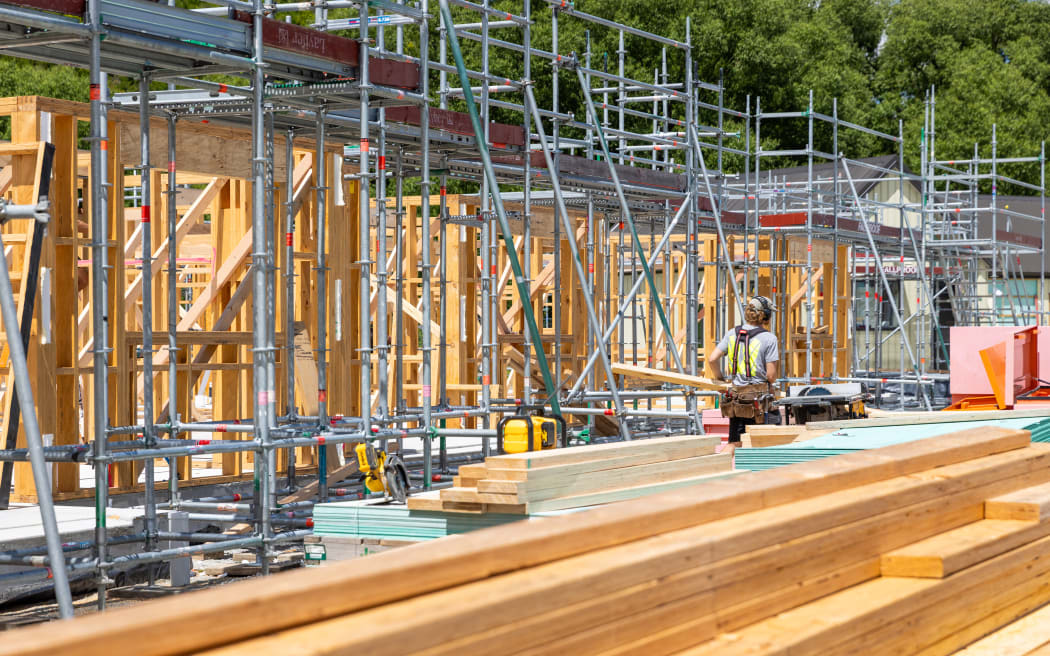
Construction job are down 2.1 percent and manufacturing is down 1.6 percent.
Photo: RNZ / Nate McKinnon
New Zealand had 1505 more filled jobs in February than same time a year earlier, Stats NZ data shows, but economists say that might be as good as it gets for a while.
There were 2.35 million filled jobs last month.
Public administration and safety was up 3.2 percent year-on-year, while healthcare and social assistance was up 1.7 percent. Education and training jobs were up 1.2 percent.
But construction was down 2.1 percent and manufacturing down 1.6 percent.
Between construction and manufacturing, they lost almost 8000 jobs over the year.
Canterbury had the largest growth year-on-year, up 1.5 percent. Auckland was down 0.4 percent and Wellington down 0.9 percent. Otago was up 1.4 percent and Waikato up 0.9 percent.
Westpac chief economist Kelly Eckhold said the update was the highest monthly filled jobs figure since November.
It was probably as high as it would go for now, he said.
“We currently forecast very modest positive growth in employment from here until Q3 when we expect decent levels of growth to resume as the Iran War is expected to have died down by then. Hence we are likely very close to peak filled jobs for now but much depends on how the Iran war and the response from business evolves.”
BNZ chief economist Mike Jones agreed the outlook was uncertain.
“Hiring plans may well be impacted. Firms’ intentions to hire for the coming 12 months had climbed to levels well above average, but these plans look set to be tested now that growth expectations are coming under pressure, costs rising aggressively and uncertainty about the outlook in the ascendancy.
“The key question is whether this shock causes firms to rein in hiring plans, or whether it’s of a magnitude that forces them to reduce staffing numbers. I think, at this stage, it’s more likely aggregate employment slows down rather than stalls or contracts. But, as with many aspects of the outlook, much depends on how long this shock goes on for.
“Prospects for a recovery in the labour market this year do appear to have dimmed, with any decline in the unemployment rate looking more like a story for next year.”
Infometrics said any signs the economy was starting to recover would most likely be put on hold.
“The immediate effects are being felt by consumers and businesses at the pump. The secondary effects on business overheads, and the extent to which they will be pushed through to consumer prices, will take longer to materialise. Under these conditions, any confidence employers were starting to feel to take on additional staff will most likely have been undermined.”
Sign up for Money with Susan Edmunds, a weekly newsletter covering all the things that affect how we make, spend and invest money.