
“I thought as the first Māori dean I could lead my school through that. It wasn’t always easy making some pretty significant changes, and asking colleagues who’d done things in a particular way for a really long time to change their practice was pretty hard work.”
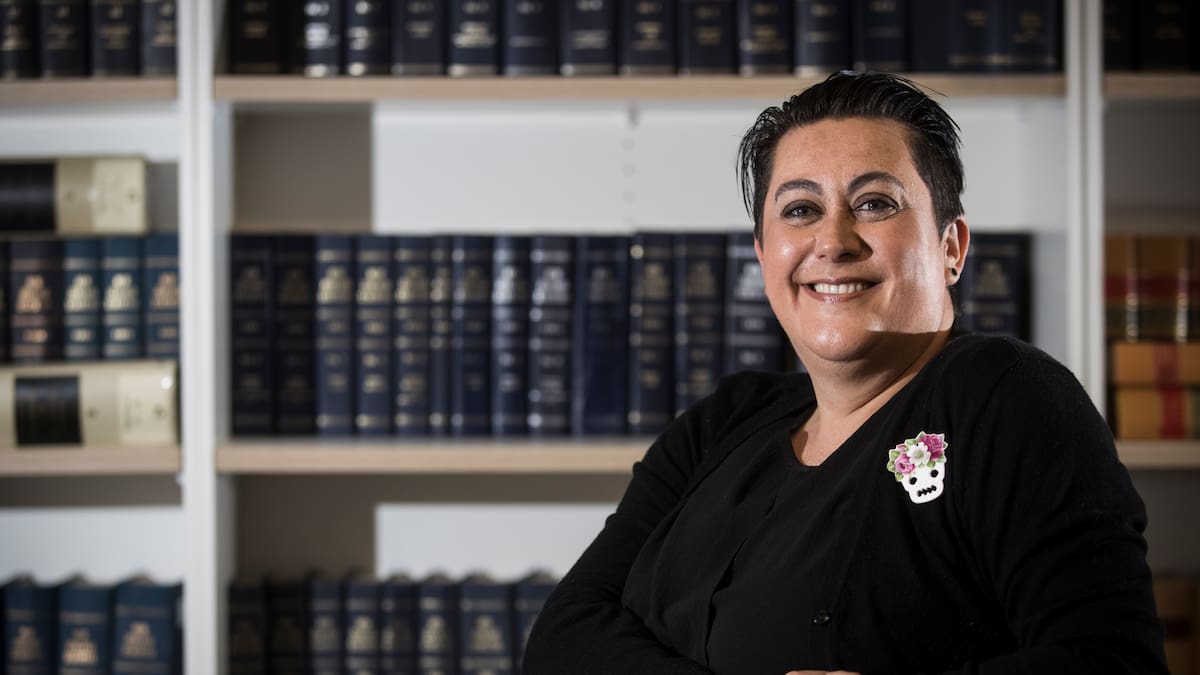
It makes a huge difference for tikanga to not just be an add-on at the end of a law student’s degree, outgoing AUT Dean of Law Khylee Quince says. Photo / Alyse Wright
The New Zealand Council of Legal Education (NZCLE) introduced a mandatory separate course on tikanga Māori in law degrees from the start of last year.
In May, National MP and Regulations Review Committee member Joseph Mooney, backed by governing parties, used a parliamentary motion so universities were only required to have a stand-alone tikanga paper, not tikanga components in compulsory law papers, such as criminal law, property law and torts.
The move came after the committee heard complaints about the mandatory courses from lawyers Gary Judd, KC, and Thomas Newman.
Tikanga ‘not an add-on’
Quince said it was significant the first thing law students at her university heard was “a Māori voice talking about Māori law being the first law of this country”.
“That sounds easy, but it was pretty significant … it just makes a big difference in terms of [tikanga] not being an add-on at the end of the degree, when people have already had a particular way of thinking about the law set in their ways.
“I’m pretty proud of how that’s come off … now it’s time to do some other things.”
Khylee Quince’s next research project includes a focus on the impact on children whose parents are in jail. Photo / 123rf
Quince would help with the transition when a new dean was appointed, but otherwise her focus would move to research.
She and University of Auckland professors Julie Tolmie and Tracey McIntosh last year received an almost $500,000 Borrin Foundation grant to look at “justice gaps for wāhine Māori and rangatahi (young people) … particularly the impacts of imprisonment on children”.
Parents who’d been in jail and school principals with a high number of pupils whose parents were in prison would be interviewed about the impact on affected kids’ care and education.
“The idea is to create some resources to assist judges making decisions, [and] schools and identify those gaps so people know where the kids are and [are] caring for their wellbeing.
“I’m quite excited about that.”
She’d also missed teaching, Quince said.
“Frankly, that’s what I’m good at, that’s what I really love about the job, so I’m pretty excited about going back to that, too.”