
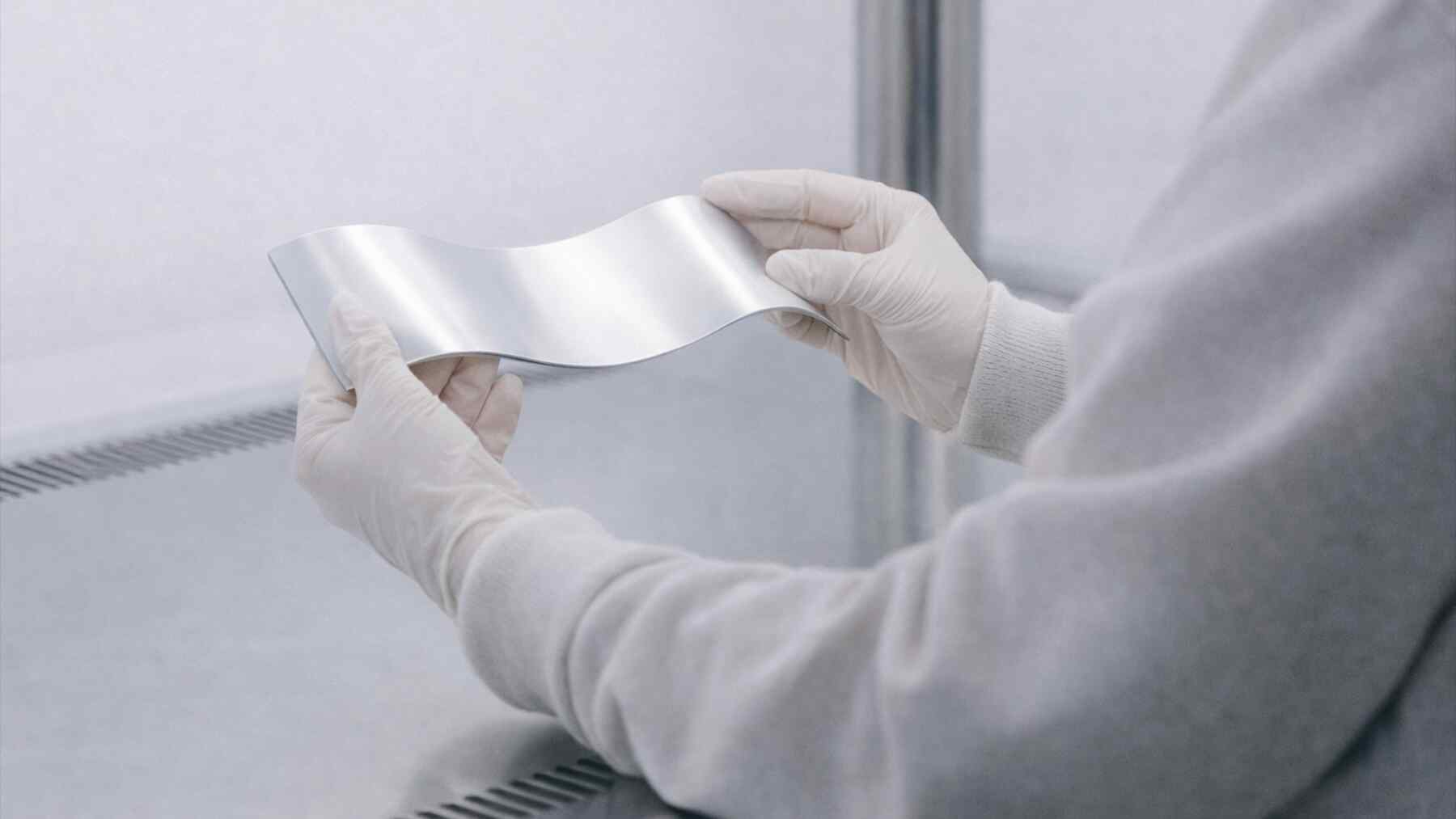
Scientific experiments can reshape the world around us.
Over the course of history, several experiments have led to astonishing creations that have rewritten our collective rulebook. But how can an experiment to create brighter materials result in a new flexible film that produces its own light and energy?
How has this new innovation in energy and lighting technology emerged?
How ultra-thin materials have changed the scientific world
The world has seen a technological shift from old, bulky materials that used up a lot of space and energy to ultra-thin materials that dominate society.
Everything from our phones to batteries that charge our electric cars is getting smaller and thinner. Ultra-thin, specially designed materials have revolutionized certain subsectors in science and technology.
The super-thin graphene is a prime example with its extreme strength and conductivity.
Thinner materials designed for energy generation have also become commonplace. New types of solar cells with remarkable efficiency have transformed the energy sector, while the new types of battery materials have enabled the ‘fast-charging’ of the world.
When technology and energy come together, the results are enlightening
Science has been working hand in hand with the technology sector to develop a new era of ultra-thin, super-small innovations that can revolutionize the world.
With the emergence of the electric vehicle sector, the world is awash in electric batteries, and people are finding interesting uses for discarded lithium-ion batteries that may shock you.
However, a recent experiment aimed to create a new type of material that glowed like the moon on a clear night may be the answer to our future energy needs.
Remarkable scientific minds have laid the foundation for some of our latest energy generation potential. We have developed a new system that could create energy in a physical ‘warp drive’. Who would’ve thought that bending space and time like a Star Trek film could generate power?
Energy has become the issue of our generation, as new complex problems need the efforts of the global community to get to the bottom of.
The public outcry that is a direct result of energy blockades in the Strait of Hormuz has raised alarm bells for the world, as the price of Brent Crude Oil has reached unprecedented levels.
So what’s next for energy production across the global market?
A recent study, “Organic, Transparent, and Flexible Films Exhibiting White-Light Emission via Polymer-Network Engineering: A Non-Dye-Centric Strategy,” published in Advanced Optical Materials, may have stumbled upon the newest, ultra-thin energy resource for the world.
How a quest for brightness created an ultra-thin energy-generating material
Researchers were conducting a routine experiment that aimed to create brighter materials. What they ended up with may change how we think about power and light in modern society.
The team created a new type of ultra-thin, flexible organic film that is capable of emitting white light through a novel polymer-network engineering process.
Because the team used a “non-dye-centric” strategy, the white light emitted from the organic material is not a result of a chemical additive, but instead stems from the way the polymer fibers are woven together at the most microscopic level.
The possibilities from these new innovations are boundless
The material could eventually be developed into a world of ‘smart’ technology for lighting and energy generation. Imagine a ‘smart window’ that collects energy during the day while remaining transparent and switching into a light and energy-emitting ‘window’ at night, when we need it most.
The costs associated with lighting and powering our homes are getting out of hand, and with this new organic, flexible, ultra-thin material, we are one step closer to a new era of energy.