
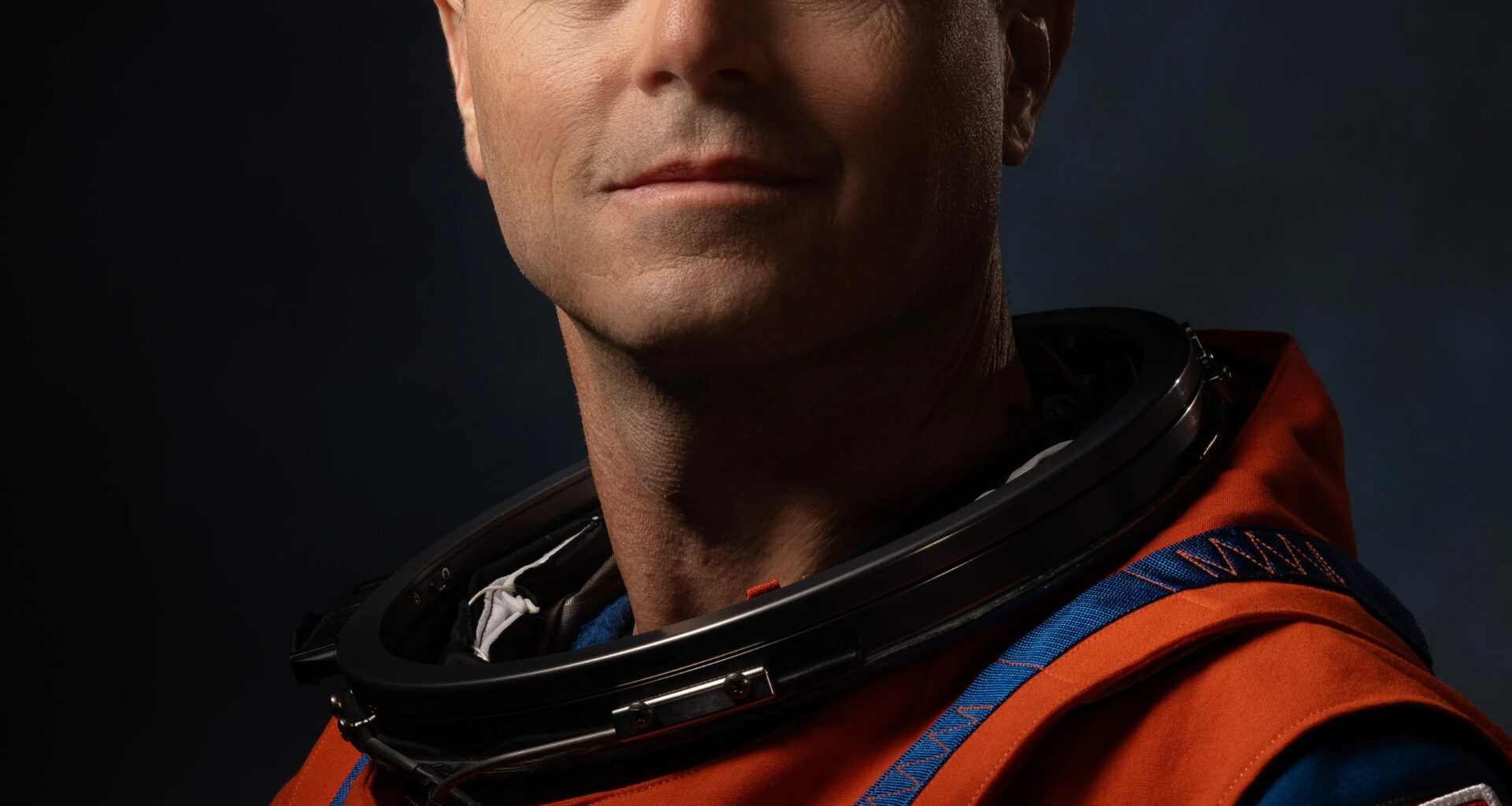
Soon, humans will once again travel beyond Earth orbit and head towards our planet’s constant companion in the sky, the Moon, as part of the upcoming Artemis II mission. Leading the intrepid explorers is U.S. Navy Captain and NASA astronaut Reid Wiseman, mission commander. Selected in 2009 as part of NASA’s 20th group of astronauts, Wiseman brings with him a wealth of military, engineering, and spaceflight experience, just as his predecessors in the Apollo lunar program did. If we look at that program of the past as our template for future Artemis flights, we might think of Artemis II as the Apollo 8 of today, heading out to the Moon but not landing. Stretching that comparison a bit further, Wiseman is perhaps the Frank Borman of today, taking up the mantle of commanding the first lunar voyage of a program with the potential to reshape how entirely new generations see and think about the Moon. Wiseman’s work at NASA over the last 17 years prepared him to blaze a new pathway to the Moon.
Artemis II, unlike the 10 orbits of Apollo 8, will make a sweeping loop around the Moon at some distance before heading home. As a crewed test flight rather than an operational mission, Wiseman’s crew must analyze the performance of the SLS rocket and Orion spacecraft for further mission uses rather than begin the next steps towards a lunar landing itself. In that, Artemis II looks a bit more like a mashup between Apollo 7 and 8, and Wiseman’s role a hybrid of Borman’s and Wally Schirra, the Apollo 7 mission’s leader. Even the biographies of Schirra and Wiseman look similar as the first mission commanders of new programs, both being Navy test pilots with military combat operation deployments and engineering degrees. Their sustained passion for spaceflight on top of intense training brings their stories even closer together.
Reid Wiseman is a native of the suburbs of Baltimore, Maryland. Wiseman participated in the Navy ROTC program at Rensselaer Polytechnic University, going on to become an F-14 pilot for the Navy during Middle East operations like Iraqi Freedom. His selection for the U.S. Naval Test Pilot School at Patuxent River in 2003 returned him to the Baltimore/Washington area and gave him the opportunity to also pursue his master of science degree at Johns Hopkins University (received in 2007). These combined achievements, like many of his Apollo predecessors, set him on the path to becoming an astronaut.
Like many others of his generation, seeing a Space Shuttle orbiter launch profoundly affected Wiseman’s career ambitions. With the advanced degree, experience, and enthusiasm for adventure he developed through his early career, Wiseman’s 2009 selection as an astronaut candidate along with 13 others from a group of 3,500 applicants signaled a shift in their lives, and hinted at the larger shift going on at NASA.
NASA’s astronaut Group 20 (nicknamed “The Chumps”) includes two Artemis II crewmembers commander Reid Wiseman in the front row, second from the right, and mission specialist Jeremy Hansen, first on the left.
NASA’s Group 20, selected five years after Group 19, began the shift from Space Shuttle orbiters to other means of accessing space. That path to space progressed from the intermediate use of Russia’s Soyuz rockets and later using SpaceX Falcon rockets carrying the Crew Dragon spacecraft. None of Wiseman’s classmates would travel on a Space Shuttle orbiter, but all of them visited the International Space Station for long-duration missions. Now, Wiseman finds himself the first of his class (along with Canadian Jeremy Hansen, a first for his country) to break the orbital plane by making a trans-lunar injection (or TLI, the name for reaching escape velocity from Earth orbit, approximately 25,000 mph/40,000 kph) and leading his crew of four towards the Moon.
Wiseman became familiar with leadership roles both before and during his time as an astronaut. After taking part in Middle East deployments in the early 2000s, flying F-14 Tomcats in Fighter Squadron 31, he was selected to take part in the U.S. Naval Test Pilot School at Naval Air Station Patuxent River. This achievement put him in a category with many of his astronaut predecessors and contemporaries, all recognized leaders with such a selection, including John Glenn, James Lovell, and Mark Kelly. While at Pax River, his work garnered the respect of his colleagues and instructors such that he was asked to become a Test Pilot and Project Officer at Air Test and Evaluation Squadron Two Three (VX-23) following his 2004 graduation from the school. As part of his continued Navy flight career, Captain Wiseman tested the F/A-18 and F-35C Lightning II and received numerous medals and commendations, all certainly contributing to his selection as an astronaut.
After their 2009 selection, Captain Wiseman and his astronaut colleagues from Group 20 trained for two years as candidates until their “graduation” in 2011, putting them in line for spaceflight assignments following the end of the Space Shuttle program. However, until 2020 and the certification of the SpaceX Falcon 9 launch vehicle and Dragon spacecraft for ISS crew delivery, U.S. astronauts would be members of Russian Soyuz launches. In late May 2014, Wiseman and his Soyuz TMA-13M crewmates Maksim Surayev (Russia) and Alexander Gerst (Germany) became part of ISS Expedition 40, joining an American and two Russians (Steven Swanson, Aleksandr Skvortsov, and Oleg Artemyev) already working in low Earth orbit. Wiseman spent just over 165 days in microgravity as a flight engineer, performing two spacewalks, dozens of experiments, and helping to maintain what became his home in space. Like many who live an astronaut’s life, Wiseman spoke of the joy of seeing Earth in interviews after his return to Earth, but the Artemis Program did not yet exist to provide him with a new route back to space.
Most of an astronaut’s life is not spent in space but on the Earth, training, teaching, and working with engineers on new equipment or projects. In addition to such work, Wiseman’s post ISS duties included becoming deputy chief of the Astronaut Office under Patrick Forrester, an experienced Space Shuttle astronaut. This prestigious leadership role highlights his reputation amongst his colleagues and made him the first ISS astronaut selected for that position. In late 2020, NASA announced a selection of active astronauts as a new subset of astronauts: the Artemis astronauts. Wiseman was not on that list as he had been preparing to move up to the position of Chief Astronaut. Interviews at the time reflect his team unity mentality amongst his colleagues, asserting that all active astronauts would remain eligible for Artemis missions. His elevation to Chief Astronaut though meant Wiseman became the primary contact between the astronauts and NASA leadership, allowing him to advocate for their needs collectively and ensuring crews received proper training prior to their missions. This was a particularly challenging time, during the COVID-19 pandemic, but proved Wiseman’s status as a respected leader. His time in that role ended in late 2022 with a wish to return to active astronaut status and become eligible for crew assignments.
The Artemis II crew (l-r), Jeremy Hansen, Victor Glover, Christina Koch, and Reid Wiseman next to Apollo 11’s Columbia command module in the “Destination Moon” exhibit during a visit to the Museum in 2023.
Since April 2023, and for almost three years now, Wiseman and his team (mission pilot Victor Glover and mission specialists Christina Koch and Jeremy Hansen) have traveled the world over, building trust as a team, training in simulators, and preparing for the confines of the Orion spacecraft over their 10-day mission. In a space with the volume of a large van, the four will put their vehicle through its paces and thoroughly test new equipment. They will eat, sleep, exercise, and use a toilet within just inches of their crewmates while flying a loop around the Moon and back. What makes Wiseman’s point of view unique, for at least those born after about 1968, is the fresh perspective he will provide on leading a team to such a location. How might his commander’s eyes see things anew, and his words again inspire inquiry into the Earth-Moon system? What photographs and videos will he take and narrate to bring us along on that journey virtually? The wait is now over as we are currently witnessing Weisman lead his generation and the so-called Artemis generation into the future of human spaceflight.