
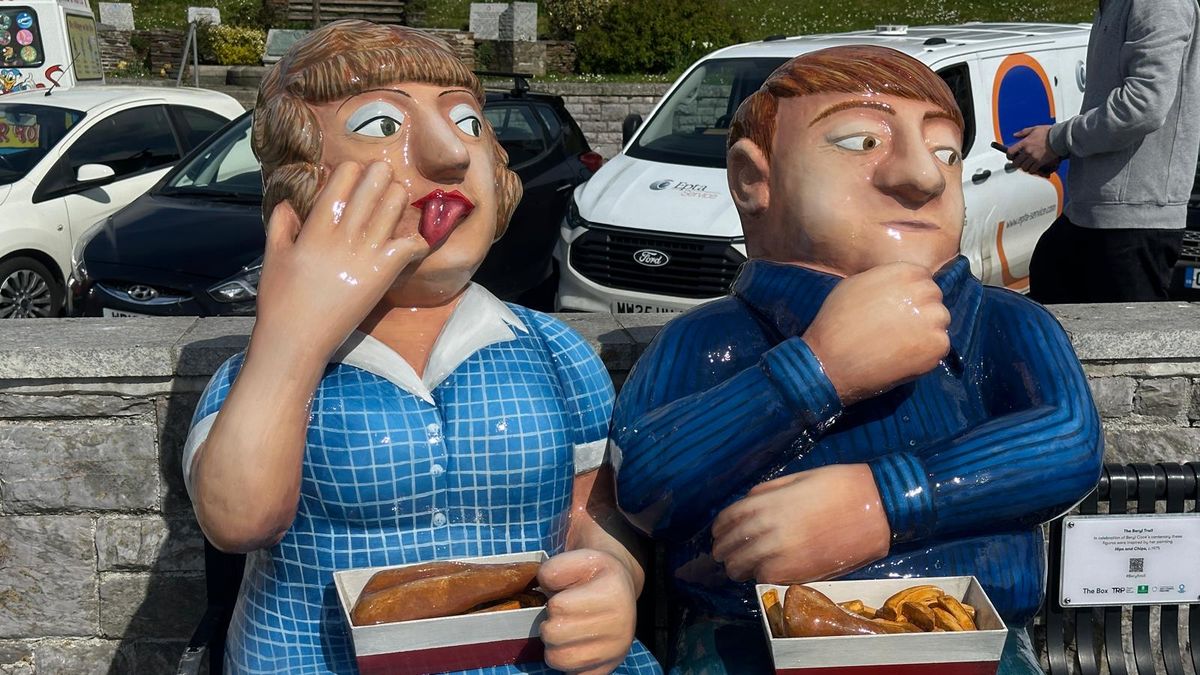
It’s the fifth one based on Beryl Cook’s work
Alison Stephenson Local Democracy Reporter
10:14, 01 Apr 2026
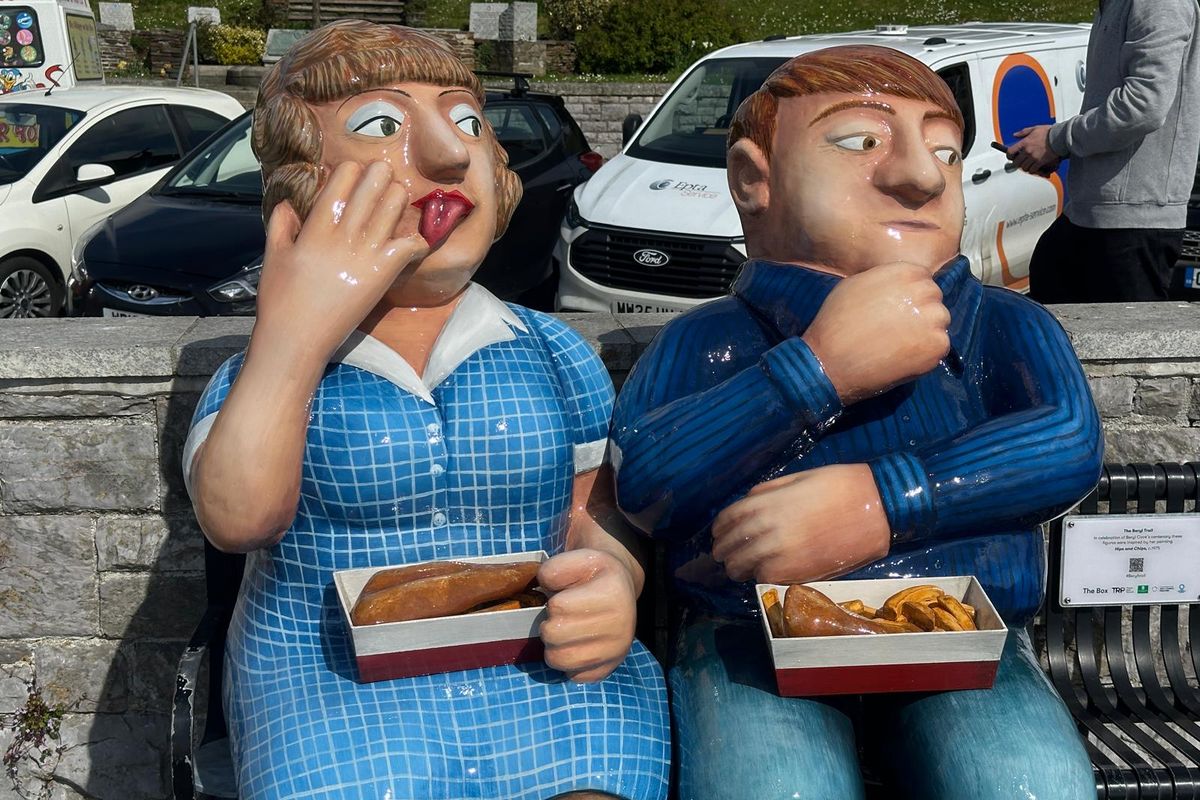
Hips-and-Chips- sculpture on Plymouth Hoe(Image: The Box)
A new life-sized sculpture inspired by Plymouth artist Beryl Cook’s much-loved painting Hips and Chips has been unveiled near the Belvedere on Plymouth Hoe.
The piece of art, created by the team at Theatre Royal’s TR2 production centre, joins four existing sculptures that were installed across Plymouth’s city centre and waterfront in late January to coincide with the opening of The Box’s popular Beryl Cook: Pride and Joy exhibition which runs until the end of May.
Beryl’s Hips and Chips painting dates from the 1970s and is a characteristically humorous everyday scene with two women and a man dressed in shades of blue tucking into boxes of fish and chips and giving the infamous Beryl Cook ‘side eye’ to a wide hipped lady dressed in red and white as she unashamedly walks past them.
The two new figures have been funded by the Plymouth Waterfront Partnership.
Sculptures can also be seen outside The Dolphin pub on Southside Street, The Barbican; near the bowling green on the Hoe; next to the entrance to the garden of the Bank pub in the city centre and by the Frankfort Gate entrance to Plymouth Market and form part of a Beryl Cook trail around town.
They and the exhibition mark 100 years since the artist was born and have been enjoyed by thousands of visitors so far.
Plymouth Waterfront Partnership CEO and Plymouth Waterfront manager Sarah Gibson said: “This expanded collection strengthens Plymouth’s reputation as a city that celebrates its cultural heritage whilst also creating engaging public art experiences, all to attract people into the area and spread some joy.
“Our two new additions have already begun to capture everyone’s imaginations, and we can’t wait to see more of the public’s photos brightening up social media as they’re out and about exploring our unique waterfront.”
Beryl Cook (1926-2008) lived and worked in Plymouth for over 40 years. Despite enormous public popularity, her work was often dismissed by critics. The Box’s centenary exhibition aims to reposition her as an important chronicler of British life from the 1970s to 2000s, celebrating her radical representation of marginalized communities including drag queens, plus-size women, working-class people and LGBTQ+ nightlife.