
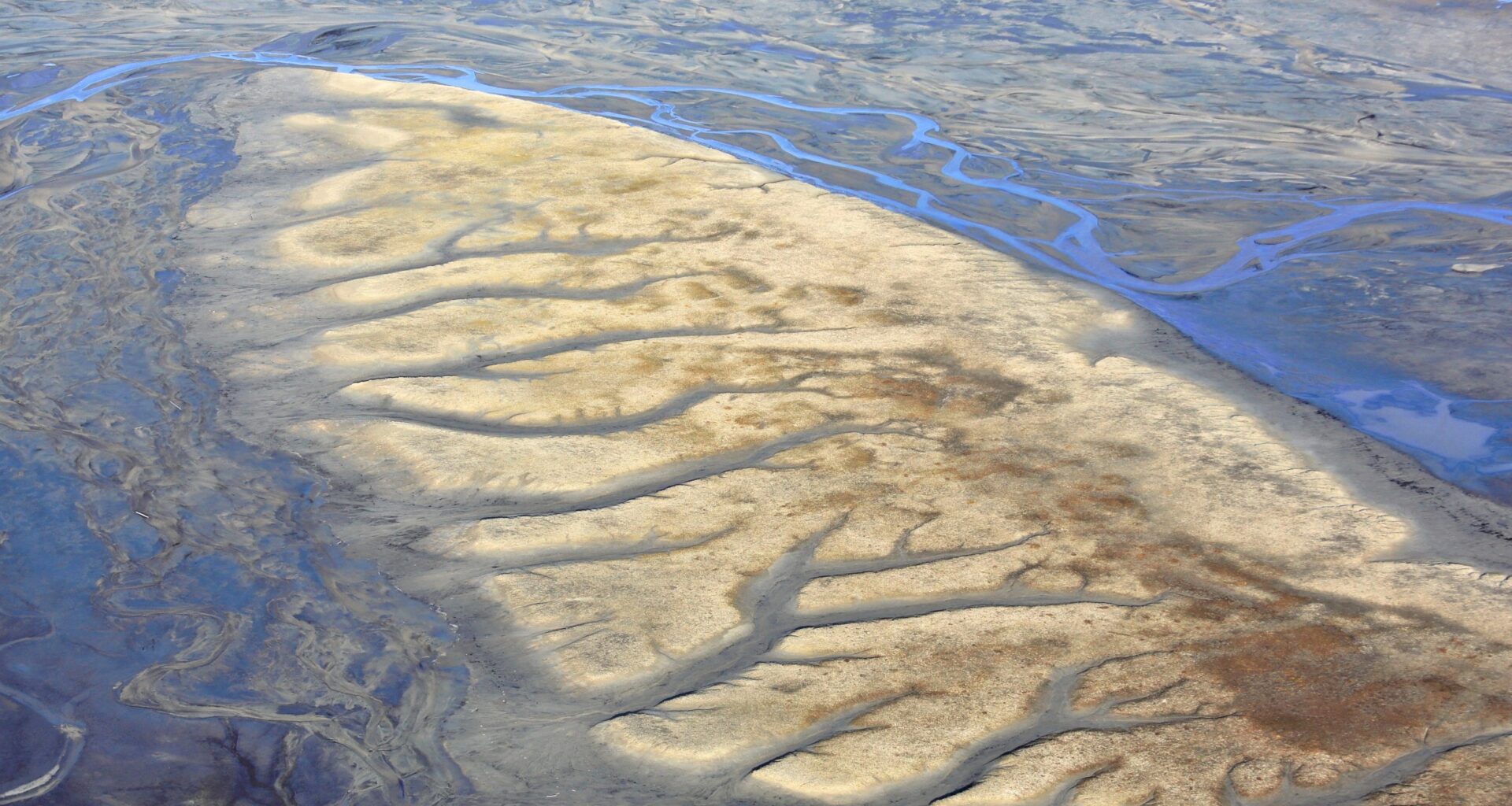
For a long time, Arctic permafrost has acted like a giant frozen lid: it locks away carbon-rich soils and slows the escape of gases that can warm the planet.
But new lab experiments from the University of Leeds suggest that once that lid starts to thaw, the ground can become dramatically more “leaky,” making it much easier for climate-forcing gases to move through the soil and into the atmosphere.

The study reveals that thawing permafrost can become 25 to 100 times more permeable, meaning gases can travel through it far more easily than when it’s frozen.
Emissions from thawing permafrost
Permafrost covers huge areas of the Arctic. It’s been frozen for long periods, which has allowed organic material – and the carbon inside it – to accumulate rather than fully decompose.
Globally, permafrost is estimated to contain about 1,700 billion tons of carbon, roughly three times the amount currently in the atmosphere.
If warming causes more of that carbon to be released as carbon dioxide and methane, it risks creating a feedback loop: warming causes thaw, thaw releases gases, gases cause more warming.
“It is now widely recognised that climate change is leading to significant thawing of permafrost, with a 42% expected loss of permafrost in the Arctic Circumpolar Permafrost Region (ACPR) by 2050,” said Paul Glover, the Chair of Petrophysics at the University of Leeds.
“The release of huge amounts of carbon that have been stored in previously frozen soils, predominantly in the Arctic, represents a very real danger, especially as it is known that climate change is warming the Arctic regions four times faster than elsewhere.”
“The hypothesis that thawing of permafrost could release sufficient climate forcing gases not only to continue but to accelerate climate change is one step closer to being confirmed by the results we are publishing today.”
What the team actually tested
Rather than relying on field observations alone, the researchers ran controlled experiments in Leeds’ Petrophysics Laboratory.
They worked with model permafrost samples and tracked two key things as temperature changed: how easily gas could flow through the material (permeability), and how much gas was present and released.
The team gradually warmed samples from -18°C to +5°C, measuring gas release at each one-degree step. One of the biggest takeaways was that the permeability jump wasn’t evenly spread across temperatures.
The most dramatic change happened close to the freezing point – in the range -5°C to 1°C – basically the zone where permafrost is starting to soften, crack, and reorganize internally.
That’s important because many Arctic regions hover near these temperatures for parts of the year, meaning small warming increments can produce outsized changes in how gases move.
One interesting detail is how the team made these measurements in the first place. They used methods originally developed for studying how fluids move through rocks – techniques that have often been used in oil and gas research.
“While these are significant results in themselves, showing how we are beginning to understand the mechanisms behind some aspects of climate change, they are also important because the measurements were only made possible by the adoption of methodologies previously developed for use predominantly by the fossil fuel industry,” said co-author Roger Clark, a Senior Lecturer at Leeds.
In other words, the same kinds of measurement tools used to understand reservoirs can also help scientists understand thawing ground and the risks that come with it.
Glover also cautioned that these are initial published results, even though the team is continuing to collect more data.
That kind of careful framing matters, because permafrost behavior in the real world is messy: different soils, different ice structures, different microbial communities, different landscapes.
But the mechanism this study highlights – thaw making soils far more permeable – is the kind of basic physical shift that can amplify everything else.
Radon in northern communities
The paper also flags a risk that doesn’t always get mentioned in permafrost discussions. Thawing ground could affect the release of radon, a naturally occurring radioactive gas linked to increased cancer risk.
If permeability rises dramatically, it may not only make it easier for greenhouse gases to escape – it could also change how radon moves through soil, potentially increasing health risks in Arctic and sub-Arctic communities.
A lot of permafrost talk focuses on biology: microbes wake up, organic matter decomposes, greenhouse gases form.
This study adds a blunt physical piece to that story: thawing doesn’t just “activate” carbon – it can also change the soil structure in ways that make it much easier for gases to travel.
If permafrost becomes tens of times more permeable as it warms, the Arctic doesn’t just become a bigger source of greenhouse gases – it may become a faster one.
That’s exactly the kind of dynamic that turns climate change into a self-reinforcing problem, and why researchers are paying such close attention to what happens as the frozen ground begins to thaw.
The study is published in the journal Earth’s Future.
—–
Like what you read? Subscribe to our newsletter for engaging articles, exclusive content, and the latest updates.
Check us out on EarthSnap, a free app brought to you by Eric Ralls and Earth.com.
—–