
After delays, the transfer was finalised on March 23, with rents scheduled to rise to market rates from June 1.
Tenants have said this would mean increases of more than 150% for some, with exact figures dependent on individual circumstances.
The council said the move was intended to reduce a roughly $1 million annual burden on ratepayers and allow many tenants to access previously unavailable central government housing assistance.
In an August press release announcing the change, council infrastructure and assets manager Stavros Michael said the council had “committed to providing a ‘top-up’ for a period of two years for tenants who are solely dependent on superannuation to make sure they will be no worse off financially”.
This would “likely be a contribution to power or other utility bills”.
MSD Bay of Plenty regional commissioner Jacob Davies told Local Democracy Reporting this week that the council did not consult MSD before announcing “the August 29 commitment to their tenants”.
“If we had been consulted, we would have advised the council that their proposal would not ensure tenants are no worse off.”
Davies said MSD officials had attended several relevant meetings since August, but the council’s utilities top-up proposal was not presented until late January.
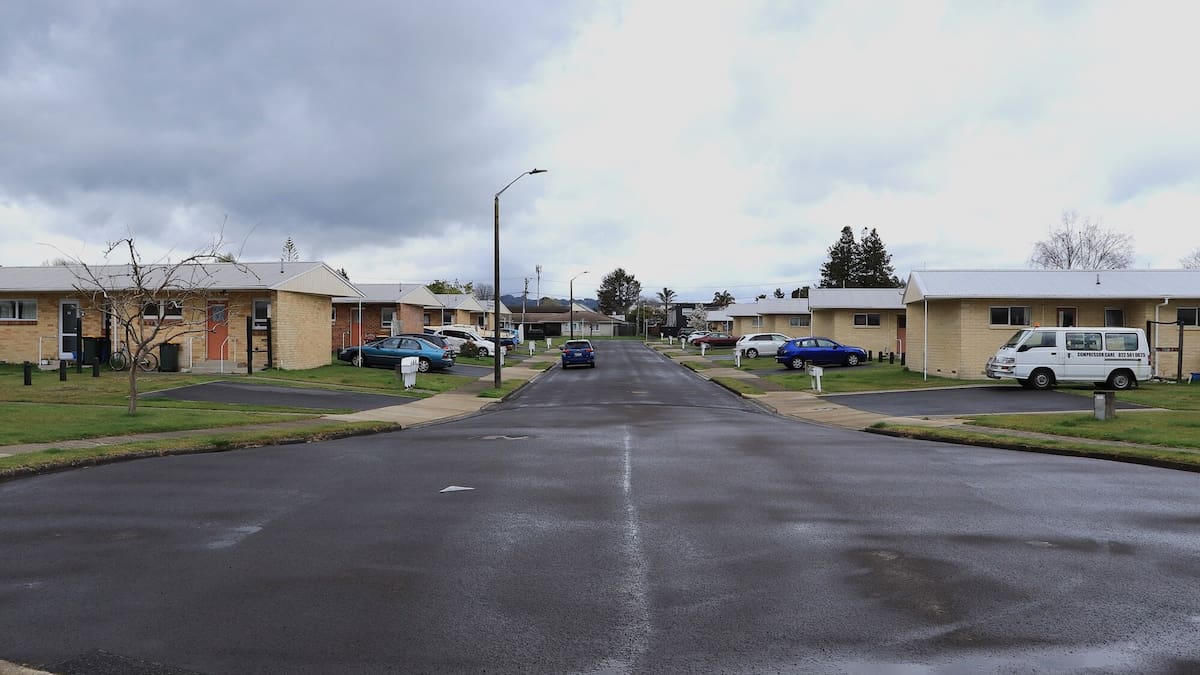
The Pomare Units in Rotorua are impacted. Photo / Mathew Nash
“We advised that these payments would likely be defined as income, which would reduce how much support a person can get,” Davies said.
Under the Social Security Act, assistance like the accommodation supplement is income-tested, he said.
“That covers all sources of income, including contributions to power or other utility bills.”
In February, MSD advised Emerge Aotearoa that there were “no immediate options” to offset the impact on tenants and recommended leaving the affected tenants at their current rent levels for the time being, Davies said.
Every application for support was considered individually, but there were legal limits to how much could be provided.
“We know it’s a stressful time for the people affected by this decision, and we’ll keep working with them to understand their circumstances and how we may be able to help.”
Westbrook resident Joe Douglas lives in one of the council’s 152 pensioner housing units.
He said he learned the top-ups would count as income when applying for government assistance.
Westbrook resident Joe Douglas still doesn’t know how Rotorua Lakes Council plans to cover the difference after a rent hike on his pensioner unit. Photo / Mathew Nash
He said his neighbours had received similar advice from MSD.
“We all have a moan about it,” he said. “But it’s just hanging over our head all the time, and that’s not nice.”
Without the promised top-up, he estimated the increased rent would leave him about $125 a fortnight out of pocket.
He said he just wanted answers.
“I don’t know if we need to reduce the rent to a level where the subsidy leads us back on an even keel again, or even if that would work, but I would like to hear something.”
A Kahikatea St tenant, who spoke on the condition they were not named, said they raised the proposed top-up at a public meeting in August, which council staff attended.
“I told them you can’t do that, that’s counted as income.”
There are several vacant units at the Kahikatea St pensioner housing block. Photo / Mathew Nash
Months later, the uncertainty was still taking a toll.
“It’s just really stressful. It’s been going on for nearly 10 months,” they said.
The delays had forced them to repeatedly reapply for assistance.
Michael responded to Local Democracy Reporting questions on behalf of the council and Emerge.
He said the council would continue working with MSD to try to ensure tenants had their full benefit entitlements, to reduce the cost burden on ratepayers.
“It would not be appropriate to pre-empt this process while it’s still underway – working with the tenants and ensuring the best possible outcomes for them is the priority.
“Looking at how we could ensure tenants relying solely on the pension were no worse off for up to two years after rental changes take effect was approved by elected members,” he said.
“Our efforts to find a way to achieve this as best we can are continuing.”
Rotorua Lakes Council infrastructure and environment group manager Stavros Michael in a March 2025 meeting. Photo / Laura Smith
He said tenants would be notified of outcomes first.
“It has been complex, and we acknowledge it has not been an easy transition for tenants, but our top priority is getting better outcomes in the long term.”
He said the council was “committed to better and more sustainable housing and support outcomes” for its pensioner housing tenants and Rotorua ratepayers.
The council did not directly answer questions on why tenants were promised they’d be “no worse off”, without MSD consultation, or when the council learned this may not be possible.
Councillors received an update on the pensioner housing portfolio, including a proposed redevelopment of the Lucas Place blocks, in the publicly excluded section of last week’s council meeting.
Michael said the council would share more details in “the near future”.
Mathew Nash is a Local Democracy Reporting journalist based at the Rotorua Daily Post. He has previously written for SunLive, been a regular contributor to RNZ and was a football reporter in Britain for eight years.
– LDR is local body journalism co-funded by RNZ and NZ On Air.