
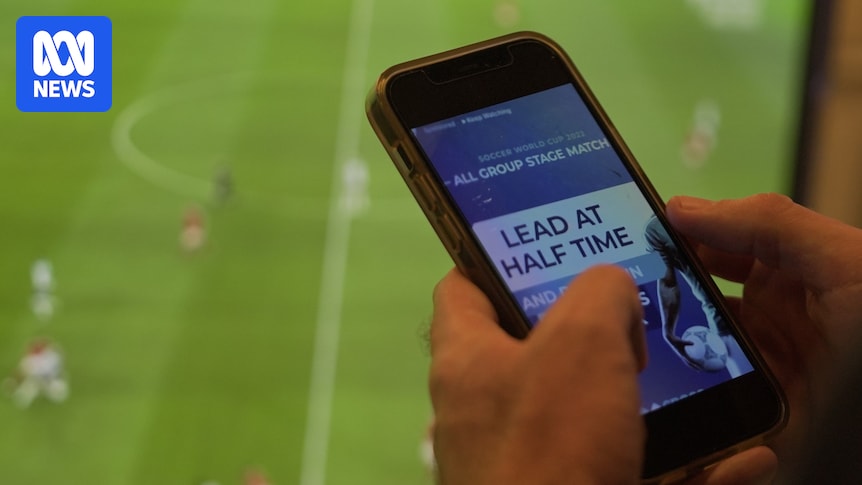
A partial ban on gambling advertising designed to protect children from exposure to harm has been unveiled by the prime minister as part of a package of reforms advocates have slammed as “tinkering around the edges”.
Anthony Albanese used his National Press Club address today to outline a series of measures the federal government is planning to introduce, describing it as “the most significant reform on gambling that has ever been implemented”.
If you or anyone you know needs help:Suicide Call Back Service on 1300 659 467Lifeline on 13 11 14Aboriginal & Torres Strait Islander crisis support line 13YARN on 13 92 76Kids Helpline on 1800 551 800Beyond Blue on 1300 224 636Headspace on 1800 650 890ReachOut at au.reachout.comMensLine Australia on 1300 789 978QLife 1800 184 527
Labor’s plan includes a three-ad-per-hour cap on television broadcasts between 6am and 8.30pm, a complete ban during live sport broadcasts in that period and a ban on radio gambling ads during school pick-up and drop-off times.
Gambling ads would also be banned on online platforms unless users are logged in, are over 18 and have the option to opt out, while advertising using celebrities or athletes, odds-style ads targeting sports fans, and ads in sports venues or on players’ uniforms would be outlawed.
“We are getting the balance right, letting adults have a punt if they want to, but making sure that our children don’t see betting ads everywhere they look,” Mr Albanese told the National Press Club.
“Because we don’t want kids growing up thinking that footy and gambling are inextricably linked. We want Australians to love sport for what it is.”
Mr Albanese also flagged a crackdown on online lottery products and offshore gambling providers, as well as a ban on online keno “pocket pokies”.
The announcement came more than three years after the government was handed the You Win Some, You Lose More report from a parliamentary inquiry into online gambling harms led by the late Labor MP Peta Murphy.
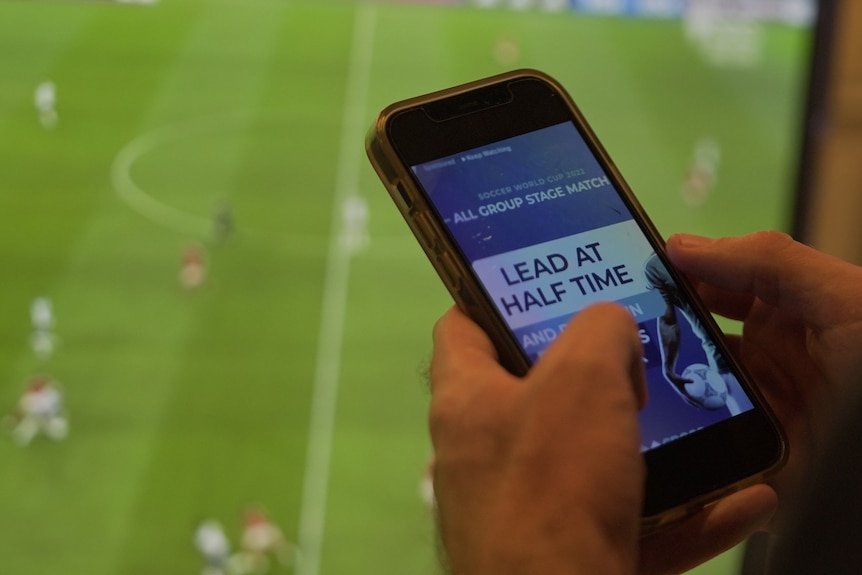
It has been three years since the government was handed a report on how to reduce gambling harms. (ABC News: Stephen Cavenagh)
The inquiry made 31 recommendations, including a phased total ban on online gambling advertising as well as TV, radio and in stadiums and on jerseys.
There was also a call to create a national online gambling harm reduction strategy, establish clearer Commonwealth regulation, a new independent online gambling ombudsman and introduce a harm-reduction levy on betting companies to fund research, education and support services.
One of the key recommendations was to ban or restrict inducements, such as bonus bets and promotions that encourage riskier betting.
Mr Albanese said the government would table a full response to the Murphy report when parliament returns in May, but acknowledged the parliamentary review “isn’t where it started and ended”.
“More than half” of gambling harms came from pokie machines, the prime minister said, which were not addressed by the report or the response.
Albanese to outline case for urgent reform amid global uncertainty
Responsible Wagering Australia said it was “deeply disappointed” by the announcement, describing the changes as “draconian measures”.
“This announcement, with no heads-up and no genuine consultation, is a real kick in the guts for the industry,” chief executive Kai Cantwell said in a statement.
“This sets a dangerous precedent. Today it’s gambling advertising, tomorrow it’s alcohol, then it’s sugary drinks, fast food, critical minerals and who knows what else comes next.”
Reforms don’t go far enough, according to doctors and MPs
Independent MP Kate Chaney, who has been outspoken about the need to implement the Murphy recommendations in full, said Labor’s proposal amounted to “tinkering around the edges of meaningful reform”.
“After more than 1,000 days of silence, this is a start,” she said in a statement.
Gambling helplines:
“But it appears to have been designed to give certainty to powerful vested interests rather than to reduce harm to the many Australians suffering from the impacts of gambling addiction.”
The changes continued to put responsibility on the individual, Ms Chaney said, rather than treating gambling as a public health issue.
“That is exactly what the gambling companies want — if you fail to work out how to opt out of gambling ads online, it’s on you.”
Liberal MP Simon Kennedy, who is a co-chair of a parliamentary friends group on gambling harm minimisation, was also not positive about the government’s response.
“The prime minister has reluctantly moved on gambling reform under pressure from parliament, but after years of inaction the announcement is overdue and underwhelming,” he said.
Australian Medical Association vice-president Julian Rait declared that “partial bans do not work”.
“Anything less than a comprehensive ban will continue to expose Australians — especially children — to relentless gambling promotion,” he said in a statement.
Deakin University professor Samantha Thomas, who researches gambling, said she was concerned the government’s response would not sufficiently address the harms, including the risk to children.
“We want action, yes — but not a charade,” she said.
“Effective reforms are needed that actually protect young people, not ones that leave the industry free to innovate around the rules.”