
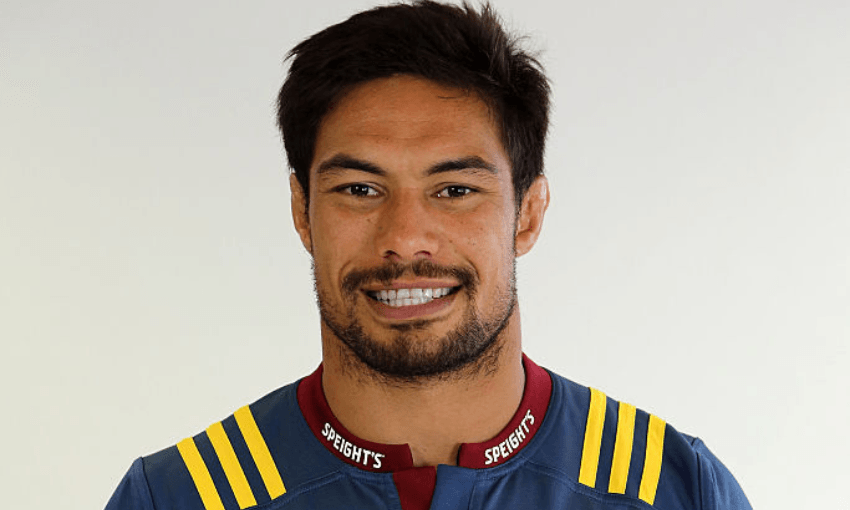
Just as he suspected in life, Shane Christie’s cruel fate has been confirmed in death.
Christie is the second professional rugby player in New Zealand, after Billy Guyton, to have been diagnosed with chronic traumatic encephalopathy (CTE).
A pathologist has found that Christie died with “high stage” CTE, a neurodegenerative disease linked to repeated blows to the head. CTE can only be diagnosed after death during an autopsy of the brain.
To those who knew and loved him, it continued, they say, a worrying trend of former players having their concerns about brain disease dismissed by treatment providers as mental health issues.
“Shane wanted people to understand that he was sick, not depressed,” says Carl Hayman, who was diagnosed with early-onset dementia and probable CTE aged just 41, after playing more than 400 games of professional rugby over his career. “Until NZR acknowledges and accepts there is a problem, cases will always be put down to issues around mental health, alcohol and lifestyle. The sadness of the matter is the information was out there long before Billy and Shane left us.”
In a statement, New Zealand Rugby interim chief executive Steve Lancaster noted the diagnosis. “[We] acknowledge the CTE pathology results for Shane Christie confirmed by The Neurological Foundation Human Brain Bank. We also acknowledge and respect the role of the coroner to determine the nature of any inquiry they may hold examining the cause and circumstances of Shane’s passing,” Lancaster said.
“Our thoughts are with Shane Christie’s whānau, friends and former teammates for their ongoing grief following his passing, especially during difficult times like this.”
Christie, 39, died suddenly last year, a little more than two years after the death of his Māori All Blacks and Tasman Mako teammate Billy Guyton.
In the time between Guyton’s diagnosis and his own death, Christie had posted several stories on various platforms documenting his battles with concussion and his fears that he was suffering from CTE.
On August 27 last year, Christie died by suspected suicide.
Christie had made it public that he wanted his brain investigated upon his death and with the consent of family it was donated to the National Brain Bank at the University of Auckland, where it was examined by pathologist Dr Clinton Turner. A non-publication order was lifted by coroner Ian Telford today, regarding a key section of the pathologist’s report, which states: “Dr Turner confirms the diagnosis of chronic traumatic encephalopathy (CTE), which he characterised as ‘high stage’.”
The pathologist’s opinion has elicited mixed emotions among those closest to Christie. Former partner Holly Parkes says she traverses the same feelings of grief, anger and guilt every day. “We didn’t listen to Bill and Shane when they were alive,” she says. “They were put through a course of misdiagnosis and mistreatment by people who chose not to consider that their brains were damaged by the sport they loved.
“No one paid any attention to Shane when he stood up and shouted that there was something biologically, not psychologically, wrong with his brain. Now he’s dead and thanks to his last act of giving — donating his brain — his life is vindicated. He died with CTE, a serious brain disease, and it’s time we listen and change.”
 Billy Guyton was the first New Zealand rugby player diagnosed with CTE
Parkes also pointed out a macabre connection that she feels is proof that rugby is failing its young men. “Shane’s final game of rugby was for the Māori All Blacks in 2016. Three players from that game have now died. Does that not seem insane?”
In October, 2021, Sean Wainui died in a single-vehicle crash that coroner Louella Dunn said was being treated as a suspected suicide. In March 2024, after testing by the Brain Bank, it was confirmed that Guyton died with stage two chronic traumatic encephalopathy, a disease associated with repeated blows to the head. The Brain Bank report noted that Guyton had “background changes consistent with global hypoxic ischaemic encephalopathy”, an umbrella term for a brain injury.
“These guys aren’t depressed, they’re sick,” John Guyton, Billy’s father, said at the time. “And there’s hundreds of them. I read that Carl Hayman described it as an epidemic, and he’s right.
“I believe Billy’s death was his final ‘f*** you’ to all those who ignored the obvious when he tried and tried and tried to get help.”
In 2024, Christie wrote an 8000-word essay titled: “The Unspoken Truth: A Journey Through Concussion and CTE — The Untold Story of Best Friends and the Impact of Multiple Concussions in Contact Sports.”
It contained the following lines:
“Amid these challenges, players like myself, Carl Hayman, Billy Guyton and many more have faced difficult questions: “Are we depressed? Are we just lazy? Are our problems just mental health issues?” Understanding the condition has been a complex and isolating journey.
“The symptoms have affected our brains in such a way that we may become impulsive and obsessive around specific goals or topics of interest. From my limited understanding of CTE, both positive and negative emotions will be extremely affected by the degenerative disease, which unfortunately for Billy meant his emotions and lack of understanding of the cause, became deadly.”
It also contained a pointed question for the game’s stakeholders and administrators.“Rugby, our beloved national sport, has provided careers and shaped the lives of many. However, not everyone is dealt a favourable hand in the game. When will those responsible for the wellbeing of our contact-sport athletes begin to educate them about the genuine risks of concussion?”
Said Lancaster: “We share the concerns about the potential long-term effects of repeated head knocks in rugby and support the need for ongoing research into this. NZR recognises an association between repeated head impacts and CTE and takes this issue seriously. We are working with researchers to strengthen the understanding of CTE, recognising that further research to look at the brains of individuals who have not played contact sports is needed, before a definitive link can be established.
“While research into the long-term impacts of head injury is ongoing, our focus remains on the support we provide to our rugby community now.”
*This piece also appears on Dylan Cleaver’s Substack The Bounce.