
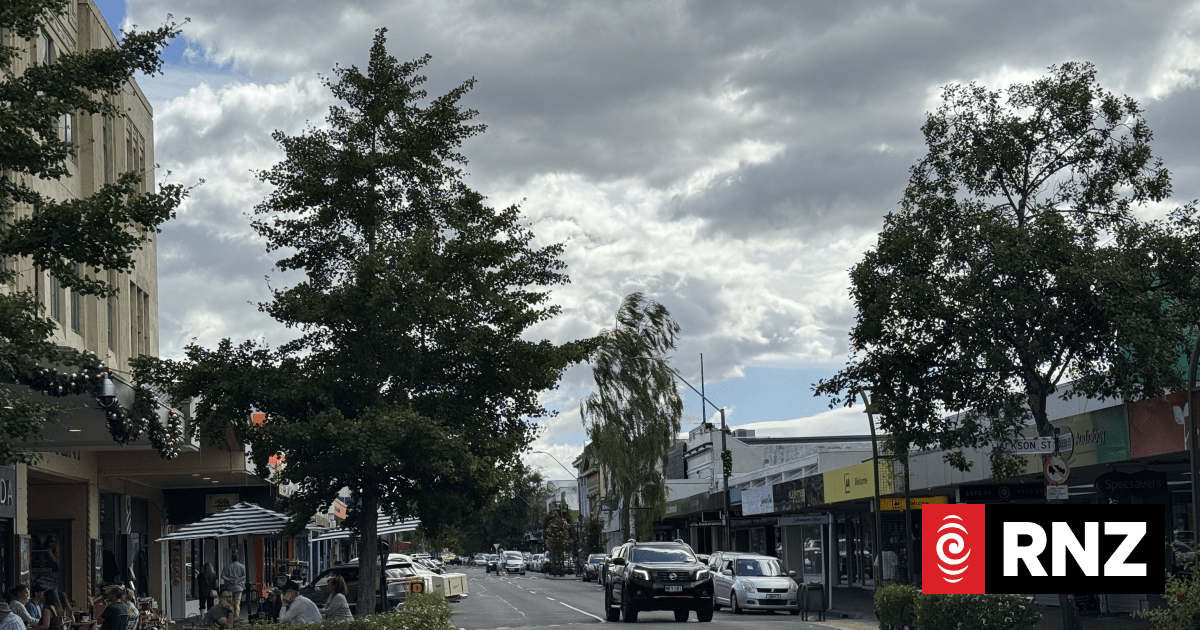
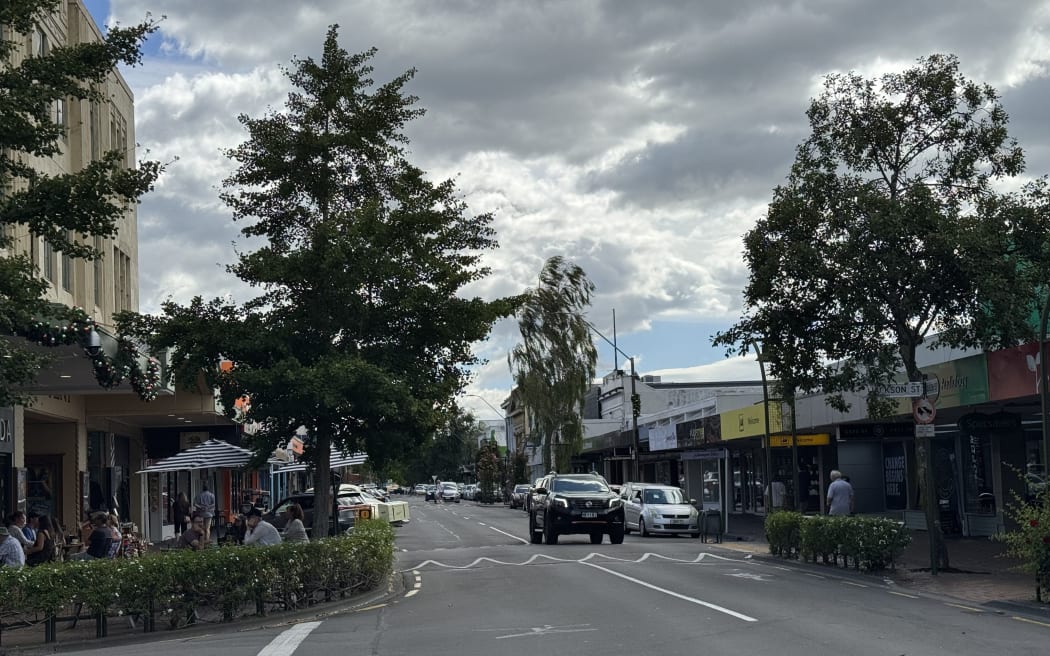
The gingko tree (L) outside Strada in Queen Street could be relocated by Masterton District Council, if it is practical to do so.
Photo: LDR/Sue Teodoro
A lower North Island council has approved a total potential tree budget of well over $700,000 after community reaction to CBD trees being felled.
Masterton District Council approved the further spending of up to $550,000 at its meeting on Wednesday. The move follows widespread public dismay after the removal of many trees on its main street, Queen St.

The extra funding is a substantial uplift on, and in addition to, $180,000 previously budgeted, making a total potential budget for the trees of up to $730,000.
A report to the council recommending the substantial budget uplift for tree replacements noted the reaction.
“In recent weeks, the removal of the trees along Queen Street has generated considerable public concern,” it said.
“Public concerns are around tree removal and the perception that the trees are not being replaced or will be replaced by much smaller trees which will take many years to provide the desired canopy cover.
“A ‘Help Save Our Trees’ petition has been submitted to council, requesting that council reconsider its CBD street tree policy.”
The council approved the increase in the project budget for up to $550,000 for street tree replacement, installation of tree pits and garden beds, and the possible relocation of a striking ginkgo tree – reputedly more than 50 years old. The tree would only be relocated if it was practical to do so.
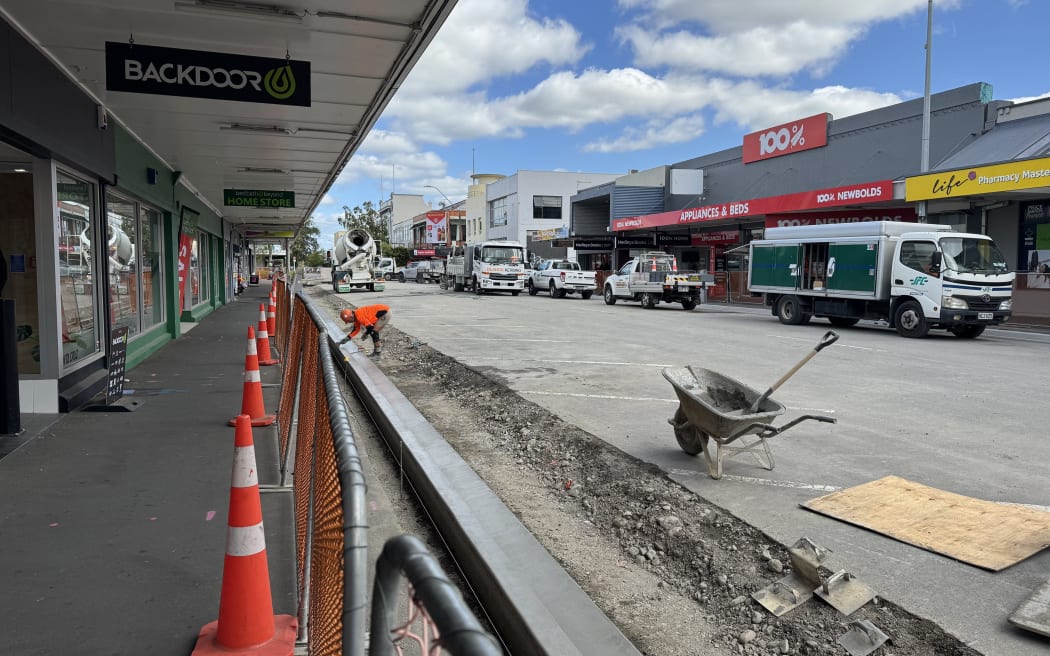
A number of trees have been removed to make way for an extensive infrastructure upgrade on Masterton’s Queen St.
Photo: LDR/Sue Teodoro
The spending comes after the well-established trees were felled to make way for a major infrastructure upgrade.
The trees had formed a distinctive canopy through the town’s main shopping thoroughfare, providing shade on hot days. However, the root systems had lifted and damaged some of the pavements, and there had been reports of people tripping over them.
The council’s decision was an increase on an initial recommendation by council staff for a budget increase of $435,475, and an additional $40,000 to relocate the ginkgo tree.
After the meeting spatial designer Kirsten Browne welcomed the decision. Browne has a particular interest in the intersection of natural and built infrastructure and had been concerned about the process followed for the removal of the Queen St trees.
“You can see there has been work done to adapt the current plan to further accommodate actual canopy trees,” she said.
“The issue is now on the agenda, and that is great news.
“Congratulations to everyone in there.”
Browne thought more work could be done to measure and develop a canopy tree strategy for Masterton’s urban centre.
She had spoken about the trees in the council meeting’s public forum, where mayor Bex Johnson had read out a statement on the issue from Ian and Diane Grant, who had organised the public petition.
The Grants said there was considerable concern in the community about “poor or non-existent communications”, and why the trees had to be removed, and what would replace them.
“It was later suggested, but not explained why, that only low level shrubs would replace the trees. Masterton has a poor record, compared to other New Zealand towns, in terms of shade, and this would worsen it in the critical business district.
“We hope the council will now give a clear explanation of exactly what the replacement vegetation will be, and when it will be planted.”
The report to the meeting said a landscape designer had been appointed to develop a planting scheme for the new garden beds and advise on appropriate tree selection, in collaboration with the project team.
It was expected a total of 15 new trees would be planted, based on features including appropriate mature size, frost hardy, wind tolerant, and able to cope with urban conditions, including restricted water and nutrient availability.
“We will plant the biggest trees that budget, space (above and below ground) and availability of stock allow for,” the report said.
LDR is local body journalism co-funded by RNZ and NZ On Air.