
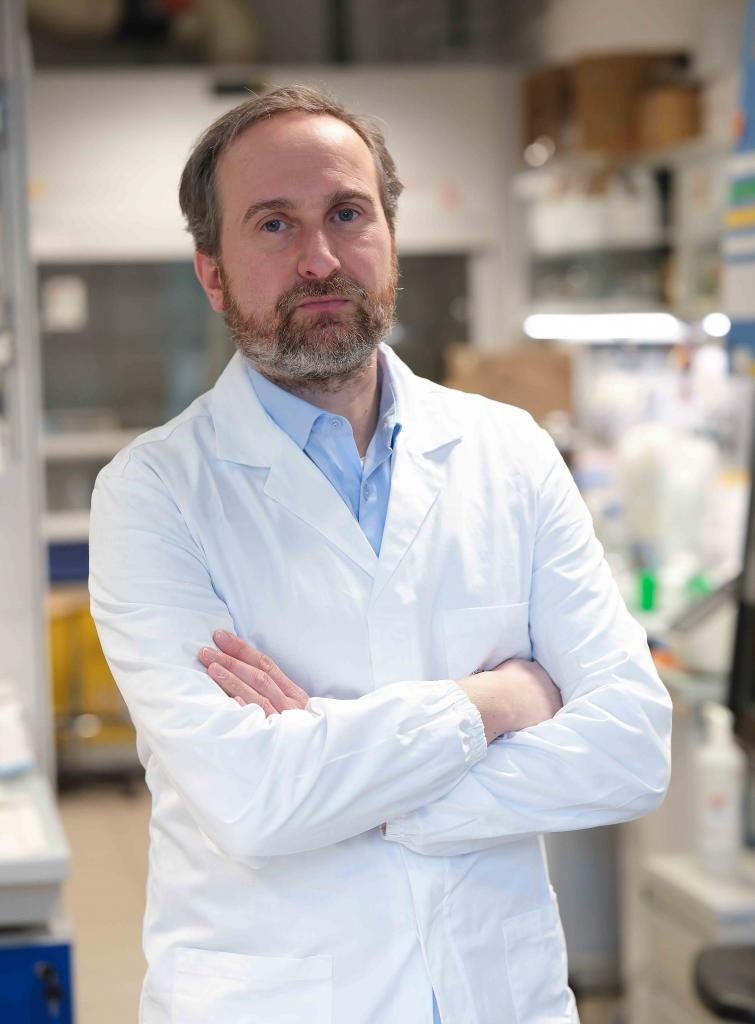
Prof. Luca Tiberi
© University of Trento; photographer: Federico Nardelli
“It is like studying what happens in vivo in a tumor avatar, with the advantage that you can verify the effectiveness of therapies without having to test them directly on sick children,” explains Luca Tiberi, professor of the Department of Cellular, Computational and Integrative Biology of the University of Trento and project coordinator. The result is expected to have a positive impact on the international scientific and clinical community because it opens up unexplored possibilities.
Patient-derived organoids (PDOs) for cancer research, also called tumoroids, are generated from biopsies and can be used as models to understand the different responses to drugs. The 3D model accurately reproduces the human environment and represents a predictive tool for oncological pharmacological research because it maintains the molecular characteristics of the original tumor to be studied.
The research coordinated by Tiberi focuses on ependymoma and medulloblastoma, which are among the most common and aggressive malignant pediatric brain tumors. “Biopsy-derived tumoroids, preserve the phenotypic and structural complexity of the disease that is lost in 2D cultures and at the same time maintain a better cellular heterogeneity, which is lost in organoids derived from induced pluripotent stem cells to create disease models,” explains Luca Tiberi.
He continues: “The organoids maintain the complexity of the tumor and therefore we can test different therapies for a broader pharmacological screening. The bulk of the work is done here at the Cibio Department by a close-knit group of young PhD students who give their dedication and time to advance research.”