
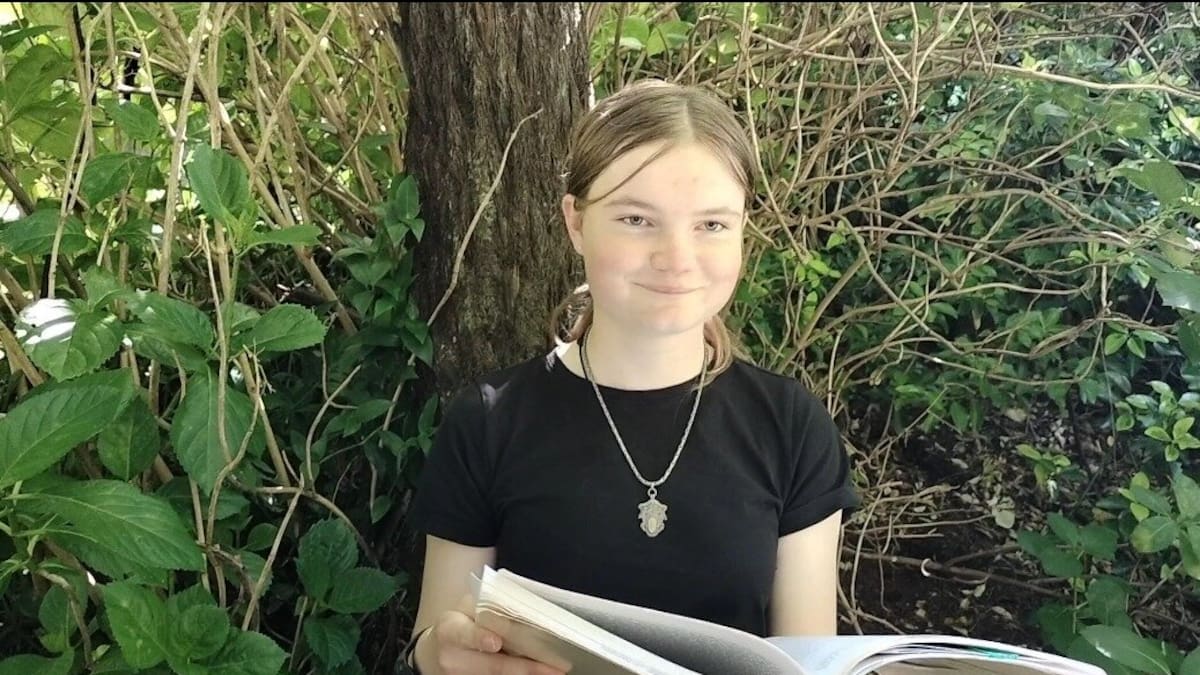
Lexie will spend three weeks in Turkey, including Anzac Day.
To apply, students had to be descendants of someone who served in the Gallipoli campaign.
They then completed a research project linking their ancestors’ experiences to their own lives.
Lexie discovered her great-great-great-grandmother Ellen Knight – Herbert, George and Douglas’s mother – had kept all their letters in a box.
From left: Herbert, George and Douglas Knight. Photo / Supplied.
She immersed herself in the project, finding it deeply personal.
Much of her time outside school was spent gathering stories from five generations of family members.
“I’ve been reading about World War I since I was 4 years old.”
One of Lexie’s favourite books is 1915: Wounds of War by Diana Menefy, which tells the story of the New Zealand hospital ship, Maheno, at Gallipoli.
Discovering George served on the same ship made familiar stories feel closer.
As she prepared for her trip, Lexie admitted she was nervous, having never been away from home.
At the same time, she was excited to experience a new culture.
She hoped the trip would allow her to visit Herbert’s grave, who died in the second battle of Krithia at Cape Helles, Gallipoli.
Lexie said she saw the trip as an important way to learn about the war outside of a classroom.
Lexie found it special to find out how much of their lives was still relatable today.
“George, he really loved books, and he was a librarian and stuff, and that’s exactly like me.”
Award recipient Lexie Knight will spend three weeks in Turkey over Anzac Day. Photo / Supplied
Her mother, Beth Knight, said she was immensely proud.
Lexie’s family encouraged her to pursue the opportunity.
Since then, they had watched her throw herself into the undertaking, even learning Turkish.
“I don’t think you could embrace it any more than she has.”
AFS Intercultural Programs marketing manager Linda Rotaeche said the organisation’s mission had stayed the same since its’ founding in 1947.
It was established by former World War II volunteer ambulance drivers who wanted to continue promoting peace across nations.
“The idea is very simple. The more we know each other, the more we understand each other, the less likely we are to go to war with each other.”
She said the mission felt especially relevant today.
“Promoting peace is still as important as ever, if not more important.”
The upcoming exchange will take students through Istanbul, Ankara, Izmir, and Canakkale, staying with volunteer host families.
They will visit historic sites and take part in community events.
“Just see a little bit of the everyday rather than just the tourist highlights.”
On April 25, they will visit Anzac Cove and attend the New Zealand Anzac service.
Rotaeche, who completed her own exchange 30 years ago, said the experience stayed with you.
She said students returned more mature, resilient and confident – qualities that could not be taught in a classroom.
“It really does define you because you learn so much, not just about another country and culture, but also about yourself.”
AFS planned to continue the Gallipoli Award and offered a wide range of other scholarships for its exchange programs.
In the past three years, the organisation has awarded more than $430,000 in scholarships.