
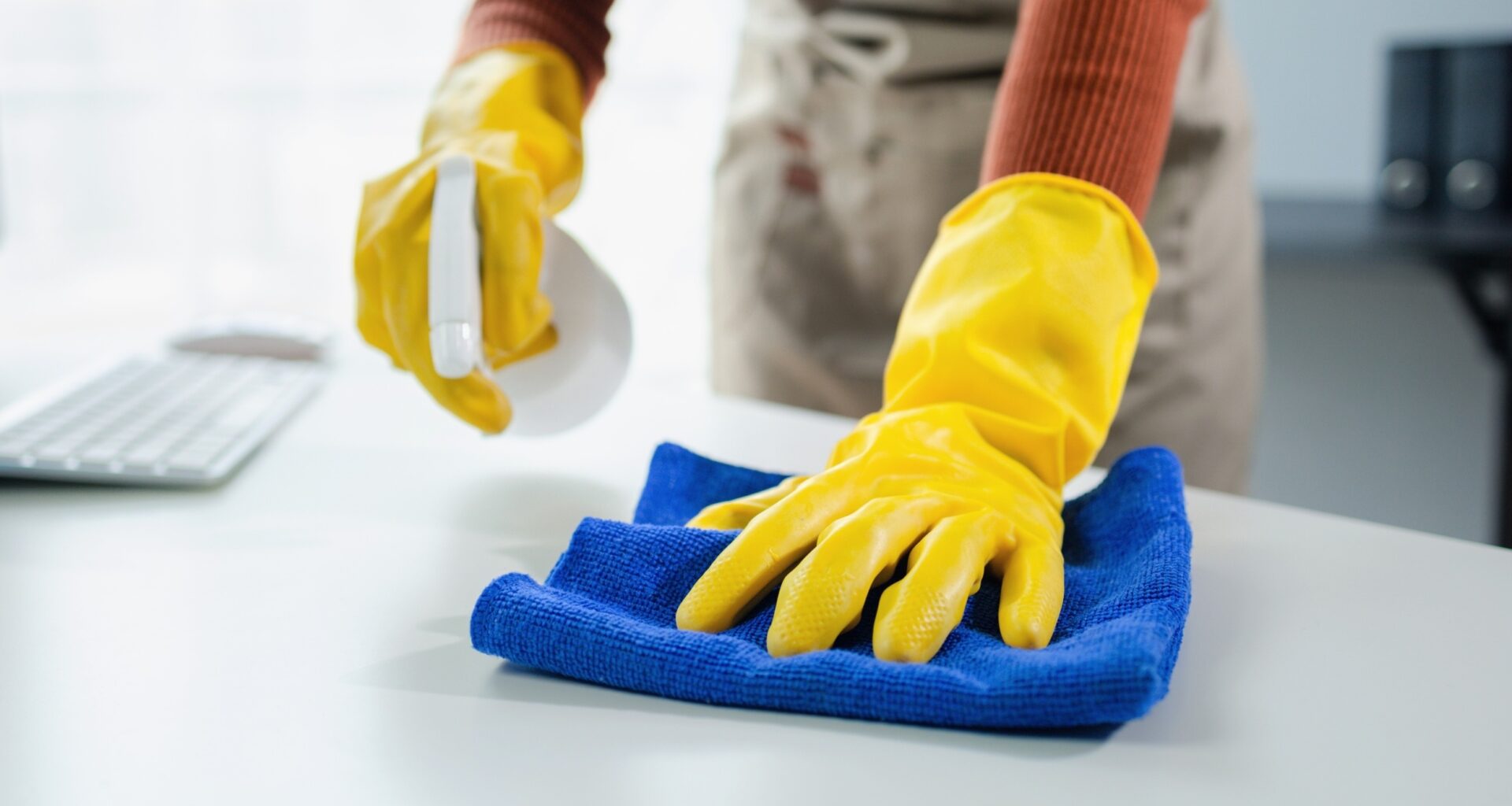
Spray disinfectants are everywhere – kitchens, bathrooms, schools, and hospitals – and most of us use them without a second thought.
But new research suggests the way we use these cleaners may matter more than we realize. In lab tests, breathing in common cleaning chemicals caused far more lung damage than swallowing the same substances.

The findings don’t mean people should stop disinfecting, but they do raise new questions about a major gap in safety assumptions – especially when it comes to what happens once those chemicals are sprayed into the air.
What happens after spraying
In mouse experiments, the damage appeared at doses far lower than those associated with swallowing studies.
Gino Cortopassi at the University of California, Davis (UC Davis) tied the injury to ingredients used in common disinfectants.
Blood concentrations reached the same general range previously reported in humans, linking lung exposure to the chemical burden already detected outside the laboratory.
That overlap does not settle human risk, but it makes the route of exposure the key question the rest of the story must answer.
More than just surface cleaners
These disinfectants belong to a group called quaternary ammonium compounds, or QACs, which are commonly used in cleaning products.
On their own, they don’t easily turn into a gas. But when sprayed, they break into tiny droplets that can be breathed in and reach deep into the lungs.
QACs aren’t just in cleaners, either. They’re also found in products like herbicides, nasal sprays, mouthwashes, dryer sheets, and fabric softeners, which means people may be exposed more often than they realize.
That widespread use has raised concerns. One study found QACs in 80 percent of people tested, with higher levels linked to reduced energy production inside cells.
Tracking exposure in blood
The new research found that levels of these chemicals in the blood dropped quickly after exposure. This suggests they move fast – entering through the lungs and then spreading into the bloodstream.
Because of this, timing matters. If blood is tested too late, exposure may appear low, even if levels were much higher shortly after inhalation.
While mouse studies can’t fully predict human risk, they do help explain how sprayed cleaners can move from the air into the body.
Some disinfectant sprays are more harmful
The study also found important differences between chemicals and between individuals.
One ingredient, didecyl dimethylammonium chloride, proved more harmful than benzalkonium chloride when both reached the lungs at the same dose.
It caused more deaths in mice and led to higher levels of protein and debris in lung fluid – clear signs of greater damage to the air sacs. Immune cells also rushed in more quickly, and later tissue samples showed more swelling and disruption.
These differences suggest that products with similar labels may not carry the same risks. The researchers also found that male mice were more likely to die than females at the same exposure levels.
Blood data offered one possible explanation. Female mice appeared to move benzalkonium chloride out of the lungs and into the bloodstream faster, which may reduce how long the chemical sits in lung tissue and causes damage.
However, this pattern did not fully explain the effects of the second chemical, meaning sex-based differences are still not completely understood.
How lung damage begins
Swallowing these compounds leaves much of them outside the body, but inhalation is very different. When sprayed droplets reach the lungs, they come into direct contact with delicate tissue built for rapid gas exchange, making the lungs especially vulnerable.
Researchers suspect the damage involves mitochondria – the parts of cells that produce energy. These disinfectants appear to disrupt those systems.
When cells lose energy, they struggle to maintain protective barriers. This can allow fluid and immune cells to leak into lung tissue, increasing inflammation and injury.
While this process hasn’t been fully confirmed in humans, it helps explain why inhaled exposure behaves so differently from ingestion.
Real-world data points in the same direction. In healthcare settings, QAC exposure has been linked to a 7.5-fold increase in physician-diagnosed asthma.
Another study of 73,262 U.S. nurses found that high exposure to disinfectants was associated with chronic obstructive pulmonary disease (COPD).
These studies don’t prove the same effects occur in households, but they suggest repeated inhalation may carry real respiratory risks.
Questions still remain
Human exposure usually happens as low-level repeats over months or years, not as one acute dose delivered to mice.
Timing matters too, because the chemicals dropped quickly in mouse blood and could look smaller if sampling came late.
Researchers also tested only two ingredients, so other members of this chemical family may behave differently in lungs.
Those gaps keep the study from settling human risk, yet they also define the experiments that now matter most.
The risk of airborne cleaners
Airborne droplets are the key shift, meaning the same disinfectant can pose a very different risk when sprayed instead of poured or wiped.
That distinction becomes especially important in homes, schools, hospitals, and transit systems, where repeated cleaning can keep those droplets circulating in shared indoor air.
“We have to question whether we really want to have all of these QAC-based disinfectant sprays in the environment,” said Cortopassi.
The findings don’t suggest stopping disinfection altogether, but they do challenge the long-held assumption that inhaled exposure is minor.
Instead, cleaning chemistry begins to look less like a simple surface issue and more like an airway exposure problem driven by airborne droplets.
Future studies will need to focus on chronic, human-relevant exposure levels. Still, this mouse research already makes it difficult to dismiss the risks associated with spraying.
The study is published in the journal Environmental Science & Technology.
—–
Like what you read? Subscribe to our newsletter for engaging articles, exclusive content, and the latest updates.
Check us out on EarthSnap, a free app brought to you by Eric Ralls and Earth.com.
—–