
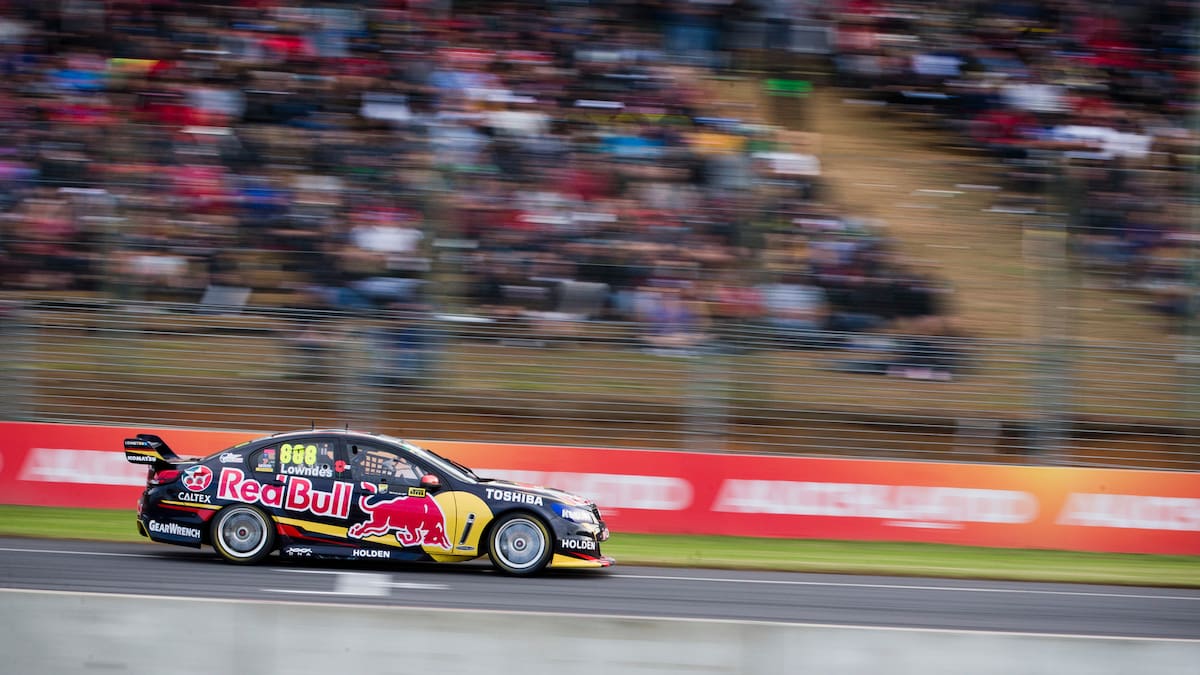
Taking the race to Wellington was a smart move, like moving Parliament there in 1865.
Come to think of it, at times it felt a bit like an automotive version of politics.
A lot of going around in circles, plenty of noise, and in the end, you just knew there’d be a crash followed by a fair bit of blaming someone else for it.
So how do we give the V8s a proper Kiwi flavour today? Turn it from Bundaberg Rum into Hokey Pokey?
It starts with going back to the racing roots. To what racing was built on. A simple idea: “Win on Sunday, sell on Monday”.
The phrase came out of the States in the 60s, and the logic was hard to argue with.
If it was good enough to win a race, it was good enough for your driveway.
You’d watch it go around on Sunday, then by Monday, you’d somehow talked yourself into owning one.
These days, with all the technology involved, that connection is a little harder to make. The days of walking into your local dealership and buying a car you’d watched race on Sunday are pretty much gone.
So instead of trying to make the cars more like road cars, I think we go the other way and make the race more like the road.
A proper Kiwi driving experience.
Let’s start with the chicane.
Traditionally, it’s there to slow the cars down. With over 500 horsepower in each, this is important.
A neat little sequence of corners designed by engineers who know exactly what they’re doing.
So instead of a chicane, we introduce roadworks on the main straight.
A great Kiwi way to slow traffic to a crawl.
Cones slightly too close together, a temporary speed limit that nobody quite understands, and at least one sign suggesting the work will be completed by April 2007.
And the best part is this innovation wouldn’t require much re-engineering of the track, just a casual detour through the gravel trap with a sign warning “No road markings”.
We could also bring in the judder bar. Not one of those gentle ones either. A proper set that makes the car sound like it’s about to disassemble itself.
Then there’s the pit stop.
Now, traditionally, this is all about speed and precision. Tyres off, tyres on, fuel in.
But I think we can improve on that.
Alongside the tyre change, the crew should be required to open the boot and locate the space-saver wheel, which, as we all know, is never just sitting there ready to go.
It’s under something; many things. Usually, a chilly bin, a bag of tools, a couple of old jackets, a length of rope, a dog toy for a dog you don’t own, and something in a plastic container that nobody wants to open but nobody is prepared to throw away either.
Once located, the space saver is fitted, and the rest of the boot is packed back in, in roughly the same order, or at least in a way that allows the boot to close.
The car must then complete at least three laps on the space saver.
Perhaps the price of fuel could change on each lap, to add an element of tactical uncertainty. Photo / Michael Craig
Fuel stops also need a bit of a rethink.
While the car is being fuelled, the driver should be required to pop into the pit stop shop and grab a pie and a V.
Now this process might sound simple, but life is not simple when you are on the road, especially when you see a vindaloo pie and forget that the danger is very much in the second half of that name.
Drivers must also consume at least part of the pie before rejoining the race, while trying not to burn the roof of their mouths.
And because we’re aiming for realism, especially in the current climate, the price of fuel should change every lap.
A big sign on the side of the track, numbers flicking over just as the drivers go past. Do you pit now, or do you risk another lap and hope it drops a couple of cents?
It’s a strategy, but with a real sense of financial anxiety.
We could also introduce a passing lane.
On paper, it’s the perfect opportunity to overtake calmly and safely.
In reality, it turns into a drag race, everyone accelerating at once until the merging lane sign appears, and the whole thing becomes a live demonstration that two into one doesn’t really work.
And, just to make the race truly New Zealand, at some point, the drivers would round a corner and be met by a farmer waving them down while a team of dogs and farmhands move a flock of ewes across the track.
It might ruin a few race strategies, but the Instagram potential alone, #onlyinnewzealand, would have drivers diving into their race suits for their phones.
Now I’m not saying all of these ideas are fully thought through.
There may be a few minor logistical challenges. But if we’re going to host the V8 Supercars, we may as well make it properly Kiwi.
And while I’m genuinely excited to have the V8 Supercars back in New Zealand, there’s still a part of me that remembers those Wellington street races.
The noise, the atmosphere, the way the cars tore around the city.
And before you say it, yes, I could go back to Hamilton and experience something similar.
So once again, in the words of Murray Walker, go, go, go!