
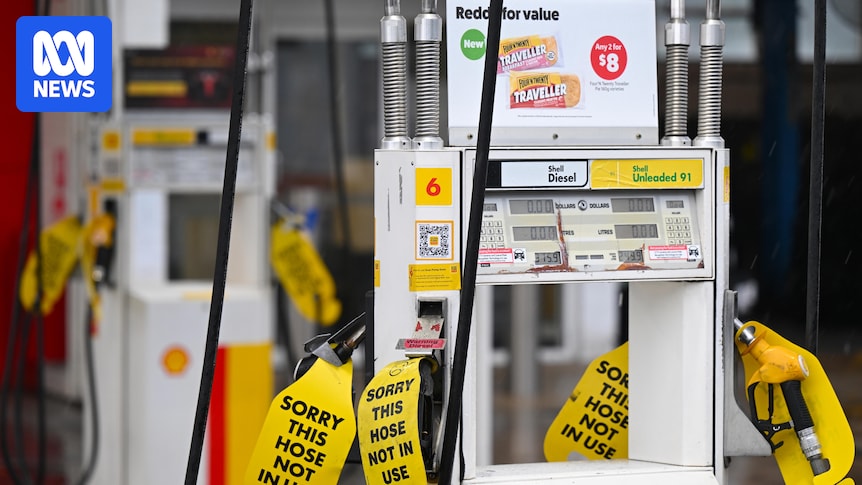
Two highly respected Australian economists have warned about “stagflation” in recent weeks.
Professor Bob Gregory, a former Reserve Bank board member (from 1985 to 1995), said he thinks we’re already seeing the early stages of stagflation in Australia.
How a global energy crisis can lead to stagflation
Dr Martin Parkinson, a former Treasury Secretary (from 2011 to 2015), said while he doesn’t think we’re seeing stagflation yet, there’s a real risk of it occurring.
They’re both pointing to the global oil crisis as the source of the problem.
They say the war in the Middle East has damaged the world’s energy supplies, disrupted supply chains, and pushed inflation into the global system to such an extent that the fallout will be immense.
“The forces that have been unleashed, and the consequences of this war, are going to have long-lasting effects,” Parkinson said last week.
Stagflation is already happening
Stagflation is a situation where your economy is stagnating and you’re dealing with high inflation (stagnation + inflation).
It is a damaging phenomenon that can be accompanied by rising unemployment and recession and a whole host of other problems.
If we’re hit by stagflation, it will be different this time
In the 1970s, many economies around the world experienced stagflation simultaneously, including Australia. It had many causes, but the oil price shock of 1973-74 was a major one.
Professor Gregory participated in the policy debates in Australia in the 1970s.
And a couple of weeks ago, the ABC’s Peter Martin invited Gregory onto his podcast, “The Economy, Stupid”, to talk about today’s oil crisis and the similarities with events in the 1970s.
You can listen to it here.
Could stagflation happen today?
“I think it will happen and it is happening,” Professor Gregory said.
“What we’re going to see going ahead is inflation’s going to go up a little bit, and unemployment’s going to go up.
“The question though is how big is stagflation going to be, and nobody at this point is thinking anything like the 1970s.
“It all depends on how long this oil price increase lasts.”
He said if the war in the Middle East ends promptly and oil prices don’t stay elevated for too long, the Reserve Bank will prefer to let the coming wave of inflation work its way through the system without worrying about it too much.
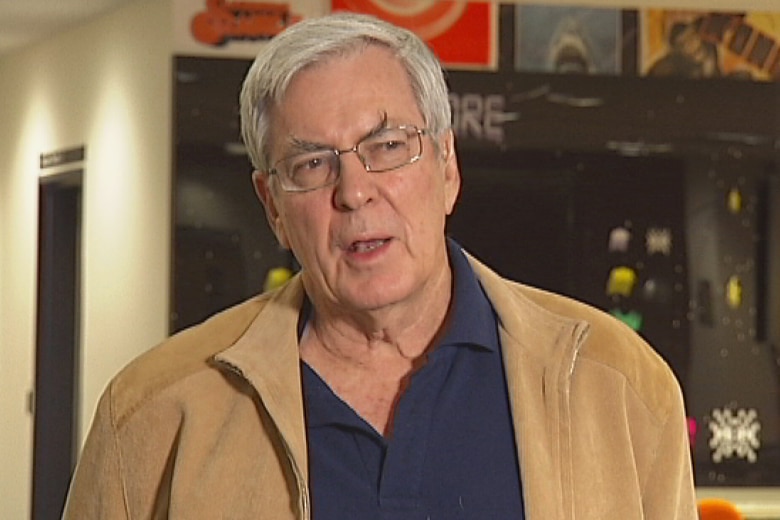
Emeritus professor of economics Bob Gregory says stagflation is already happening, but no one thinks it will be as bad at the 1970s at this point. (ABC News)
But if the war continues for a long time, and people have to adjust to much higher petrol prices for an extended period, that will be a different story, he said.
“If you read the Treasurer’s speech [from 19 March], he’s sort of well aware of that,” he said.
“And they’re doing model simulations in Treasury which give you both higher unemployment and higher inflation in the next two or three years.
“But so far the extent to which inflation is going up, and the extent to which unemployment is going up, are reasonably moderate. It all depends on how long this oil price increase lasts. That’s the big judgement to be made now.”
Professor Gregory made those comments two weeks ago.
On Monday last week, former RBA assistant governor Luci Ellis — now Westpac’s chief economist — then circulated a note to say that she thought the RBA would be lifting interest rates three more times from here: in May, June and August.
That will push the cash rate target up to 4.85 per cent (from 4.1 per cent currently).
Ms Ellis said the Albanese government’s decision to halve the fuel excise for three months would probably reduce the near-term outlook for inflation in Australia, but headline inflation would still hit 5.4 per cent in the June quarter.
She also forecast unemployment would rise to 5 per cent (up from 4.3 per cent currently) as our economy weakens.
The risk increases as the war continues
Speaking at the National Press Club on Wednesday, Dr Parkinson said he was also concerned that Australia’s economy would experience stagflation but he hoped it could be avoided.
“I don’t think we’re in a situation of stagflation today. But I do think there’s a risk, and I emphasise ‘risk’,” he said.
“It’s not guaranteed that it’s going to happen, but there is a risk that we could find ourselves in that situation, and that risk goes up the longer the conflict goes on.”
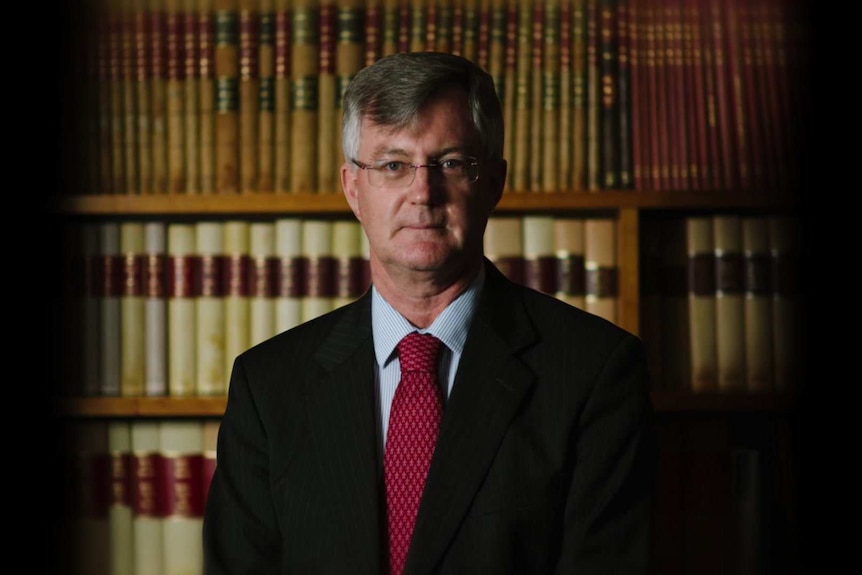
Dr Martin Parkinson, former Treasury Secretary, says the risk of stagflation is increasing as the war in the Middle East drags on. (ABC News)
He said it was also impossible to know what the world’s energy and trade patterns would look like on the other side of this war, because it depended on how the conflict is resolved and what lessons countries learn from it.
“The forces that have been unleashed, and the consequences of this war, are going to have long-lasting effects,” he warned.
The next day, on Thursday, US president Donald Trump then announced that his war against Iran had been won, but that it would probably last another couple of weeks, and that he also planned to bomb Iran back to the “stone ages”.
He also said he wouldn’t bother trying to re-open the Strait of Hormuz to the passage of oil tankers because once the war ended the strait would simply open up “naturally.”
His rambling and confusing announcement sent Australia’s stock market tumbling into negative territory, and global oil prices higher.
New crises, different ideas
In economic crises, Australians often wonder if we can manage inflation with a variety of policies instead of always relying on the blunt instrument of interest rates.
And truth is, policymakers do experiment during major crises — because major crises often have new and unfamiliar dynamics that demand novel solutions by necessity.
Why fuel prices could go much higher
During stagflation in the 1970s, the Fraser Government (1975 to 1983) tried to eradicate high inflation in Australia by controlling the rate of growth of the money supply.
Under the influence of Milton Friedman and “monetarism,” the federal Treasurer (supported by Treasury and the Reserve Bank) set annual growth targets for a monetary aggregate called “M3.”
That period of monetary targeting lasted for nearly nine years (from April 1976 to January 1985) before it was abandoned.
In 1975, when the British economist Joan Robinson visited Australia, she was asked how she thought Australia could escape stagflation.
She said Australia would probably need a new industrial relations climate to generate cooperation between unions and employers to stop wages and inflation chasing each other higher.
A better way to manage inflation
That type of “incomes policy” was later adopted by the Hawke Labor government in the 1980s in the Prices and Incomes Accord — and it was credited with helping to finally kill the long tail of stagflation in Australia.
Or go back further to the 1950s.
Last week, the independent economist Saul Eslake reminded ABC listeners that Liberal Prime Minister Robert Menzies chose to tackle the extremely high inflation in 1951 and 1952 (which had been sparked by the “Korean War Boom”) by lifting taxes.
Mr Menzies told parliament in 1951 that he planned to collect enough tax to produce a budget surplus (so he’d be taking more money out of the economy than he’d be spending into it) in a deliberate effort to suck inflation out of the economy.
He increased company tax, income tax, excise duty and sales tax, and he removed special depreciation allowances.
“A deficit budget in an inflationary period like this would be a scandal,” Menzies argued at the time.
“It would expose any government to the accusation that it did not care about inflation because it was prepared to pour 50,000,000 pounds of new money into the existing supplies and so aggravate the inflation.
“Should taxation be increased? [And] if it should, are the increases fairly distributed? I will undertake to demonstrate that the answer to both these questions ought to be, ‘Yes.'”
Windfall tax on gas exports
Will we see some different inflation-fighting ideas today?
Last week, the Northern Territory government revived a 77-year-old law to force fuel retailers to provide their “full cost structure” to prove that they’re not ripping off motorists.
Iran war ‘worst’ time for tax, say gas companies
There are also growing calls for Australia to introduce a 25 per cent tax on the value of our gas exports.
Commonwealth Bank chief executive Matt Comyn says such a gas tax (he suggests a rate between 15 and 25 per cent) could be used to fund business tax incentives to boost productivity in the economy.
With the budget just over a month away, will Treasurer Jim Chalmers be prepared to experiment with some novel approaches to try to head off stagflation, rather than leaving it to the Reserve Bank to use the only instrument it has… interest rates?
And will his boss, Anthony Albanese, be brave enough to let him try?