
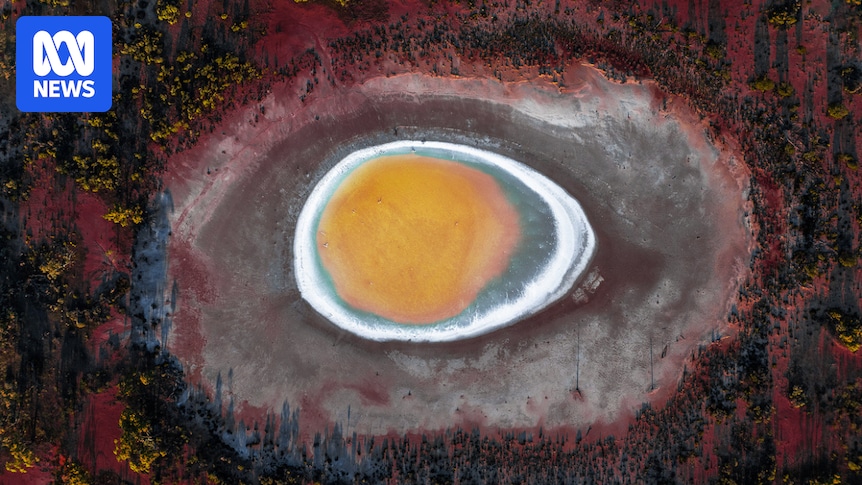
Scott McCook hunts “eggs” from the air, but not the traditional Easter kind.
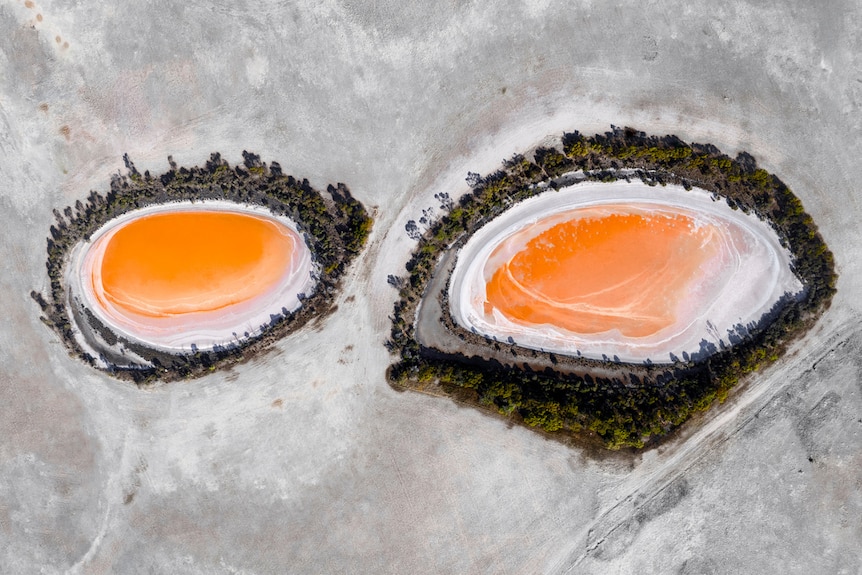
He’s spent eight years photographing the changing hues of salt lakes in WA’s Wheatbelt, hoping to find pools of yellow and orange left behind as the water begins to evaporate.
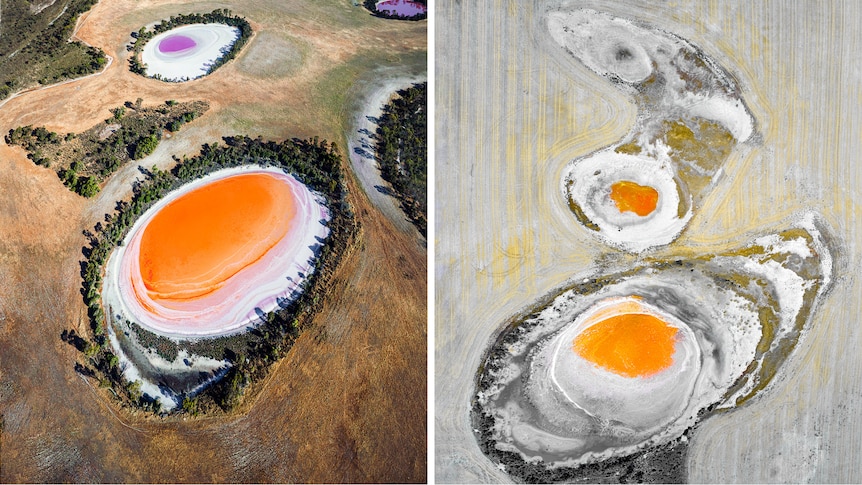
Scott McCook has been photographing egg-like lakes for eight years. (Supplied: Scott Jon McCook)
Mr McCook discovered the “eggy” phenomenon when he first began photographing larger salt lakes from helicopters and light planes.
“Every now and then, I’d look beyond the lake and you’d see these little isolated round lakes,” he said.
“They always just fascinated me.”

Scott McCook specialises in aerial photography. (Supplied: Scott McCook)
Long drives
The Perth-based photographer said the small lakes usually appeared in wheat and canola fields.
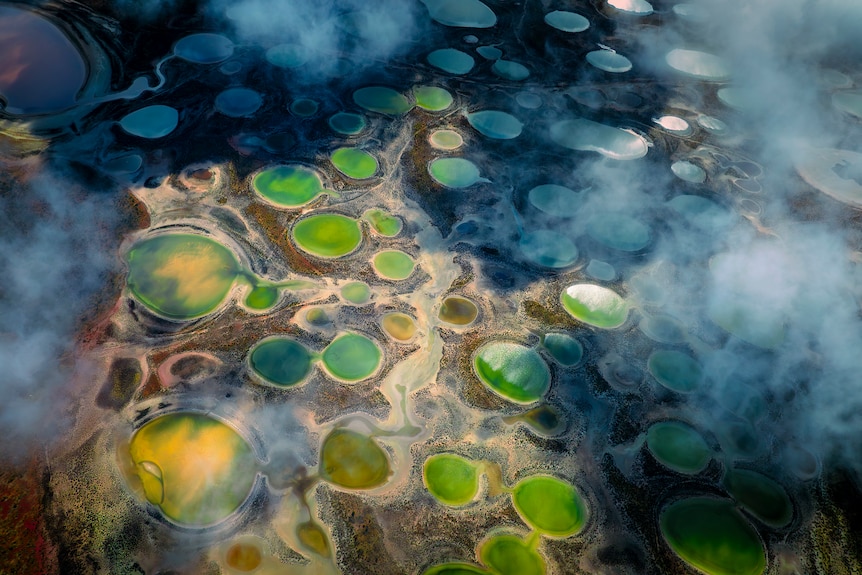
The lakes often start green then become yellow and orange over time. (Supplied: Scott Jon McCook)
“They fill in winter … they start green, and then as they start to evaporate, these colours start shifting,” he said.
Mr McCook uses near real-time satellite imagery to scope out potential locations.
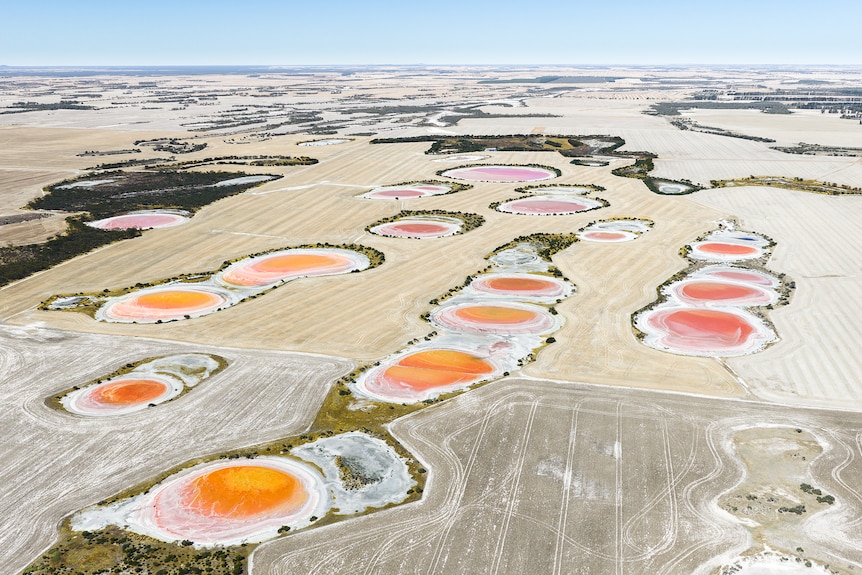
The lakes can also appear in groups. (Supplied: Scott Jon McCook)
“Once I was sort of armed with that knowledge, I was able to drive thousands and thousands of kilometres because they’re in the most random spots,” he said.
“I am addicted to egg hunting.”Hunting natural hues
The lakes’ natural colours usually transition from a “rotten egg” green to orange or yellow.
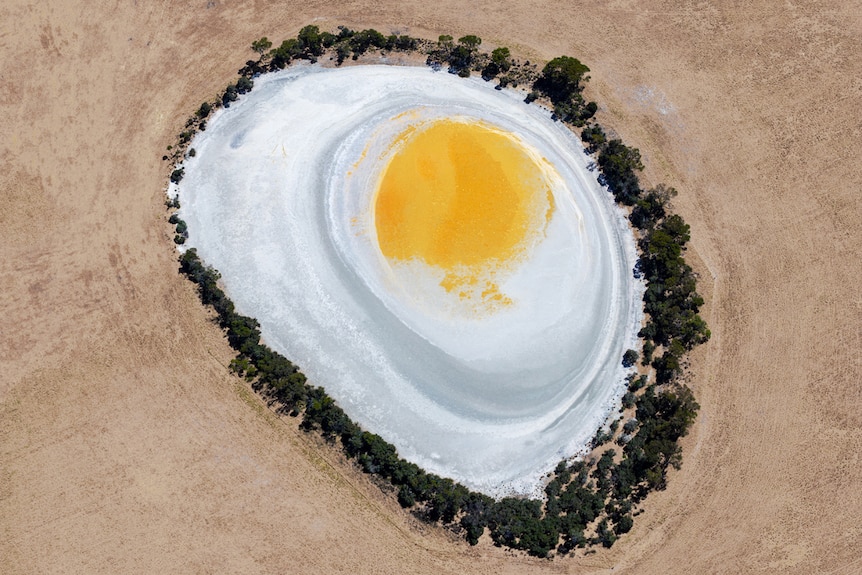
“A lot of the poached egg, fried egg ones are like that,” Mr McCook said.
Scott McCook says the egg shape occurs as water evaporates from salt lakes. (Supplied: Scott Jon McCook)
“The surrounding part that looks like the sort of white of the egg is the area that’s already evaporated and gone white.
“And then the little area in the middle is the last of the water that’s left.”
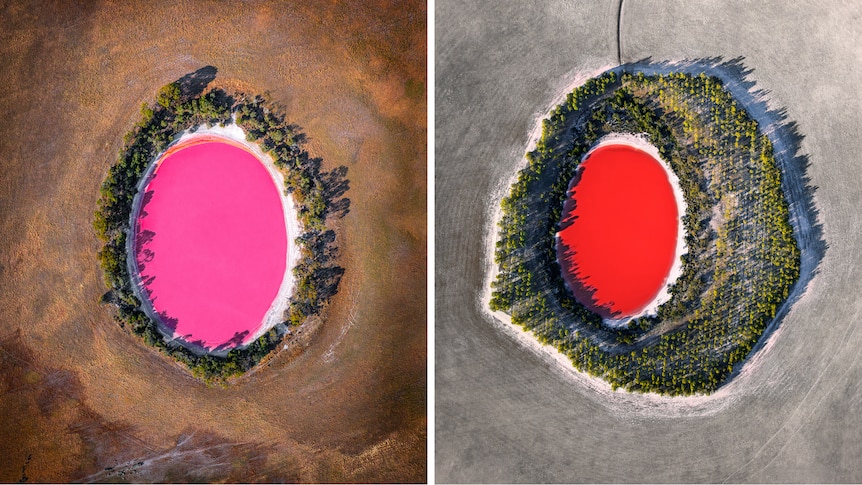
Scott McCook says he occasionally “shifts” the vibrancy of naturally occurring colours in his images. (Supplied: Scott Jon McCook)
Mr McCook occasionally edits the images to make some of the colours more vibrant, especially photos of the pink and red lakes, to make them look “like pretty little Easter eggs”.
A creative concreter
A concreter by trade, Mr McCook pursues his passion for photography in his spare time.
“That’s where my photography stemmed from, I wanted to escape the city and just go and do landscape photography,” he said.

Scott McCook’s photography has earned him international recognition. (Supplied: Scott McCook)
But he didn’t tell people about his blue-collar job when he first started selling his images, worried about a perceived stigma.
“I hid that I was in construction because I felt like, in the artistic circles and everything, you weren’t taken as seriously,” he said.
“As I’ve got older and more into this, I’ve realised that’s a really silly way to look at it.”
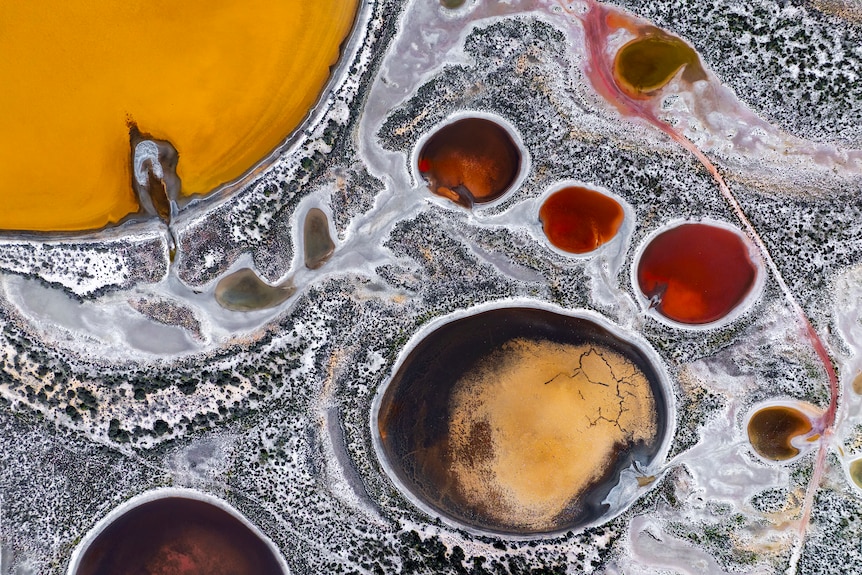
Not all the lakes have a distinct egg shape. (Supplied: Scott Jon McCook)
Mr McCook said he hoped other people would be inspired by his photos of WA’s natural beauty — from its eggy lakes to rolling fields.
“It was only when I took up aerial photography that I realised, ‘Holy cow, we are sitting on a gold mine,'” he said.
Scott McCook says he hopes others can find inspiration in WA’s landscapes through his photos. (Supplied: Scott Jon McCook)