
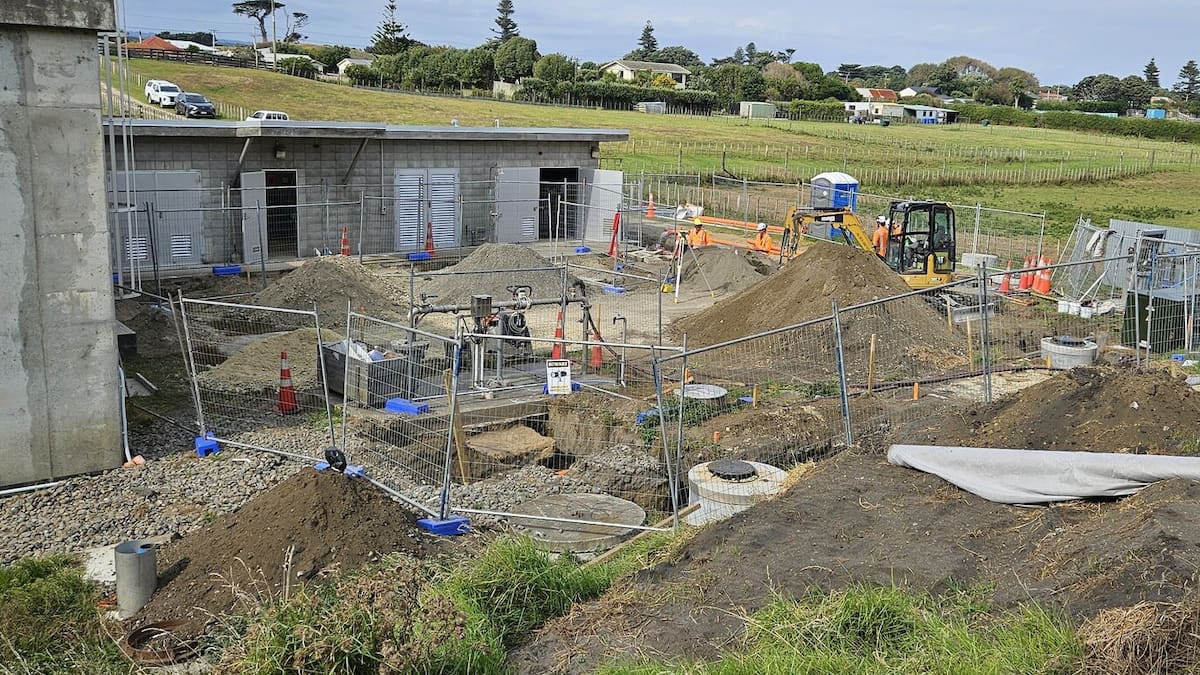
Council spokesman Gerard Langford said the upgrade would achieve “several things”.
New installations include biologically activated carbon filters, copper and carbon dioxide dosing systems, ultraviolet (UV) disinfection, chlorine gas disinfection and storage, and improved filter cleaning and monitoring systems.
These will lower ammonia levels in the water and help maintain chlorine levels required under the new water quality monitoring and reporting rules.
Pātea’s water supply comes from deep underground bores.
Langford said the bore water was “very safe” and “really good-quality water” because of natural filtration.
The council was not required to further filter the bore water before the most recent updates, he said.
In September, Taumata Arowai directed the council to issue a boil-water notice in Pātea after a routine test detected possible E. coli bacteria in the town’s water supply.
The advisory was lifted two days later after further testing found the water supply was safe.
“Nothing had actually changed with the water but, because we weren’t putting it through chlorination or a UV filter, we had to put that boil-water notice on,” Langford said.
The council tested the water supply weekly.
“It wasn’t because we’d found anything in the water. It was because we didn’t have the UV disinfection.”
He said UV filtration was installed before the main upgrade work to avoid more boil-water notices.
Water restrictions were issued in Pātea on February 10 after one of the two pumps used to extract water from the underground bores broke.
After repairs were completed on the second pump in early March, drought levels across the South Taranaki District reached the threshold for water restrictions.
District-wide level one water restrictions are in effect until further notice.
“It was quite confusing to explain,” Langford said.
“That we were going from level three [water restrictions] in Pātea to level one everywhere.”
The council uses a level one to three water restriction system, with level three banning all non-essential water use.
Under current level one restrictions, residents are asked to avoid non-essential water use, including water blasting and car washing, and to fix leaks.
Households should alternate using outdoor hoses between 8pm and 6am by odd house numbers on odd calendar days and even numbers on even days.
Unattended hoses, pool filling and lawn watering are banned under level one.
More information on the treatment plant upgrade and water restrictions is available on the council’s website and Facebook page.
Erin Smith is a multimedia journalist based in Whanganui.