
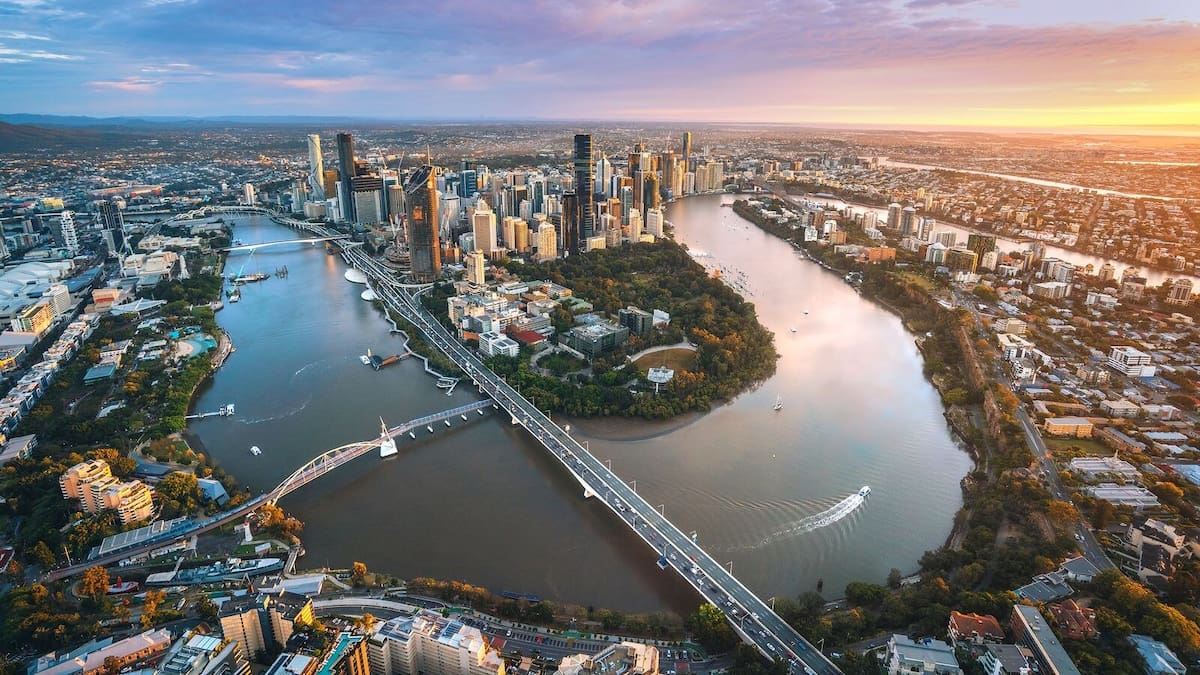
Although the current Middle East war may have some questioning Tel Aviv’s desirability, Deloitte said all these cities were among the world’s most liveable, with good green spaces, and challenges from increasingly volatile weather.
And Oxford’s Global Cities Index 2025 ranked Auckland 85th and Brisbane 23rd.
The Herald visited recently and met with the Brisbane Economic Development Agency (Beda) to get a steer on some of the city’s secrets to success.
Vibrant hospo, music and tourism sector
Brisbane’s hospitality sector grew 30% since 2020, faster than any other Australian capital.
The city has vibrant restaurants, especially along the riverbank, such as Howard Smith Wharves, and in redeveloped parts of South Bank and nearby West End.
Across the river, Fortitude Valley might have long been viewed as a red-light district, but the New York Times said it had one of the world’s highest concentrations of live music venues.
Lord Mayor Adrian Schrinner previously said the city was capitalising on its subtropical climate, lifestyle precincts like Howard Smith Wharves and access to natural assets, including Moreton Island.
Critical mass from domestic and international migration
Brisbane has been Australia’s fastest-growing major city for most of the past 10 years.
It also added 274,000 jobs from 2020 to 2024, according to last year’s Brisbane State of the City report.
As migrants arrive, they drive demand for professional services, and a big new cohort of white-collar professionals gets established.
Better networking
Beda says it helps business leaders meet up for a range of interactions, including off-the-record chats.
Instead of business leaders preaching on LinkedIn or criticising each other publicly, some meet face-to-face to discuss shared goals and big issues facing the city.
Where collaboration is possible, leaders collaborate. Where not, they stay in their lane.
A can-do attitude on infrastructure
Infrastructure projects in New Zealand might often be met with scepticism. For the Olympics, Brisbane will have 17 new and upgraded facilities alongside multibillion-dollar transport infrastructure upgrades.
The city’s lord mayor has said that with more than A$100 billion ($119b) in major projects and a $328b economy projected by 2041, the city was focused on being one of the “most connected” in the world.
Beda said that included more than $13b in “experience economy” infrastructure, from new entertainment venues and sports facilities to tourism attractions.
Howard Smith Wharves near Story Bridge have had extensive development in recent years. Photo / Beda
STEM research
Auckland’s State of the City report last year said many peer cities had increased the share of Stem (science, technology, engineering, and mathematics) research produced with industry partners over the past year, and universities in Brisbane were pulling ahead.
Brisbane over the past decade has also increased the share of its population with a tertiary education, helping build a more educated workforce.
Along with Copenhagen and Vancouver, Brisbane is ranked first among peers for top-rated university course offerings.
The Queensland capital’s civic leaders have described an inner-city “knowledge corridor” with 10 hospitals, nine research institutes, and nine universities.
The corridor stretches from Duttons Park’s Ecosciences Precinct and Princess Alexandra Hospital to Herston Biofabrication Institute and the Stryker R&D Lab, 7km north.
And its people have a generally positive view about the consistency of access to good schools.
As for those too young to go to university, Brisbane has 30% more childcare places available than other big Australian cities.
And a Deloitte-Mitchell Institute study found the city had childcare fees 8% cheaper than other major Australian capital cities.
The Herald travelled to Brisbane courtesy of Qantas, Beda and Moreton Bay Tourism.
Stay ahead with the latest market moves, corporate updates, and economic insights by subscribing to our Business newsletter – your essential weekly round-up of all the business news you need.