
The total rateable value for the district fell 2% since the last revaluation on September 1, 2022 to $42.76 billion.
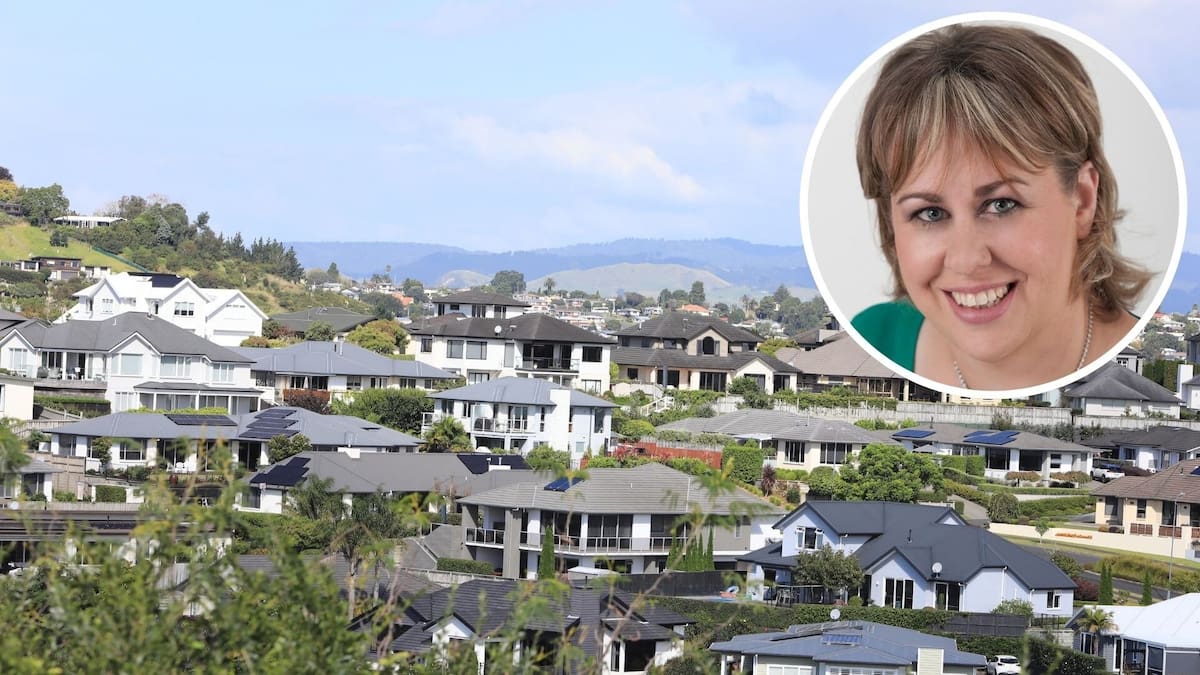
The average home value dropped 7% to $977,000 – leaving the seven-figure territory ($1.05 million) entered at the last revaluation, which happened a few months after the nationwide market peak.
Average residential land values decreased 9.1% to $574,000.
The residential market had remained relatively subdued, with more available vacant land putting downward pressure on land values, a council statement said.
“Lower-value properties have held up well, supported by continued demand from first-home buyers.”
Mid-to-high-value properties had been more affected by higher interest rates and tighter lending, the council said.
Change factors and looking ahead
Property Indepth franchise owner and valuer in Rotorua, Bay of Plenty and Coromandel, Adrienne Mikkelsen, told Local Democracy Reporting interest rates went up from 2022 to 2025, so fewer people could afford to borrow and buy.
“Higher interest rates resulted in difficult market conditions, and demand for property eased, resulting in lower prices.”
Houses sat on the market for longer, and higher stock led to price decreases.
Property Indepth franchisee in Rotorua, Bay of Plenty and the Coromandel, Adrienne Mikkelsen. Photo / Supplied
Mikkelsen said since the revaluation cut-off of August 2025, market activity had increased in most of the district’s market sectors.
First-home buyers were driving the market, mostly at the lower end.
“When this occurs, it tends to flow through to the next market sectors.”
Investors had become cautious and preferred properties with multiple income streams.
“If activity continues at strong levels, we may see an uplift in value levels; however, nowhere near the crazy price lifts early post-Covid.
“It will be interesting to watch the impact of the fuel crisis on activity, as it affects more than just petrol costs, but food and manufacturing, which will likely reduce the amount of disposable income available for mortgage repayments.
“In my opinion, we won’t know if we have a market recovery until we get past this, and the impact could be continued to be felt for the rest of the year.”
Residential homes across the Western Bay of Plenty have dropped in value by an average 7% since 2022, according to the district’s latest council valuations. Photo / Kelly O’Hara
She said places closer to Tauranga tended to hold their value better because commuting was easier.
More distant areas or lifestyle blocks were more sensitive to fuel and travel costs, and buyers were less willing to take on properties in need of extensive upgrades.
She said this was why some areas fell more than others.
Rates impact
The council’s corporate services acting general manager, Matt Potton, said revaluations did not necessarily mean an increase or decrease in rates, as this depended on how your property’s value changed compared to everyone else’s.
Revaluations reflected the likely selling price of a property, excluding chattels, at the effective revaluation date – in this case, August 1, 2025.
Market movements after this date were not included.
“Overall, the latest revaluation reflects a general softening in property values across much of the district, with stronger growth in high-demand areas, particularly the Rangiuru Business Park, which has seen significant development since the previous revaluation,” he said.
The rates impact would not be known until the council set the 2026/27 rates in June. The council’s draft 8.13% average increase is out for public feedback.
Matt Potton, Western Bay of Plenty Council chief financial officer. Photo / John Borren
The amount of rates needed would be divided across all ratepayers, with property value “only one of the elements used to work out the amount of rates you pay”.
Generally, properties with an above-average valuation movement would pay higher rates, and a below-average movement may mean paying less.
Sector trends
QV Upper North Island regional manager, Joe Holmes, said the district followed general market trends observed across the wider Bay of Plenty and Waikato regions.
“Well-presented, modern homes continue to attract stronger inquiry and maintain value more effectively than the wider market, whereas older or less well-maintained properties are generally recording more pronounced value declines,” he said.
There was stronger inquiry for smaller, elevated and well-located lifestyle properties with manageable land areas, good access and a realistic commute to Tauranga or other job centres.
Housing closer to Tauranga has generally held its value better, with easier commuting helping support prices in nearby Western Bay suburbs. Photo / Kelly O’Hara
Over the revaluation period, the average capital value of lifestyle properties with dwellings declined 9.9% to $1,436,000, while the corresponding land values dropped 14.6% to $770,000.
Holmes said there was less interest in larger holdings needing lots of investment.
Commercial capital values registered little change and good-quality, well-located industrial property continued to attract solid inquiry.
Commercial/industrial values varied by location. Katikati showed minor positive growth, while the Te Puke retail market declined.
“An outlier is certainly the new Rangiuru Business Park,” Holmes said. This was reflected in the southern rural area’s 36.9% average increase in capital value and 73.1% for land value.
Rural and lifestyle properties in parts of the Western Bay of Plenty have recorded some of the sharpest value declines, reflecting higher travel costs and reduced buyer demand. Photo / Kelly O’Hara
For horticultural and rural properties, values for most kiwifruit properties softened between revaluations, but the market had strengthened since August.
Pastoral and dairy property values generally eased slightly, although this varied by location and quality.
Objection deadline
All New Zealand councils must carry out a revaluation at least every three years for rates calculations.
These are based on an analysis of recent comparable sales. Many properties are also physically inspected, particularly those where building consents were issued during the past three years.
The valuations are independently audited by the Office of the Valuer-General.
Any objections to the revised valuations must be lodged by April 24.
– LDR is local body journalism co-funded by RNZ and NZ On Air.
Ayla Yeoman is a Local Democracy Reporting journalist based in Tauranga. She holds a Bachelor of Arts majoring in communications, politics and international relations from the University of Auckland, and has been a journalist since 2022.