
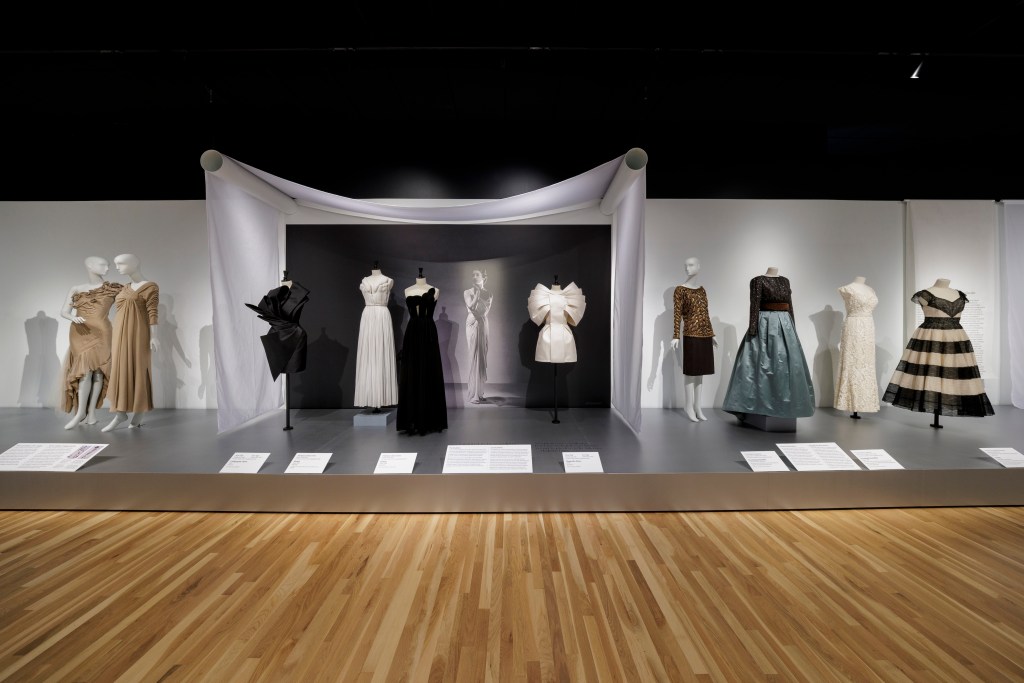
It’s always exciting when a museum presents an exhibition culled from its own collection that is centered around works that have never been on public display before. And exciting is a good way to sum up the Denver Art Museum’s new “Conversation Pieces: Stories from the Fashion Archives.”
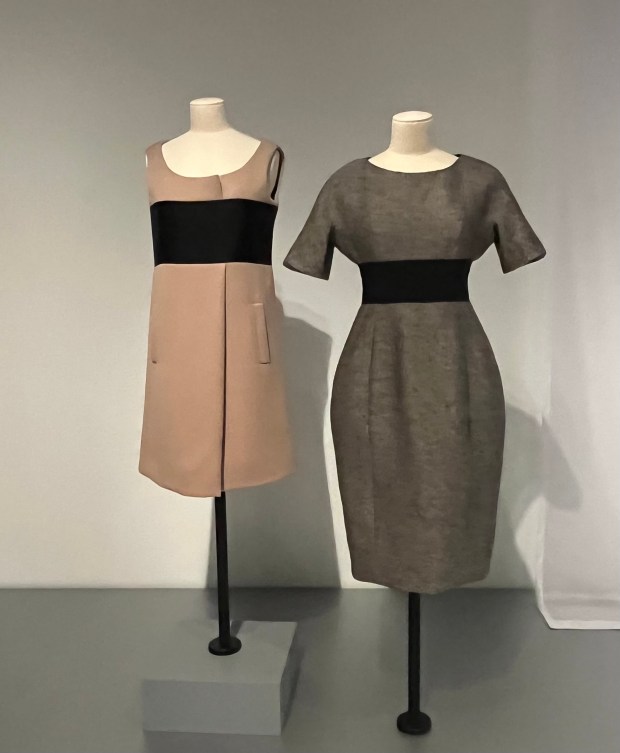 Dresses by Geoffrey Beene (left) and Norman Norell (right). (Ray Mark Rinaldi / Special to The Denver Post)
I would not describe it as an ambitious event; shows drawn from in-house objects rarely are. They can be quick and uncomplicated — and certainly cheap — ways to fill an art gallery.
The material is already on-site, saving the museum shipping and insurance costs. The curatorial choices are less about building an experience around some grand concept or documenting an important moment in art history, and more about showing off what is in the storeroom, or in this case, the closets.
Still, these efforts can be crucial for both the museum and the patrons who support it. Without them, some important objects can remain hidden forever; a waste of human effort and money — and much of that sponsorship cash comes from taxpayer funds and the generous gifts of donors who trust the museum to share its collection with its community.
Just as important, these shows let art fans size up the job curators are doing on their behalf. Is the museum making good choices when it spends its limited acquisition money? Does it have good taste?
The good news is that “Conversation Pieces” is full of good taste and great examples of work by some of the most popular high fashion designers of the past 100 years. The exhibition’s energy comes from the star-studded list of creators whose objects are displayed on the 60 mannequins set up on the sixth floor of DAM’s Martin Building.
Fashion lovers will find it hard not to get giddy over a 1926 outfit by Coco Chanel, the famous inventor of the little black dress (and, of course, much more). The piece on display is a dazzler, with a low, wide neckline and fringe extending from the shoulders and hemline. The signage lets viewers know it is made from silk chiffon and embroidered with bugle beads.
And that garment is displayed right next to Yves Saint Laurent’s updated version of the style from 1982. This one has beads, too, along with rhinestones and Chantilly lace. It was famously worn by the actress Catherine Deneuve.
There are many more top-of-the-line, brand names in this display. Wool dresses by Geoffrey Beene and Pierre Cardin; a velvet coat dress by Elsa Schiaparelli; an evening gown decked out with faux pearls by Christian Dior; a coordinated jacket, shirt and pants by Yohji Yamamoto; another coat dress by Rei Kawakubo.
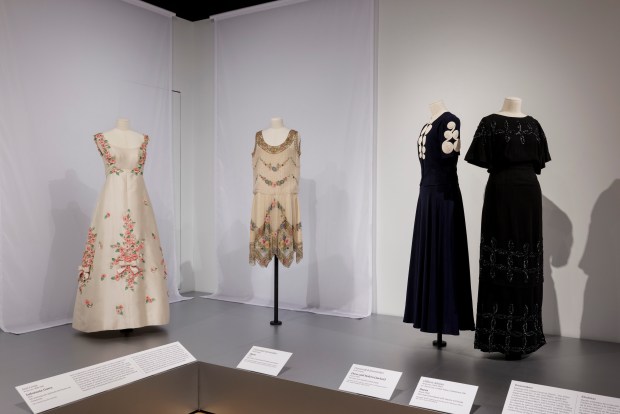 Most of the dresses in the exhibit have never been shown to the public before. (Eric Stephenson / Provided by Denver Art Museum)
Bringing all that up-to-date are clothes by makers with more contemporary currency, including a printed synthetic knit dress by American designer Vivienne Tam; a dress and shawl by the Peruvian designer Ani Álvarez Calderón; a metallic gold frock by Mexican designer Carla Fernández; a printed silk party dress by the British designer Alexander McQueen, who died in 2010.
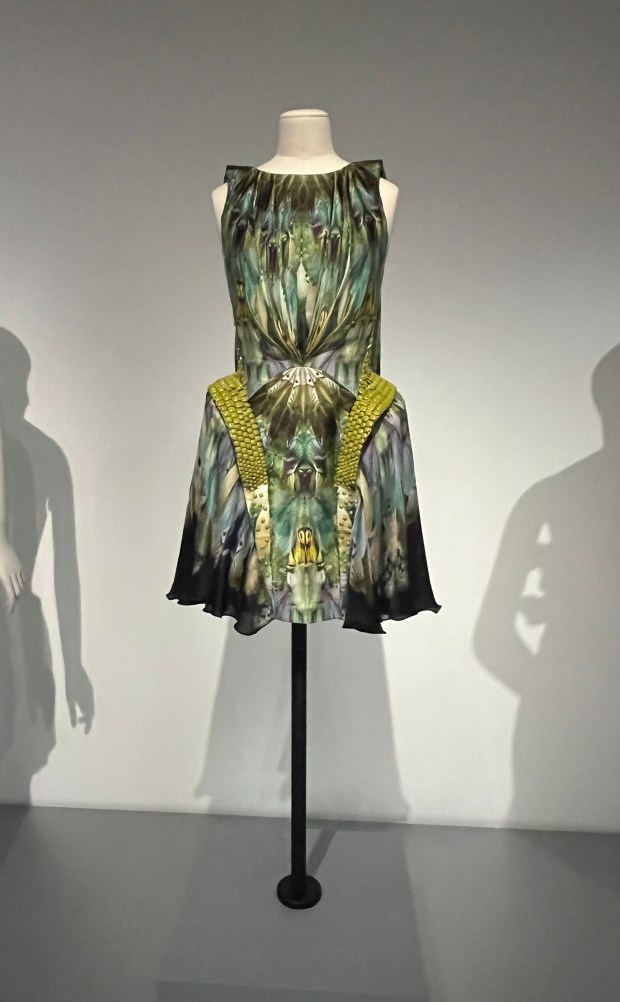 A silk dress by British designer Alexander McQueen, from 2010. (Ray Mark Rinaldi / Special to The Denver Post)
And there are pieces that are a treat to look at, even if the designers behind them are less familiar to many people: a 1973 “hippie” dress with glass beads by Bill Gibb; a pleated ball gown by Rick Owens; a shiny debutante gown by Ann Lowe adorned with silk flowers.
That might sound like a laundry list of objects, but that is really how “Conversation Pieces” plays out as a show. It is all over the map as far as styles and time periods go, though DAM’s textile team, led by curator Jill D’Alessandro, tries to make sense of things by grouping dresses made with similar personalities, or during the same time period, or with complementary techniques or colors. That goes a long way toward helping visitors understand the context of these particular pieces and the history of high fashion at the same time.
While the work has global roots, the show adds a local touch. There is a tribute to Neusteters, the family-owned department store that brought to Denver a world of fashion before it closed down in 1986.
Surprisingly, there are a few dresses worn by society figures of a bygone age when Denver was an up-and-coming metropolis, made rich by mining and the westward expansion of American culture. That includes a fancy, 1935 silk velvet evening wrap by Italian designer Maria Monaci Gallenga that was “worn by Mrs. Thomas Patterson Campbell of The Rocky Mountain News family,” as the exhibition’s text tells visitors.
While Colorado has never been considered a fashion capital (unless you count ski wear, and that is a stretch) these objects remind exhibition visitors that clothing has always played the same role here that it has in other places — it’s a legit avenue for artistic, self-expression, as well as a way for people of different social and economic classes to separate themselves from each other.
The show mostly avoids the politics that swirl around the design business, especially these days when critics are obsessed with the environmental evils of fast fashion and the shortcomings of an industry known to exploit labor around the globe. There is not much of a theme separate from the idea of giving folks a glimpse of what Denver has managed to collect since 1942, when the museum acquired its first women’s garment.
But there is something enjoyable — again, exciting — about this kind of showing off. This is a lovely array of dresses, and it is pulled from a collection that DAM’s fans and supporters can easily admire. If the goal was to build up a little it of pride about our local museum, and offer some unexpected fun to visitors, all the while doing it on a conservative budget, then that mission is accomplished.
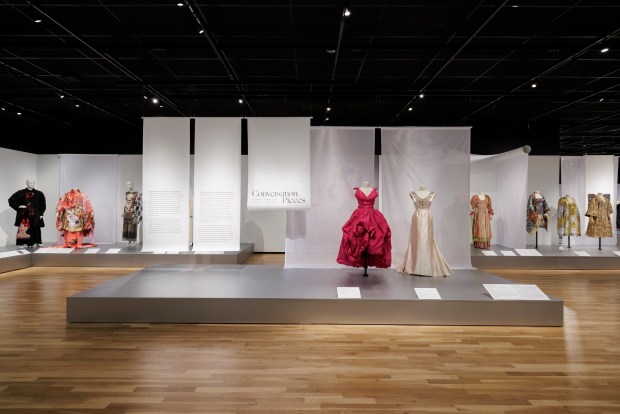 “Conversation Pieces: Stories from the Fashion Archives” continues through Feb. 7, 2027. (Eric Stephenson / Provided by Denver Art Museum)
If you go
“Conversation Pieces” continues through Feb. 7, 2027, at Denver Art Museum, 100 14th Ave., Denver. Info: 720-865-5000 or denverartmuseum.org.