
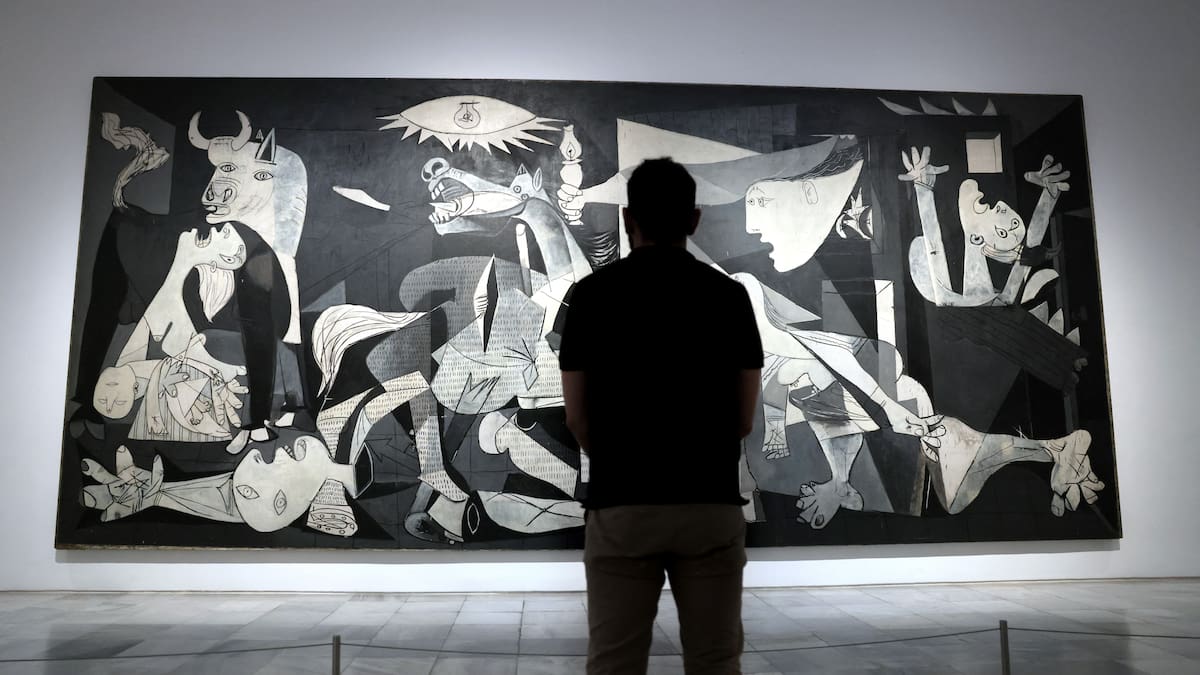
Sanchez – whose minority Government depends on the support of two Basque parties in Parliament to pass laws – did not reject the proposal outright, instead referring it to the Culture Ministry.
The ministry asked the Reina Sofia museum for a technical report on the viability of the request, which once again “strongly advised” against moving the painting.
The report said the painting is too fragile to travel, citing risks of damage from vibration or movement.
Picasso’s black-and-white masterpiece is the highlight of the Reina Sofia museum, which welcomed around 1.6 million visitors last year.
The outspoken head of the regional Government of Madrid, Isabel Diaz Ayuso of the conservative Popular Party (PP), weighed in on Monday, calling the request to move the painting “provincial”.
“It makes no sense for everything to be returned to its origin. In that case, we should send all of Picasso’s works to Malaga,” she said, a reference to the southern Spanish city where Picasso was born.
Return from New York
Asked about the controversy on Tuesday, Spain’s central Government spokeswoman Elma Saiz said the Government relies on the advice of “professionals”, referring to the museum report, and “never resorts to insults”.
Painted in 1937 in the aftermath of the bombing, Guernica debuted in Paris at the World’s Fair, then was placed in the care of the Museum of Modern Art in New York.
When Franco’s forces overthrew the Spanish Republic, Picasso stipulated that the painting should not return to Spain until democracy had been restored.
The work was moved to Spain in 1981, six years after Franco’s death.
It was first displayed at the Prado Museum, then moved to the Reina Sofia in 1992.
Picasso, who died in 1973, never lived to see the painting exhibited in Spain.
In 1995, Spanish authorities refused to lend it to the Pompidou Centre in Paris, citing the damage the work could suffer during its transport.
-Agence France-Presse