
Queensland’s peak tourism industry body has written to both state and commonwealth governments, calling for immediate and coordinated intervention to stabilise the visitor economy as the sector faces a “tipping point”.
According to the Queensland Tourism Industry Council (QTIC) many operators are struggling to remain afloat as they grapple with rising operating costs and cancellations, along with the ongoing fuel crisis.
QTIC chief executive Natassia Wheeler said while the Easter long weekend had provided a welcome increase in bookings for some operators, others had experienced “mass cancellations”, alongside a downturn in forward bookings.
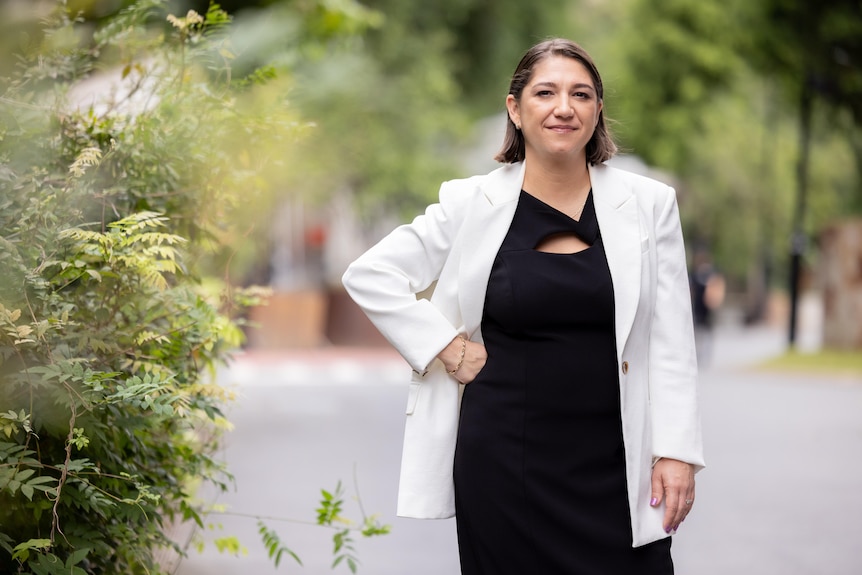
Natassia Wheeler says the tourism industry needs “cost relief measures”. (Supplied)
“We had caravan parks recording over 200 cancellations, upwards of $52,000 in terms of economic impact and loss to business directly,” she said.
“That also doesn’t take into account the flow on effect of that loss.”
According to figures collected by data company Localis, which derives data from sources including Airbnb, Booking.com and Stayz, accommodation occupancy increased across many regions over the holiday period.
Another ‘lockdown’: Long-term caravanners face fuel crisis
In the Whitsundays, Localis found occupancy was up 49.99 per cent, while the Sunshine Coast had an increase of 41.84 per cent. Outback Queensland had a rise of 31.49 per cent, and tropical north Queensland went up by 31.32 per cent.
But Ms Wheeler said these positive occupancy rates may not have necessarily translated to sustainable profitability, with many operators absorbing escalating costs from fuel, insurance, energy and labour.
“This is the tipping point for tourism across Queensland and I’m sure for the country,” Ms Wheeler said.
“We need to see cost relief measures, support processes, and look after an industry that’s dollar impact is a multiplier.”
The QTIC has called on the governments to implement a targeted stabilisation package, with key measures including cost relief for tourism businesses and coordinated action on fuel and aviation costs.
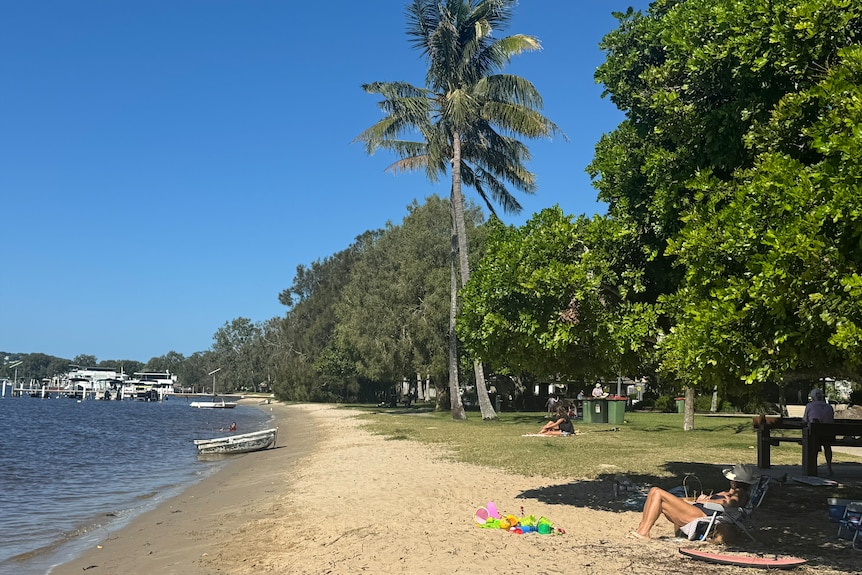
The Sunshine Coast is one of Queensland’s most popular tourism destinations. (ABC News: Tara Cassidy)
It has also called for the establishment of a joint state and commonwealth tourism fuel impact taskforce, and clear national guidance to maintain consumer confidence around pricing and surcharges.
Ms Wheeler said the industry was “not asking for a bail out”, but rather “targeted, time limited stabilisation”.
Fuel crisis hits tourism bookings, cost increases and anxiety over shortages
“There are measurements the federal and state governments can do to support the industry,” she said.
“The cost of doing nothing will be higher than [the cost of] acting now. Our regional businesses just do not have the margins to absorb another shock.”
In a statement, Minister for the Environment and Tourism Andrew Powell said the Queensland government was “backing our tourism industry” through targeted investment in events, ecotourism, and unique visitor experiences under its Destination 2045 roadmap.
“We know this national crisis is putting pressure on all Queenslanders, and there is plenty more work to be done, which is why we won’t be taking a backward step and continue to push for a national dashboard so Queenslanders can access information about where fuel is in the country.”
Temporary shutdown considered
On the Sunshine Coast, quad bike tour operator Charles Marais told the ABC he was considering a temporary shutdown, with operating costs now exceeding any money made over the holiday period.
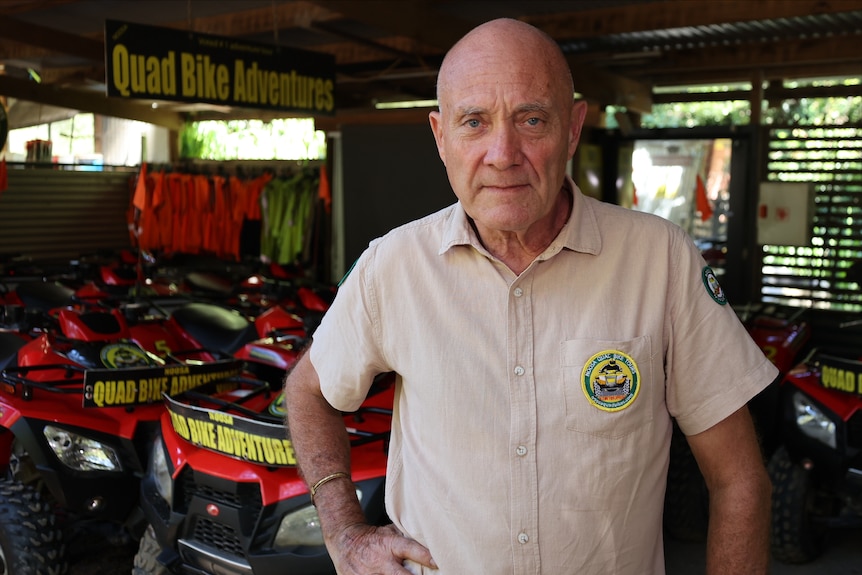
Charles Marais operates a quad bike tour company on the Sunshine Coast. (ABC News: Tara Cassidy)
Not only does he require petrol for the bikes, but also diesel for the bus that transports tourists on a 30-minute drive from Noosa to his property at Cooran, in the hinterland.
“Easter was definitely down on trade, I’d say about 50 per cent of what we usually do,” Mr Marais said.
“It all adds up and it does become concerning. I’m thinking about maybe shutting down for a short period myself because the amount of work that’s coming in isn’t enough to keep it viable.”

Sunshine Coast quad bike tour operator Charles Marais is considering a temporary shutdown. (ABC News: Tara Cassidy)
He said he would like to see government support for the industry, similar to measure introduced during the COVID-19 pandemic.
“We need something to come through. I’m in a little bit more of a fortunate position myself I own things outright; I don’t have rentals. But other tourism businesses are going to really suffer — we’ll see people closing,” Mr Marais said.
Business slowing down ‘exponentially’
The whale watching season between May and November is normally the busiest time of year for Hervey Bay cruise operator Ben Duffy.
But with bookings for sunset cruises and day trips down by 70 per cent over Easter, Mr Duffy said he was concerned about the future of his business if travellers continued to cancel their plans.
“We’ve seen [whale cruise bookings] slow down exponentially due to the uncertainty that’s around,” he said.
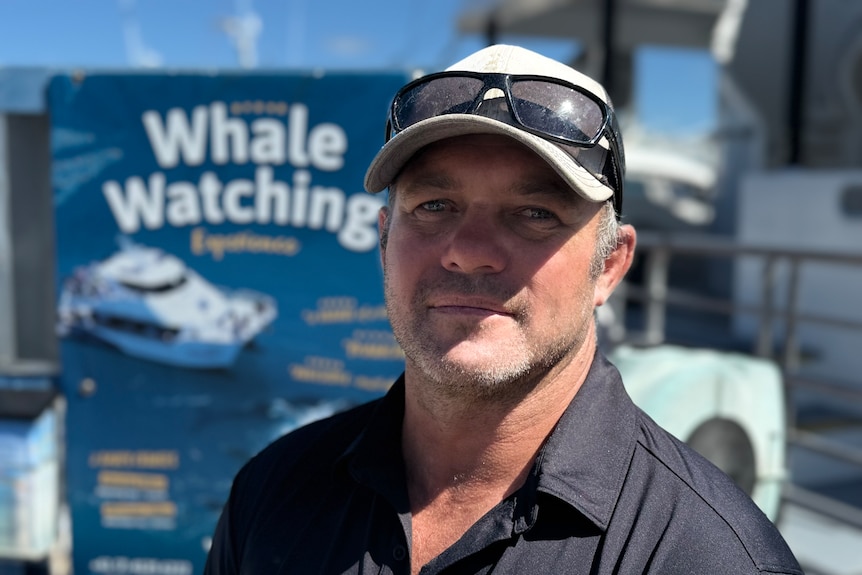
Ben Duffy says bookings for whale watching cruises have slowed down “exponentially”. (ABC News: James Taylor)
Fuel and other supply costs have risen by around 50 per cent, which Mr Duffy said would force him to make some tough decisions if the crisis does not abate in the coming months.
“I would like to absorb [the higher costs] … because our main passion is taking out people to enjoy what we do every day,” he said.
“It’s going to be a hard moment in front of the drawing board to figure out what sort of angle we do approach this season with.”
Mr Duffy said he believed the reduction to the fuel excise was not enough to alleviate the impact of the higher prices at the bowser, and called for more support for the tourism industry.
Fuel prices the ‘tipping point’
A policy briefing provided by QTIC to state and federal governments warned fuel price escalation was now acting as the tipping point in a decade of cumulative pressure, pushing otherwise viable businesses into distress.
In a statement, a federal government spokesperson said the Albanese government would “continue to take every action we can to shield Australians from the impact of this war.”
The spokesperson said that included halving the fuel excise, cracking down on petrol companies price gouging, getting more fuel into the market, and working with international partners to secure Australia’s fuel supply.
“The tourism minister is holding regular meetings with tourism industry stakeholders as well as state and territory counterparts, and the government will continue to work with the sector to navigate the weeks and months ahead,” the spokesperson said.
“Tourism is the lifeblood of so many communities in Australia, and every dollar spent enjoying our iconic tourism destinations and regions helps to support jobs, businesses and communities.”