
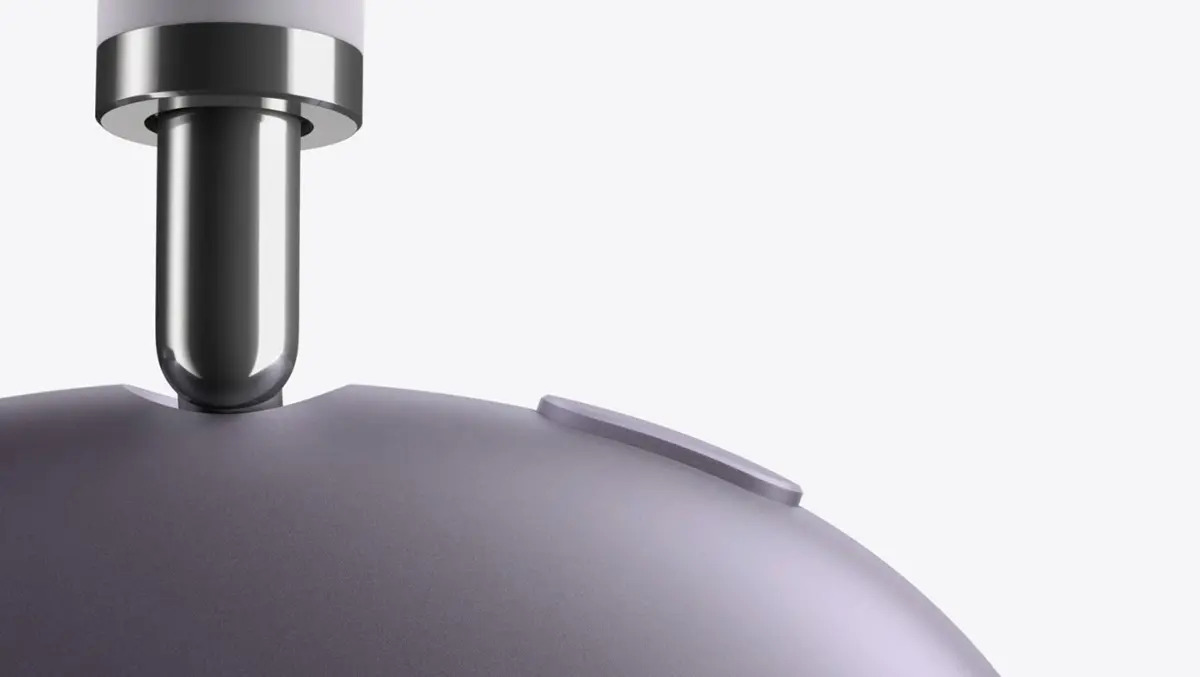
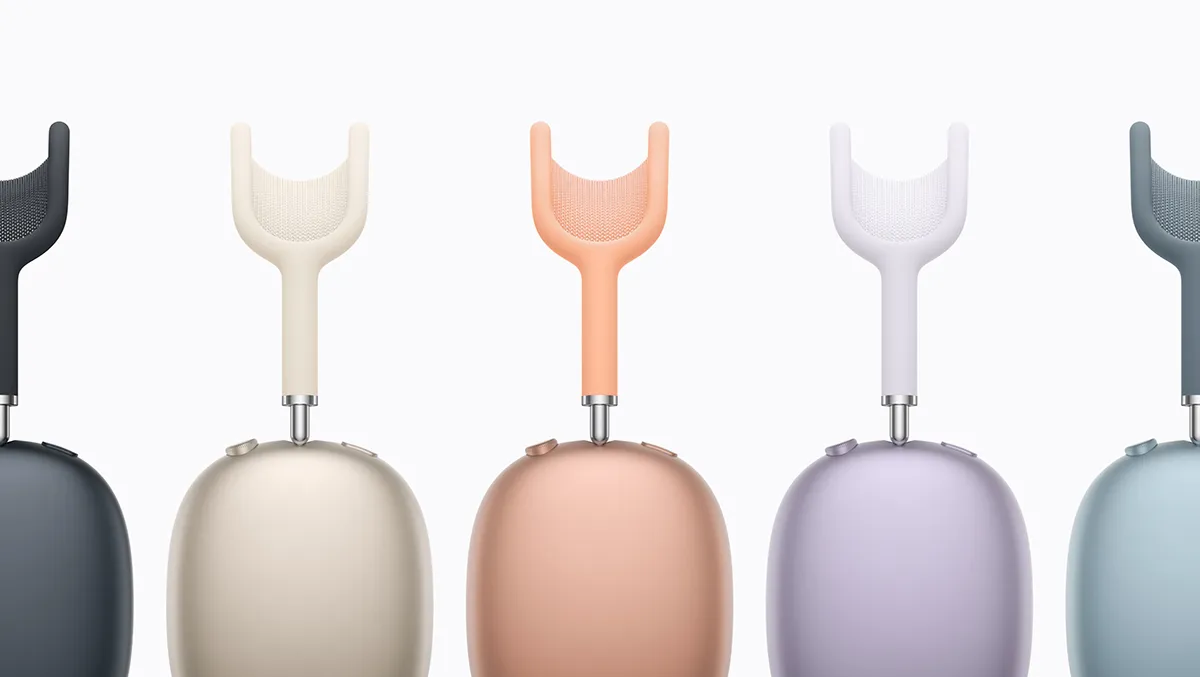
AirPods Max 2 looks immediately familiar. Apple has retained the same industrial design, with aluminium ear cups, a stainless-steel frame and the knit mesh canopy. It remains one of the most recognisable headphone designs on the market.
That familiarity works in its favour. The materials still feel considered and durable. The finish is clean, with a level of precision that stands out against plastic-heavy rivals. The ear cushions remain magnetically attached and easy to swap, while the telescoping arms offer smooth adjustment.
Comfort remains a mixed but generally positive experience. The mesh canopy distributes weight effectively, which helps during longer listening sessions. The headphones are still heavier than many competitors, though the balance reduces pressure on the top of the head.
The design does not fold. That limits portability compared to rivals from Sony and Bose. The included Smart Case returns unchanged. It triggers a low-power state but offers minimal protection. It remains more of a sleeve than a travel case.
Controls continue to be a strength. The Digital Crown is precise and reliable for volume and playback. A separate button handles listening modes. This approach feels more tactile than touch controls used elsewhere.
Sound quality
The biggest changes sit inside the ear cups. Apple has moved to its H2 chip, paired with a revised amplifier and updated processing.
In use, the sound profile is refined rather than transformed. There is better control in the low end, with bass that feels tighter and less prone to bloom. Midrange clarity is improved, which helps vocals and acoustic instruments. High frequencies remain clean without becoming sharp.
Separation is also more noticeable. Complex tracks are easier to follow, with improved placement of instruments. The soundstage feels slightly wider, though not dramatically so.
Adaptive EQ continues to adjust audio based on fit and seal. It works quietly in the background and helps maintain consistency across different users.
The headline addition is USB-C lossless audio. When connected via cable, AirPods Max 2 supports 24-bit, 48kHz playback. This delivers more detail and texture than Bluetooth alone. The difference is subtle for casual listening but becomes clearer with high-quality recordings.
Wireless playback still relies on standard Bluetooth audio. There is no support for higher bitrate codecs beyond Apple’s ecosystem approach. Users seeking the best fidelity will need to listen wired.
Noise control
Noise cancellation sees a meaningful upgrade. Apple claims up to 1.5 times improvement over the previous model, and real-world use supports that direction.
Low-frequency noise is handled well. Train rumble, aircraft engines and general city noise are reduced effectively. The headphones create a quiet environment without introducing excessive pressure or hiss.
Transparency mode also improves. External sounds feel more natural and less processed. Conversations are easier to follow without removing the headphones.
Adaptive Audio blends noise cancelling and transparency automatically. It adjusts based on surroundings, which can be useful when moving between quiet and busy environments. It is not flawless, but it reduces the need to switch modes manually.
Conversation Awareness lowers playback volume when the user speaks. It works reliably in most situations, though it can trigger unexpectedly in noisy settings.
Features
The H2 chip enables a broader set of features. Voice Isolation improves call clarity by reducing background noise. In practice, calls sound cleaner than before, especially in busy environments.
Personalised Volume learns listening habits and adjusts levels automatically. It is subtle but useful over time. Siri interactions now include head gestures, allowing users to accept or reject notifications without speaking.
Live Translation is one of the more ambitious additions. It works alongside an iPhone to translate conversations in real time. It is functional but not instant. There can be a short delay, so it suits casual interactions rather than fast-paced dialogue.
Apple has also added creator-focused tools. Studio-quality audio recording allows users to capture clearer voice recordings through supported apps. Camera Remote lets users control recording from the headphones, which is useful for solo creators.
Connectivity
AirPods Max 2 integrates tightly with Apple devices. Pairing is quick, and switching between devices is seamless. Settings are accessible directly within system menus, which simplifies control.
Features such as Adaptive Audio, Conversation Awareness and Live Translation require recent software versions. Older devices will still connect, but not all features will be available.
On non-Apple devices, functionality is reduced. The headphones behave as standard Bluetooth audio gear, with limited access to advanced features.
Battery life
Battery life remains similar to the previous model. Apple quotes around 20 hours with noise cancelling enabled.
In daily use, this figure holds up. Charging via USB-C is a welcome update, aligning with broader industry standards. A quick charge provides several hours of playback, which is useful for short top-ups.
There is still no dedicated power button. The headphones rely on the Smart Case to enter a low-power state. This approach works but feels less intuitive than a physical switch.
Value
AirPods Max 2 sits in the premium segment alongside flagship models from Sony, Bose and Sennheiser. Pricing aligns closely with these competitors.
The value proposition depends heavily on ecosystem use. For users already invested in Apple devices, the integration and feature set add tangible convenience. For others, the advantages are less pronounced.
Verdict
AirPods Max 2 is a careful refinement rather than a redesign. It improves noise cancellation, enhances sound quality and introduces a wider set of intelligent features. USB-C lossless audio adds flexibility, particularly for wired listening.
The core experience remains consistent with the original model. The design is distinctive and well executed. Comfort is generally good, though the weight is still noticeable. Portability and the Smart Case remain compromises.
This is a strong option for users within the Apple ecosystem who want a premium over-ear experience with seamless integration. Those prioritising lighter designs or broader compatibility may find better alternatives elsewhere.