
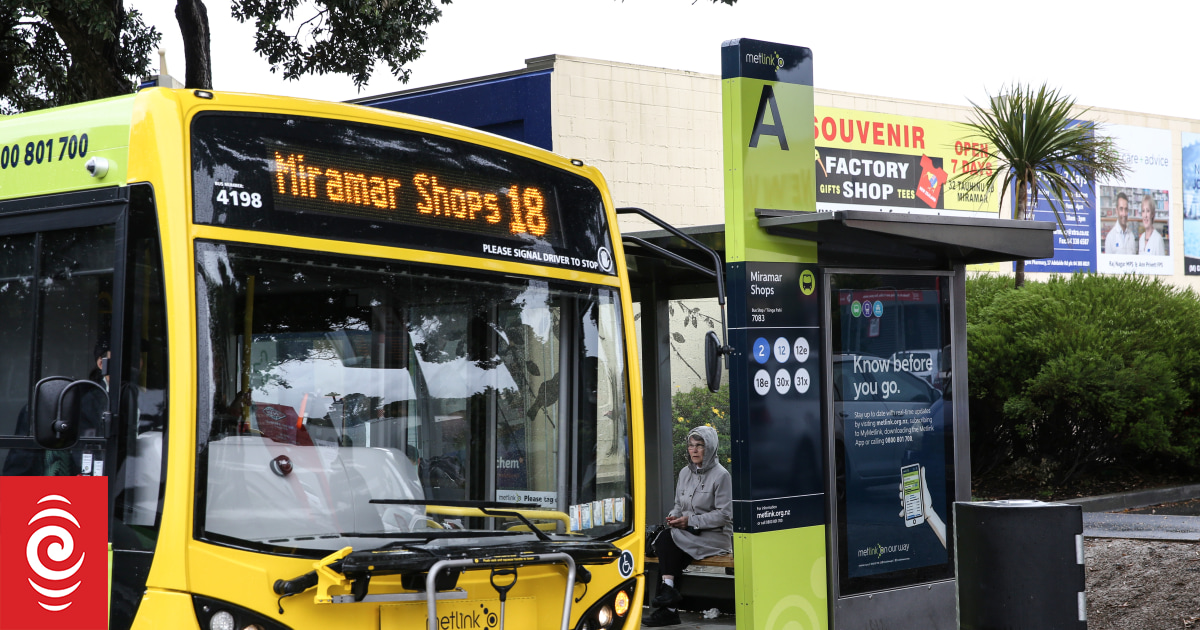
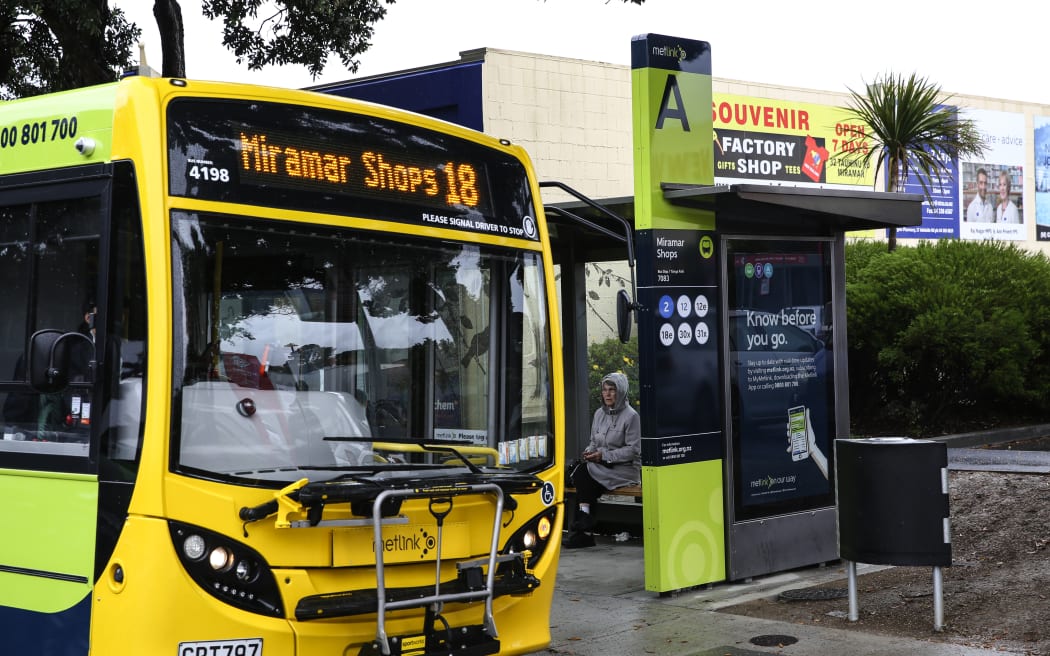
Passengers can save up to 20 percent by using cards or phones.
Photo: RNZ / Richard Tindiller
Wellingtonians will be able to use a credit or debit card, or mobile payment, for bus and train fares from Sunday 12th April.
It comes as Metlink’s fuel bill skyrockets, and Greater Wellington Regional Council warns of future service cuts and fare hikes.
Metlink said passengers can save up to 20 percent by using their cards or phones, the equivalent of paying with cash.
However, each transaction will have a 1.5 percent surcharge applied on top of the fare, the same as the top-up fee applied to a Snapper card.
Children, tertiary students, and Community Services Card holders will still need a Snapper card to access the discounts they are entitled to.
Regional Councillor Tom James, deputy chair of the public transport committee, told RNZ passengers need options as they seek to phase out cash payments over the next year.
He said the charge is temporary and only required to balance the costs for ratepayers.
“Ratepayers already contribute a significant amount to running public transport… but when we transition from Snapper to the new national system, there won’t be that transaction fee anymore.”
Christchurch Metro allowed credit, debit and mobile payments on November 10, 2025 – Auckland Transport followed a week later. Like Metlink, both still require a bus card for discounts, but neither charges a transaction fee.
Public transport networks in Aotearoa are moving towards a universal bus card, called Motu Move, as per the National Ticketing Solution launched by the then-Labour government in 2023.
Metlink is planning to roll it out in the first half of 2027, after what James, a Labour member, called a “waiting game” with the coalition government.
“We’ve been told it’s only two years away for a long time now, so the GWRC has paused on upgrades to Snapper,” he said.
Meanwhile, a fare increase for Wellington buses, trains and ferries is scheduled for May 15th.
In light of skyrocketing fuel prices, Metlink, whose bus fleet is 75 percent diesel powered, told RNZ that they will not increase fees at all for now.
But they also said their fuel bill has gone up by $130,000 per week, with around three quarters of their bus fleet running on diesel.
Councillors have said that without government support, they would expect that figure to rise, making service cuts or fare increases inevitable.
“Without government support, we will soon be forced to consider cutting services or hiking fares beyond increases planned in May,” a statement read.
All the same, Metlink said they could defer the scheduled May increase if the government stepped in with funding support.
“We’re not asking for free fares. We’re asking for practical, targeted assistance to help communities with fuel costs.”
Public transport usage has seen a notable spike as commuters react to the cost of filling up their vehicles.
Sign up for Ngā Pitopito Kōrero, a daily newsletter curated by our editors and delivered straight to your inbox every weekday.