
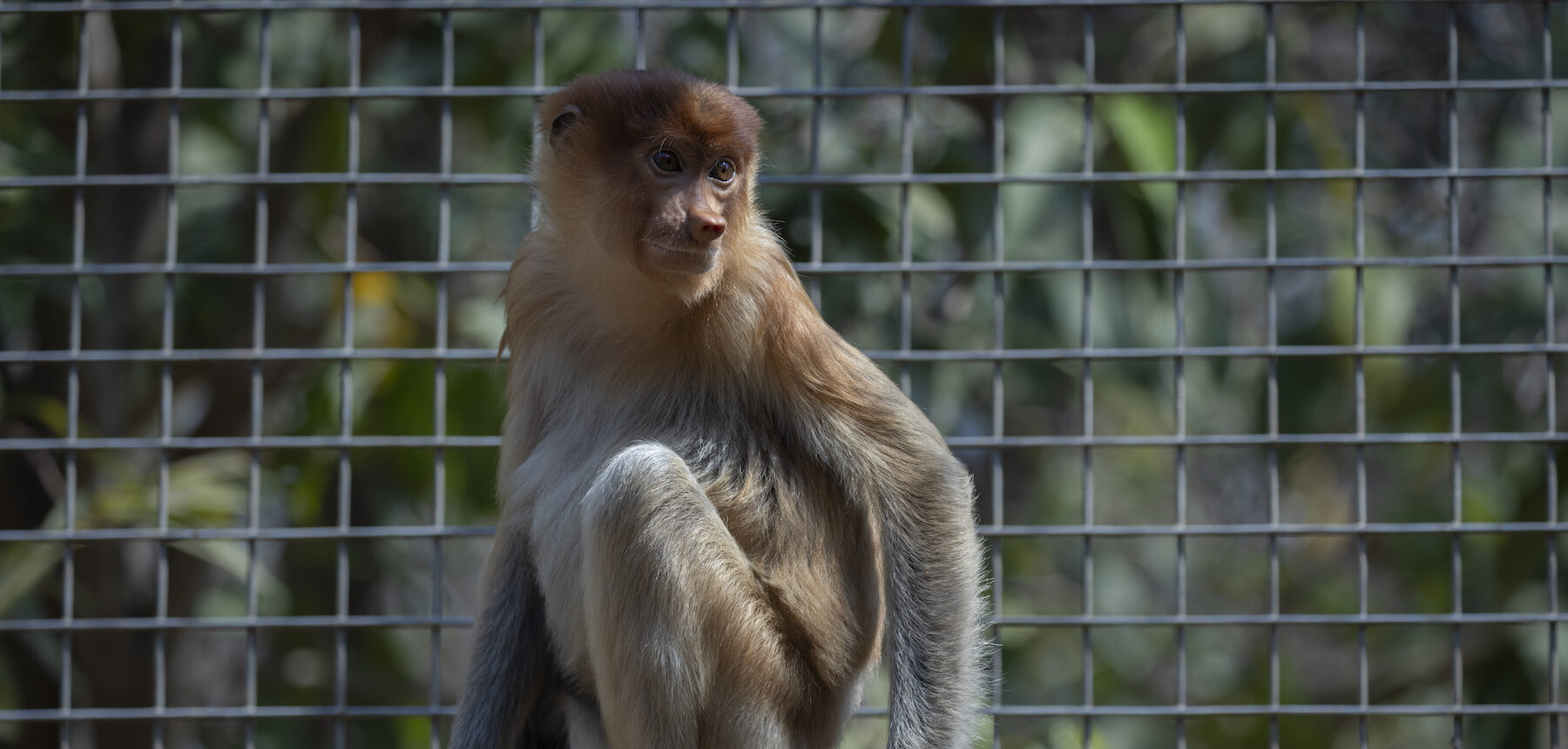
The recent discovery of an injured proboscis monkey near a railway track in Thailand points to the likelihood of cross-border trafficking in the endangered species, reports Mongabay contributor Ana Norman Bermudez.
Proboscis monkeys (Nasalis larvatus), known for their distinctive long noses, are found only on the island of Borneo. The species is legally protected in all three countries that share the island: Malaysia, Brunei and Indonesia. It’s also listed under Appendix I of CITES, the global wildlife trade treaty, meaning its international commercial trade is prohibited except for specific research or conservation breeding purposes.
Bermudez reported that local residents found the injured animal in Thailand’s Samut Sakhon province in January and later brought it to a nearby clinic. That’s when clinicians identified it as a “foreign monkey” and transferred it to the Ban Pong wildlife rescue center run by Thailand’s Department of National Parks, Wildlife and Plant Conservation (DNP).
The monkey had suffered serious injuries, requiring the amputation of a finger and part of its tail. It’s currently recovering at Ban Pong, and while it can’t be returned to the wild, discussions about repatriating it to Borneo once it’s stable are being considered.
“I believe this monkey was brought illegally, because there are no records of it in the CITES database,” Kanpicha Han-Asa, a veterinarian with DNP, told Mongabay.
At least one other proboscis monkey lives in a private zoo in Thailand; Mongabay confirmed its presence at the zoo during a visit in March.
“Where did these animals come from? How did they get there? These are questions the authorities in Thailand need to explore,” Chris Shepherd, a senior conservation advocate at the Center for Biological Diversity, told Mongabay.
A recent study shows a worrying increase in the proboscis monkey trade since 2016. This is despite the species being difficult to keep in captivity due to a specialized diet of mostly leaves.
A proboscis monkey was also intercepted at an airport in India in 2024.
While the number of such trafficking cases is still low, Shepherd said the event “is still of great concern.” Proboscis monkeys are already under pressure from habitat loss, and he warned “an increase in international trade will only further threaten these imperiled animals.”
Conservationists are calling for stricter enforcement at airports and a ban on private ownership of primates to protect species like the proboscis monkey.
Read the full story by Ana Norman Bermúdez here.
Banner image: The rescued proboscis monkey at Thailand’s Ban Pong wildlife rescue center, where it’s recovering from its injuries. Image by Ana Norman Bermúdez for Mongabay.
