
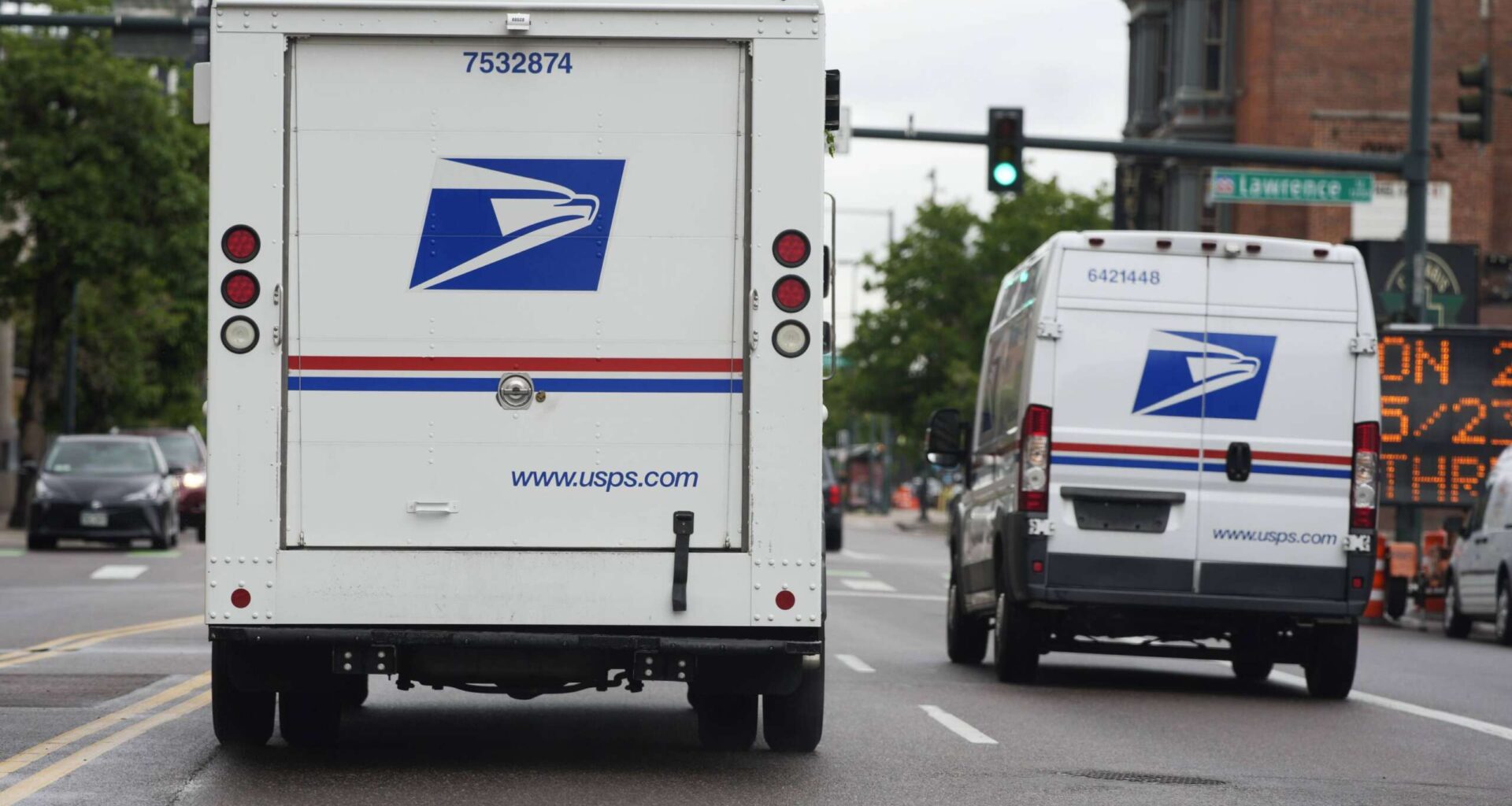
The Postal Service is temporarily suspending payments to a governmentwide pension plan, after warning Congress that it’s less than a year away from running out of cash.
USPS told the Office of Personnel Management on Thursday that it will hold off paying its contributions to the Federal Employees Retirement System (FERS), a move that’s expected to conserve cash in the near term.
The mail agency, which has posted billion-dollar net losses for more than a decade, has relied on these extraordinary measures before to conserve cash.
Postmaster General David Steiner told members of the House Oversight and Government Reform Committee last month that USPS is set to run out of cash in less than 12 months — if it paid all its bills on time — and that lawmakers need to act soon to keep the agency running.
]]>
“Less than a year from now, the Postal Service will be unable to deliver the mail if we maintain the status quo,” Steiner told the government operations subcommittee.
USPS Chief Financial Officer Luke Grossmann said in a statement that the temporary withholding will have no “immediate detrimental impact to our current or future retirees.”
“The risk to the Postal Service and the American public from insufficient liquidity for postal operations dramatically outweighs any longer-term risk to the pension funds from not making the currently due payments,” Grossmann said.
USPS is only withholding its employer contributions to FERS, and will continue to provide OPM with employees’ own contributions to FERS, as well as all regularly scheduled payments to the Thrift Savings Plan.
USPS pays OPM about $200 million every other week for the FERS annuity. By pausing some of its FERS contributions, USPS expects to free up about $2.5 billion this fiscal year to continue to cover its other costs.
USPS will be able to postpone payments through September 2030, freeing up to $15 billion in cash that would normally be spent on regularly scheduled FERS payments. The agency is normally required by law to make these payments, but the Postal Regulatory Commission granted a waiver giving USPS flexibility to make up these payments later.
USPS must notify the Treasury Department and the regulatory agency every year it decides to use the waiver allowing it to defer pension payments.
]]>
The Postal Regulatory Commission said the waiver grants USPS some “breathing room” to continue to cover its operating expenses and invest in improvements of its vehicle fleet and nationwide delivery network.
The waiver buys USPS some additional time before it runs out of cash. The regulatory agency said Congress and the Trump administration should use this time to address long-term financial problems with the Postal Service’s business model.
“The commission urges all stakeholders to treat the breathing room provided by the Temporary Conditional Waiver as an opportunity to work toward meaningful and lasting change,” the commission wrote.
USPS used these same extraordinary measures before. Over the past 10 years, USPS has frequently failed to make legally required payments to cover retiree benefits, and over the past four years, it has only made partial payments to cover its FERS obligations.
USPS previously suspended its employer contributions to FERS in June 2011 to retain as much cash as possible during another acute period of financial stress. That suspension, however, only lasted for several months, and USPS resumed biweekly payments and paid back what it owed OPM.
“While there is precedent for this type of move, concerns remain, and we will continue monitoring the situation and will keep the membership informed,” the regulator wrote.
The Postal Service has received extraordinary financial relief from Congress. Lawmakers passed long-awaited reform legislation in April 2022 that saved USPS $107 billion in total costs — including eliminating $57 billion in past-due payments to cover health benefits for postal retirees.
USPS warned lawmakers that it was also on the verge of running out of cash at the height of the COVID-19 pandemic, and received $10 billion in pandemic relief funds.
Don Maston, president of the National Rural Letter Carriers’ Association, said in a statement that USPS acted unilaterally in its decision to pause FERS payments, and did not negotiate with the union ahead of time.
]]>
“This move by Postal Service management and the Board should not be taken lightly — Congress needs to take action to address the Postal Service’s financial challenges,” Maston said.
Maston said the NRLCA supports reform measures in Congress to “strengthen the Postal Service without undermining service or earned benefits.” That includes extending its currently maxed-out $15 billion borrowing limit, giving USPS flexibility to invest its pension funds aside from low-risk, low-reward Treasury bonds, and adjusting its contributions to the Civil Service Retirement Service, which predates FERS.
Copyright
© 2026 Federal News Network. All rights reserved. This website is not intended for users located within the European Economic Area.