
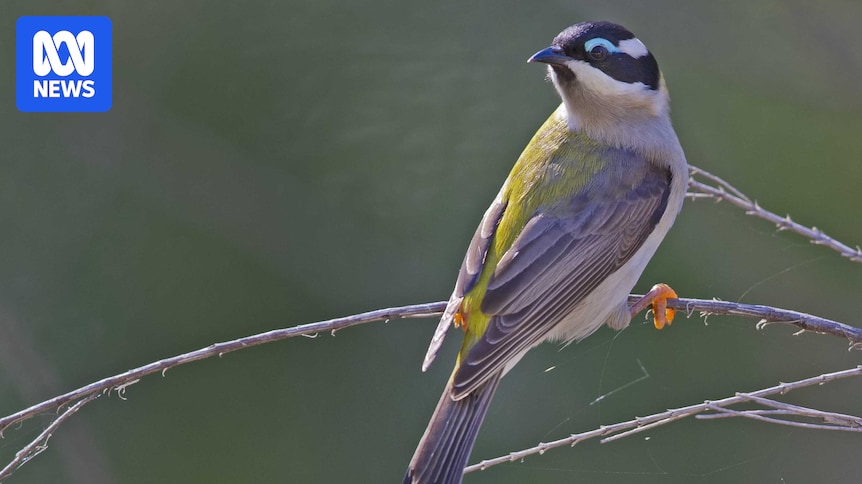
The owner of a farm in South Australia’s south-east has been fined $84,000 for illegal land clearing — much less than the $2.2 million it would have cost him if he had obtained a permit for the work.
Daniel John Molloy, 70, and his company Treetops Estate Pty Ltd pleaded guilty in the Environment, Resources and Development Court to clearing 112 hectares of “natural vegetation” at Tintinara between May and July 2023.
The court heard Molloy decided to clear more than 600 “specimens of native vegetation” including varieties of gum trees on his farm after falling limbs killed two bulls, one cow and a lamb in January of that year.
In sentencing, Senior Judge Michael Durrant said Molloy was aware that he would have had to pay more than $2 million into the state government’s Native Vegetation Fund, if the Native Vegetation Council even approved the work.
He said Molloy decided to engage a contractor despite knowing he needed to enquire about a permit.
The court heard Molloy then planted canola on most of the cleared land.
“The defendants preferred profit and commercial interest over the environment,” Judge Durrant said.
“The fines imposed must not be set at such levels that they just reflect a cost of doing business.
“112 hectares were cleared and the cost to the fund consequently was over $2,248,000.”
Molloy and Treetops Estate Pty Ltd — which Molloy is the sole director and shareholder of — were both fined $42,000, rather than the maximum penalty each of $280,000.
Home to significant bird species
Judge Durrant said the trees razed included pink gums, South Australian blue gums, sand-heath grass tree, peppermint box and a rare hybrid of South Australian blue gum and ridge-fruited mallee.
“The clearing significantly reduced high-value remnant vegetation and the habitat of 18 species of native birds, including three of conservational significance: peregrine falcon, purple-gaped honeyeater and black-chinned honeyeater,” he wrote.
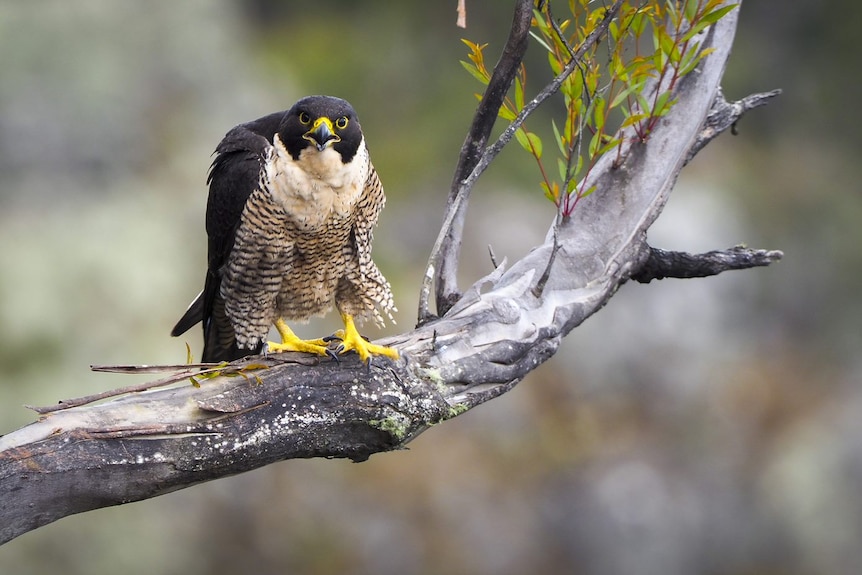
Eight native birds lived in the trees, including the peregrine falcon. (Supplied: Bert Quandt)
Molloy’s lawyer, Anthony Crocker, urged no conviction be recorded, but Judge Durrant said the offending was too serious, and that it was not an administrative oversight, inadvertent or a procedural matter.
“I consider the balance to be in favour of a conviction being recorded against Mr Molloy, so that the whole community may know of this offending,” he said.
“I also consider that the recording of a conviction in these circumstances will provide specific and general deterrence.”
Molloy will also have to pay costs of $1,210 to the South Australian Department for Environment and Water.