
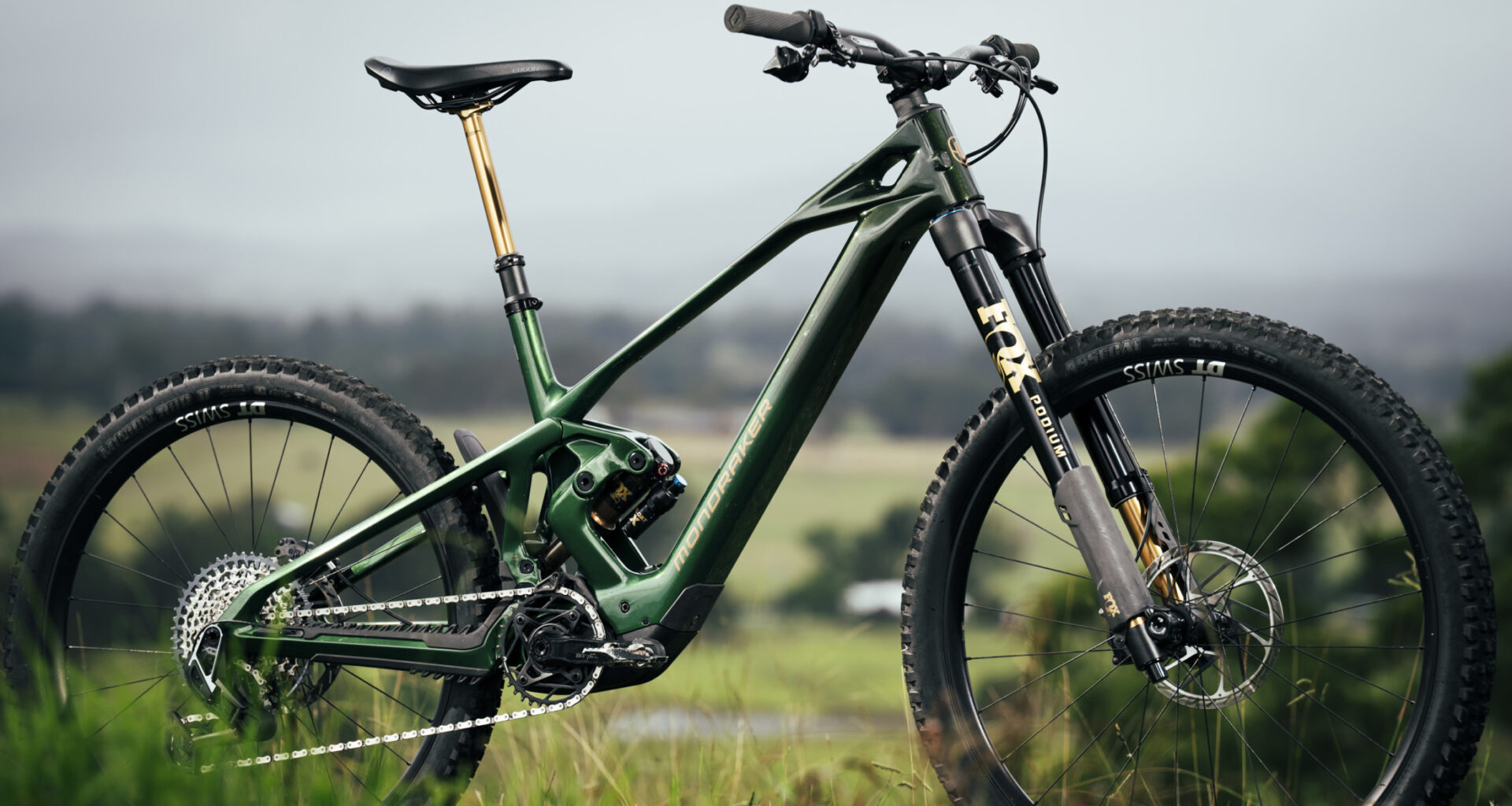
As part of the launch of the new Zendit, we’ve had the chance to spend some early time aboard Mondraker’s latest e-enduro machine to find out what sets it apart. And while the nuclear-powered Avinox M2S system is inevitably going to dominate the conversation around this bike, the more interesting story after a first ride is how much of a wicked bike there is wrapped around it.
Based in Spain, Mondraker has spent years building fast bikes with a strong gravity streak, and that approach has carried across to its e-MTB range too. Bikes like the Crafty and Level have given the brand a solid foothold in the category, but the new Zendit is clearly aimed at raising the bar again; they’re clearly very jazzed about it. Mondraker has been less visible on Australian shores, though a new sales approach and broader model availability could well change that.
Related:
What is the Mondraker Zendit?
Mondraker’s new Zendit is a full-carbon, full-power e-MTB. It has 165mm of rear wheel travel, a 170mm fork, and mixed wheels as standard, while still offering the option to run a 29in rear wheel via a lower flip-chip. Five frame sizes are available.
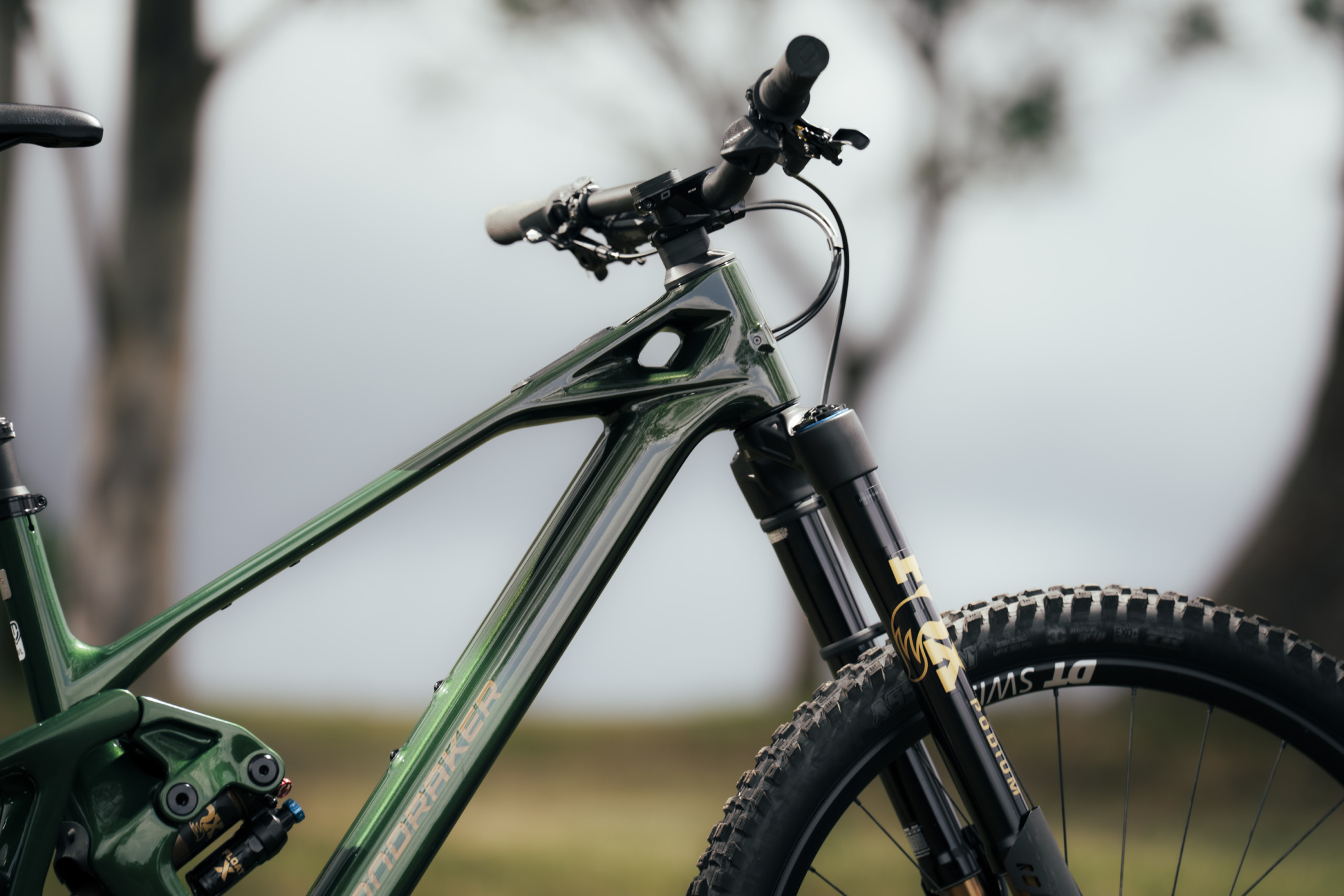 Slim tubes, wild carbon shapes and a stunning paint job make this bike hard to walk past without patting it. Does the word ‘Zendit’ mean ‘sit down, shut up, and HOLD ON!’?
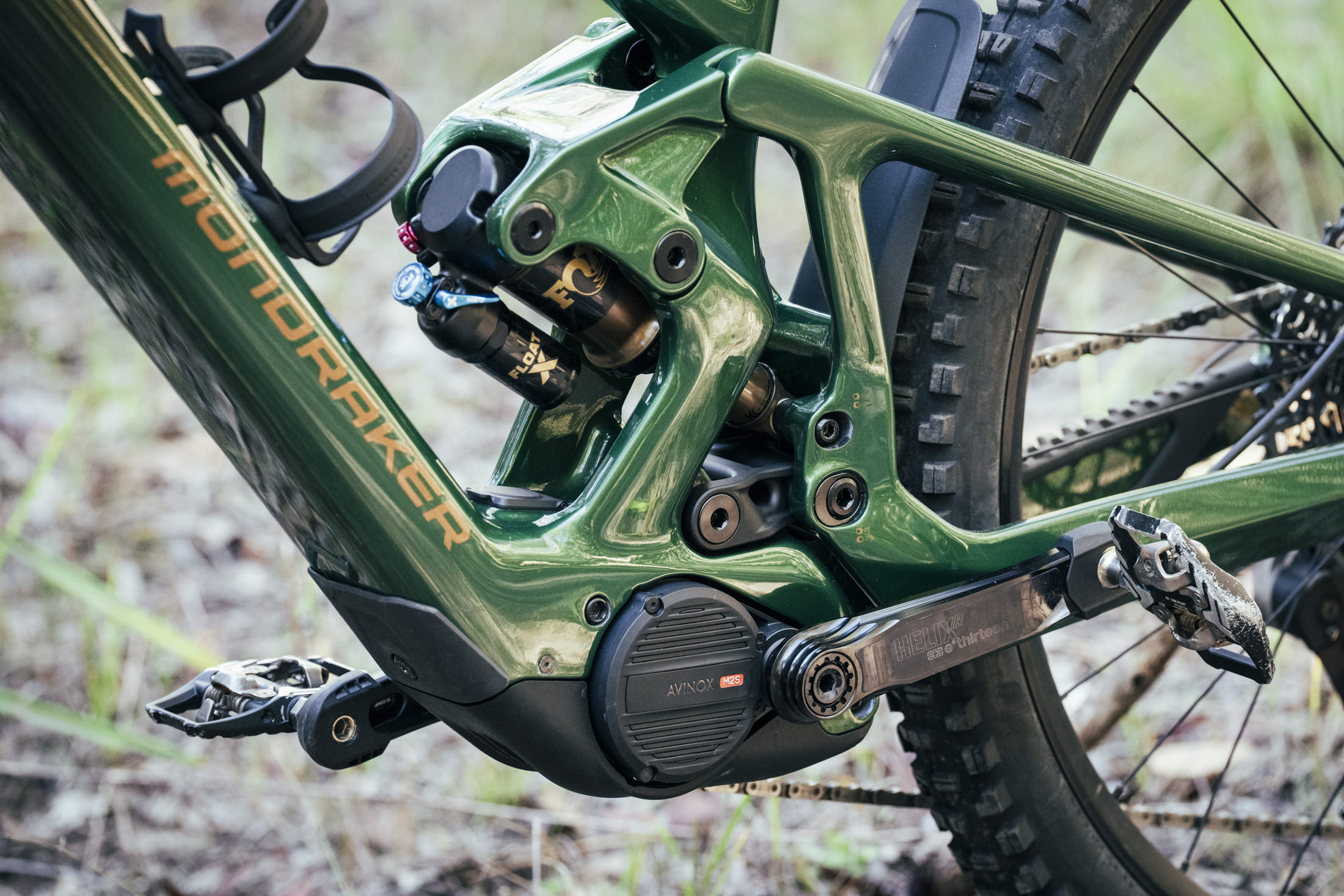
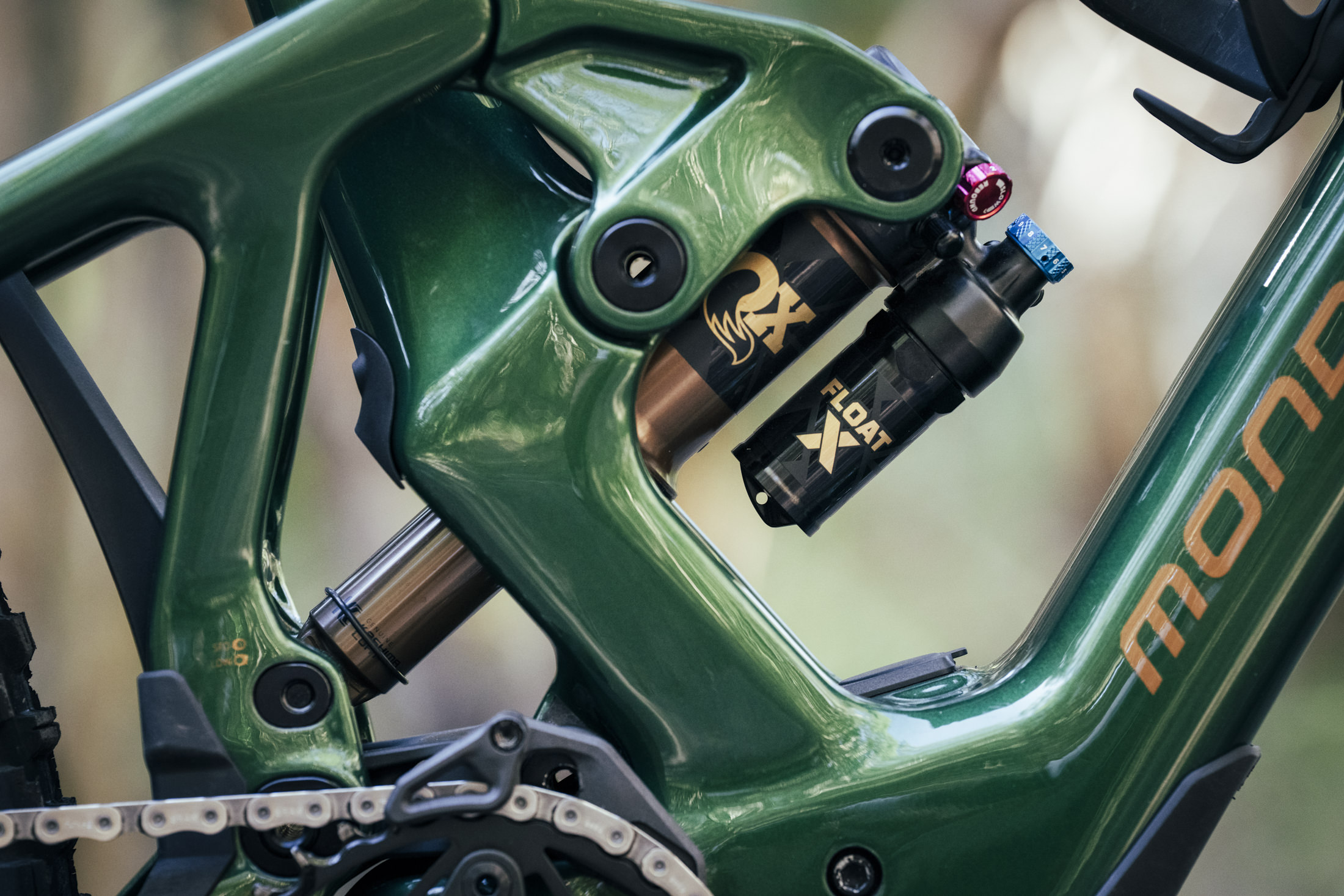
The Stealth Air Carbon frame, with its high-gloss, ultra-shimmery finish, is claimed to weigh 3,000g in a painted M/L size with hardware fitted, excluding the rear shock. There are a lot of nice details when you run your eyes over it.
A one-piece carbon rocker the size of a small watermelon, twin-sealed bearings, moulded internal cable channels, an integrated display, neat frame protection, a rear shock mudguard and a new chainstay silencer all point to a bike that has had a fair bit of attention paid to the finer points. The downtube is impressively skinny too, especially next to the chunkier shapes we’re used to seeing on removable-battery e-MTBs.
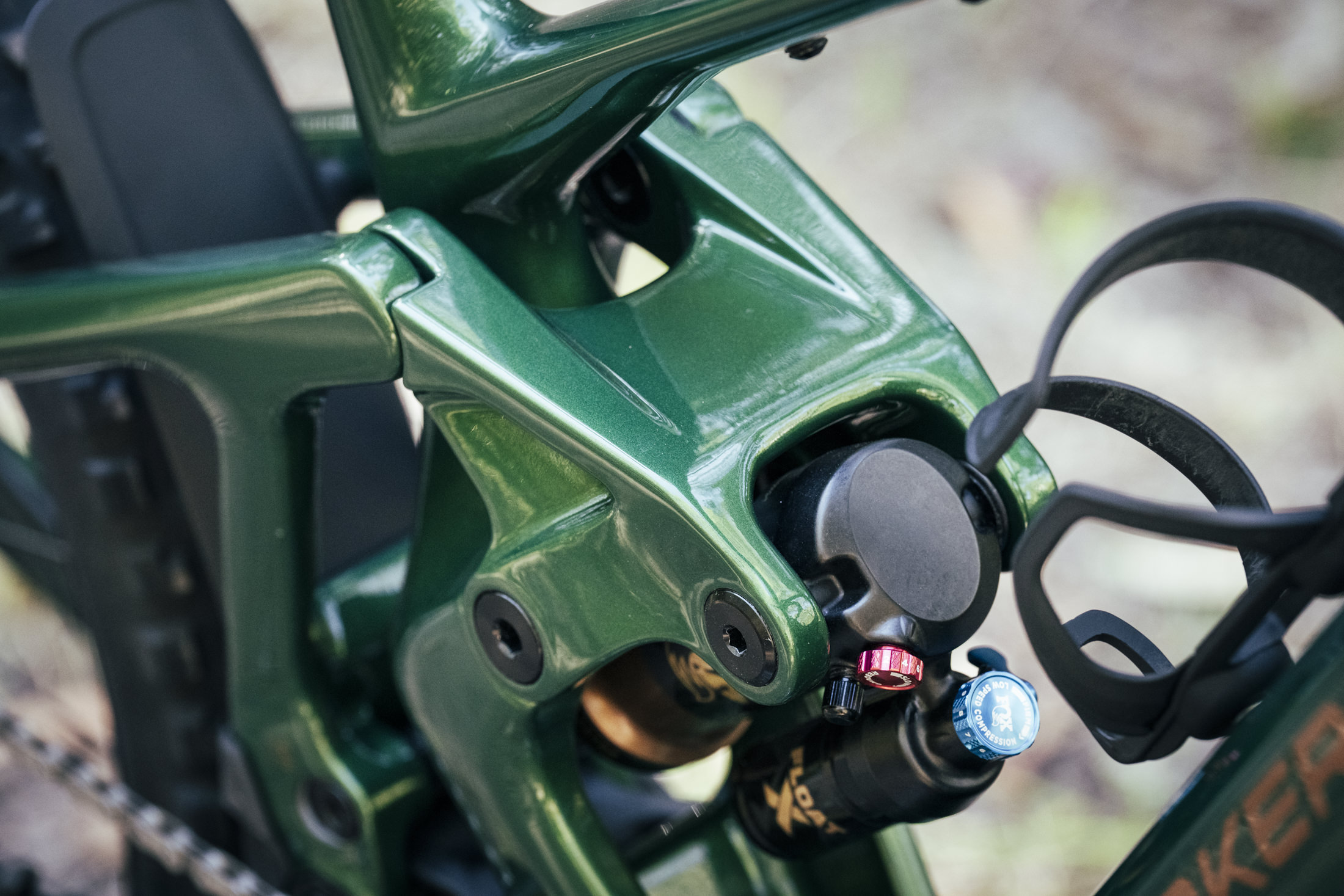 That huge one-piece rocker is one of the Zendit’s visual centrepieces.
Mondraker has also revised its ZERO suspension layout for the Zendit. The kinematics are built around a 205x65mm trunnion shock, with quoted progression of 27%, anti-squat at sag of about 105% and anti-rise at sag of around 99%. Fox-specific tunes are used on the Float X and Float X2 shocks across the range, and there’s a 36T chainring fitted as standard.
This is a big-bike e-MTB built for riders who want a lot of travel, a lot of support and a lot of oompf.
Fine frame details
There are a few genuinely useful features. The first is the wheel configuration. Zendit ships as a mullet, but if you want to run a 29in rear wheel, you can do so by changing the lower link flip-chip and updating the wheel setup in the Avinox Ride app. Chainstay length grows by 7mm, but Mondraker says the suspension kinematics, brake calliper position and key geometry figures remain unchanged.
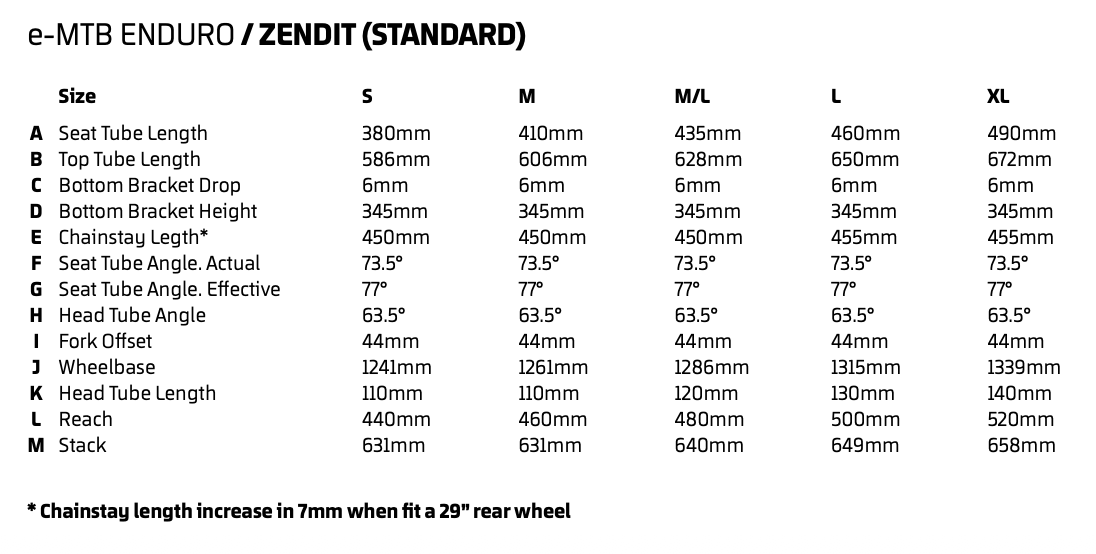
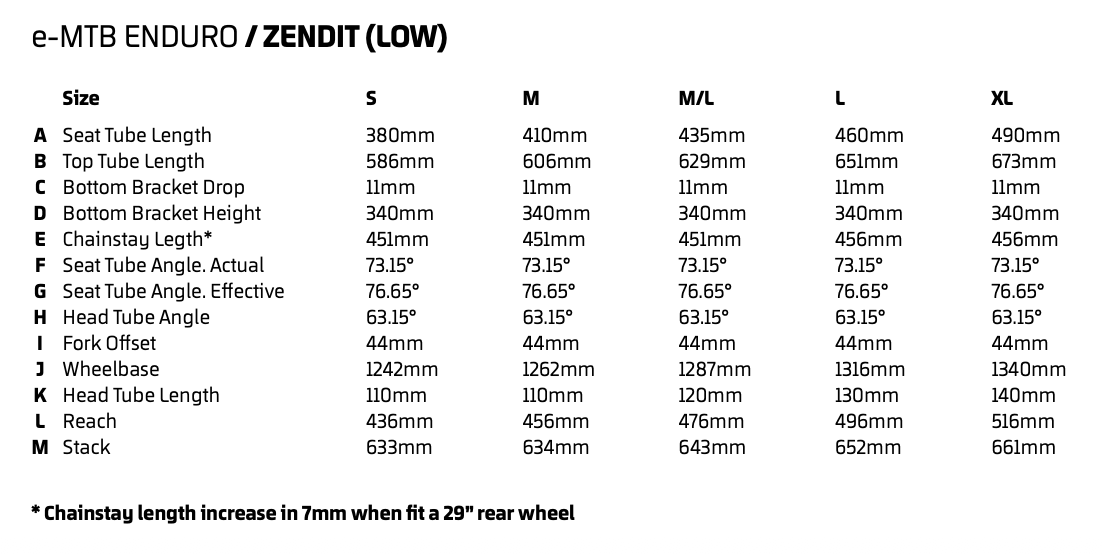
There’s also a separate geometry flip-chip that toggles between Standard and Low. In Standard, the head angle is 63.5 degrees, the bottom bracket height is 345mm, and the effective seat angle is 77 degrees. In Low, the head angle drops to 63.15 degrees, the BB height falls to 340mm, the effective seat angle shifts to 76.65 degrees, and the reach shortens by 4mm.
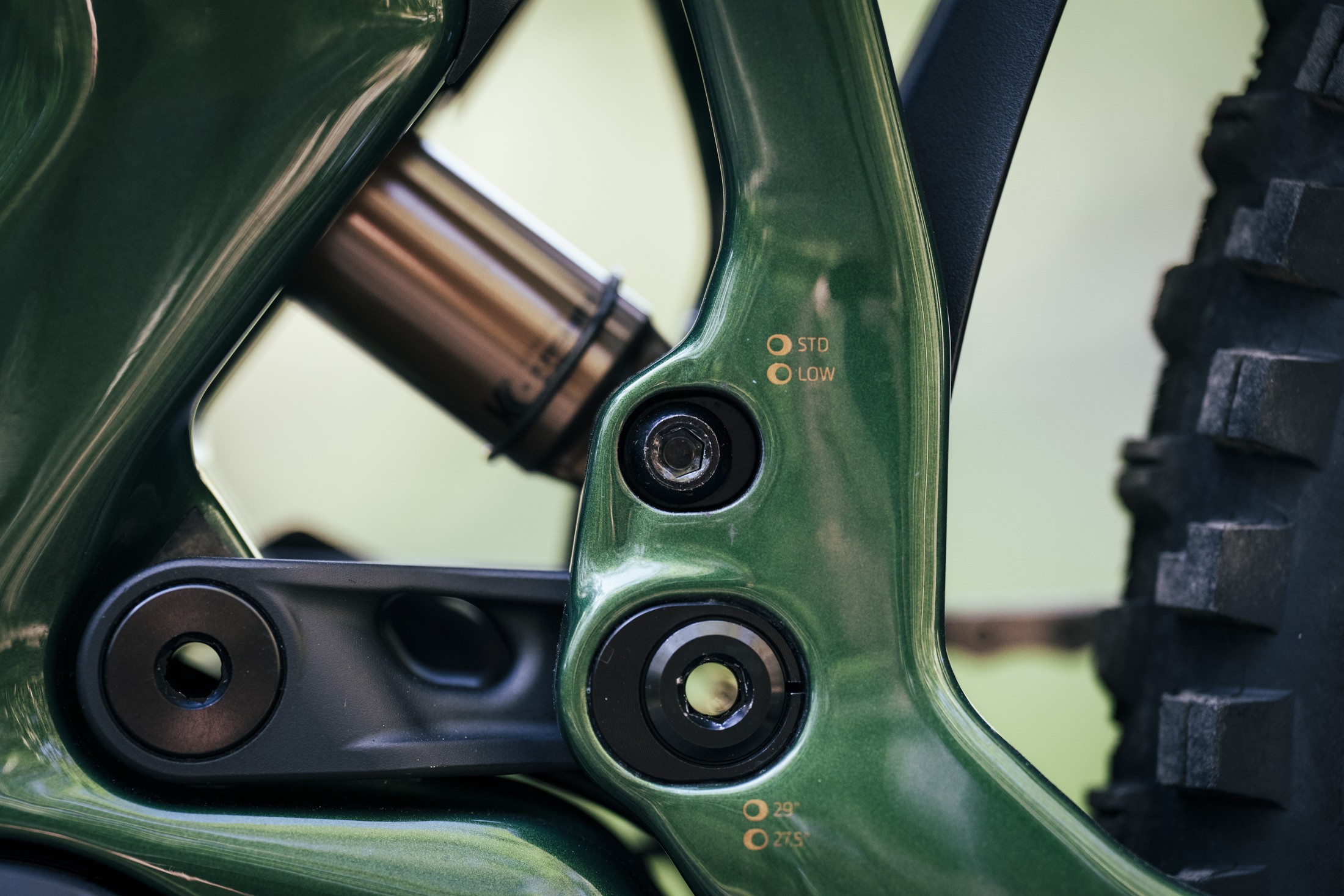 A lower flip-chip lets you fine-tune the geometry, or switch to a 29in rear wheel.
Tyre clearance is generous too, with room for up to a 2.6in tyre. Zendit is compatible with forks up to 180mm travel and rear brake rotors up to 220mm. There are also two bottle cage positions inside the main frame, including one tucked beneath the top tube, which would likely be used for just a tool carrying mount, not a bottle.
One thing to note is the battery arrangement. Zendit uses an 800Wh internal battery, and there’s no range extender available for the Avinox system. Mondraker says the battery can technically be removed, but only after taking the motor out first, and it recommends this be done by an authorised mechanic.
Mondraker Zendit geometry & size chart
Mondraker offers the Zendit in five sizes from S through to XL, with the in-between M/L size helping fill what is often a fairly awkward gap in reach.
Here are the key geometry numbers in the Standard setting:
S: 440mm reach, 631mm stack, 1241mm wheelbase
M: 460mm reach, 631mm stack, 1261mm wheelbase
M/L: 480mm reach, 640mm stack, 1286mm wheelbase
L: 500mm reach, 649mm stack, 1315mm wheelbase
XL: 520mm reach, 658mm stack, 1339mm wheelbase
Chainstay length is proportional. S, M and M/L sizes use a 450mm rear centre in mullet mode, while L and XL grow to 455mm. Add 7mm when converting to a 29in rear wheel.
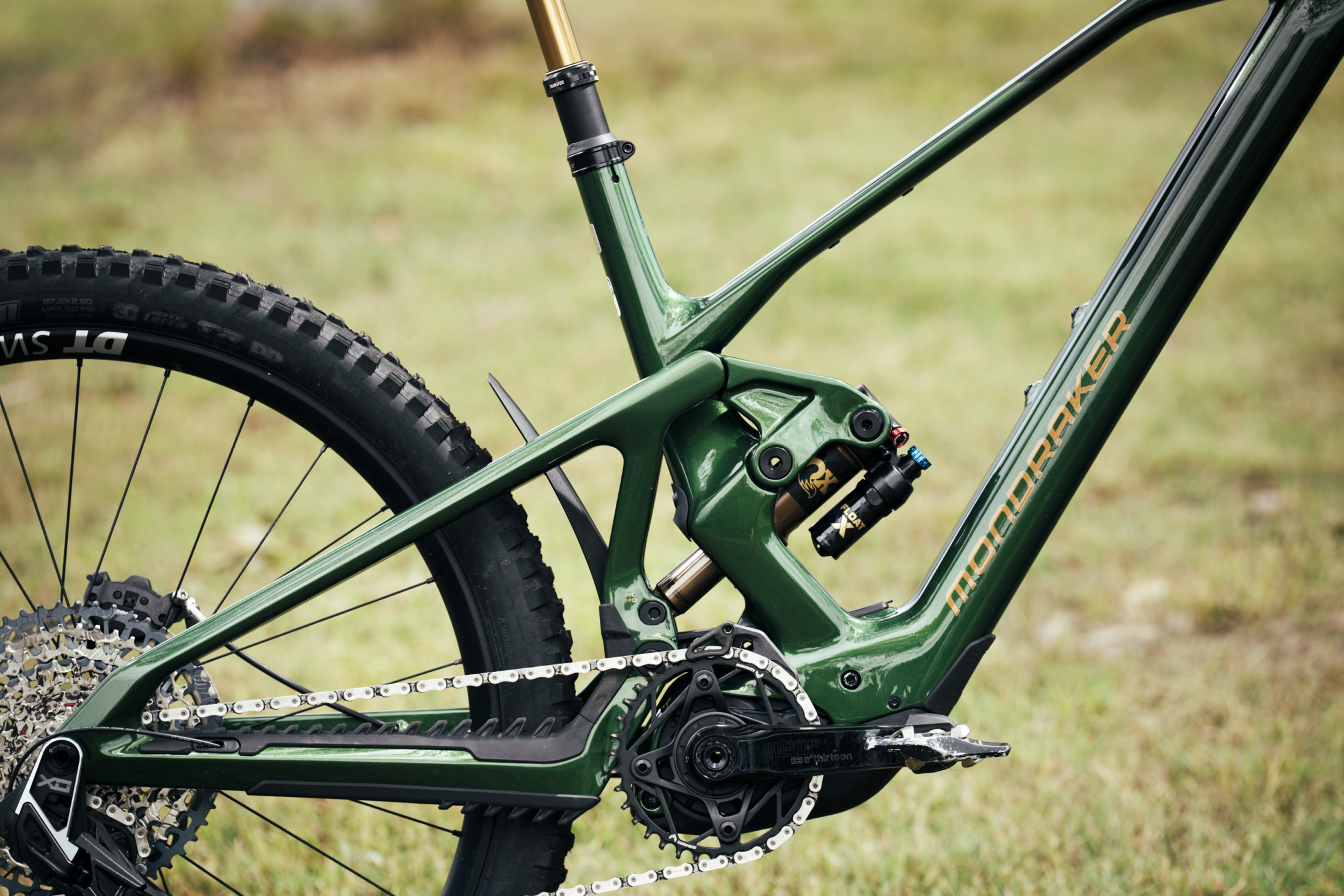 Long, low and mullet as standard, the Zendit is clearly aimed at aggressive riding.
The seat tube lengths are sensibly short too, ranging from 380mm in S up to 490mm in XL, and the FAQ file includes seatpost insertion figures for each frame size.
On paper at least, the Zendit sits in a very modern place. Long, slack and clearly aimed at stability, but with enough proportionality in the rear end to suggest Mondraker has thought carefully about balance across the size range.
The mighty Avinox M2S motor
The Zendit is also among the first to launch with the new Avinox M2S motor, which alone makes it an important bike. Avinox claims 130 Nm of torque, 150 Nm in Boost, and up to 1300W to 1500W of peak power, depending on battery and mode.
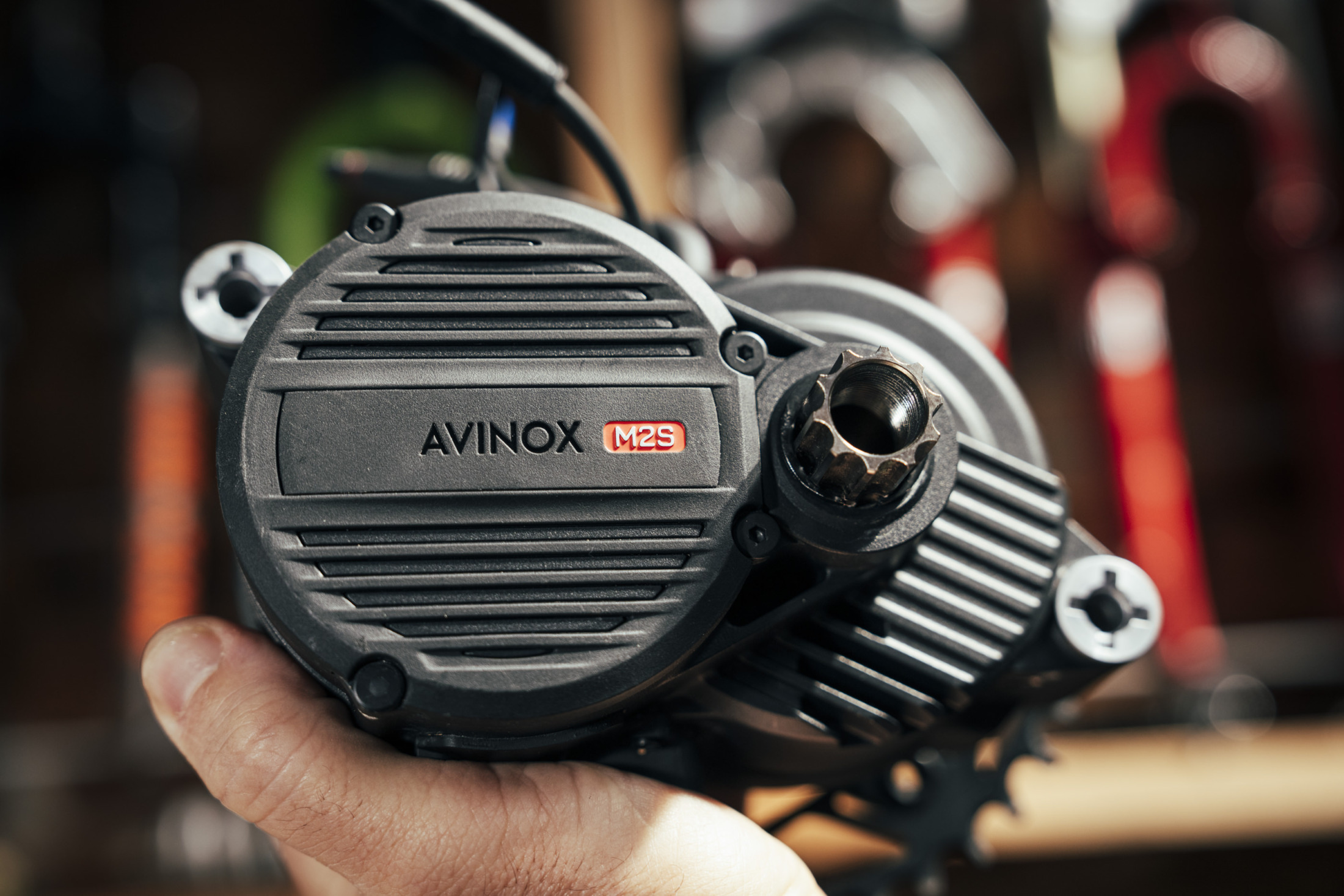 The new Avinox M2S motor is a huge part of the Zendit story.
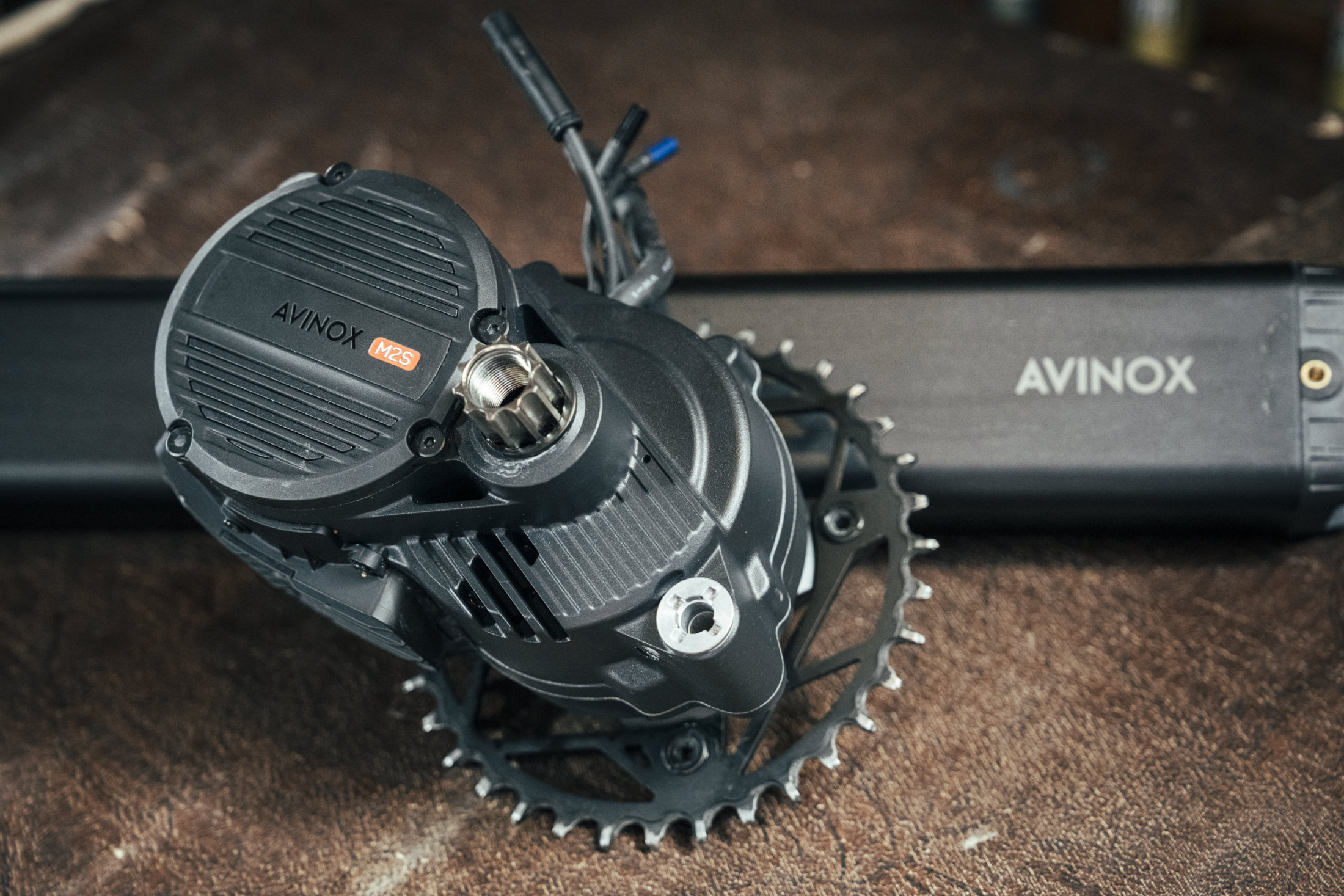
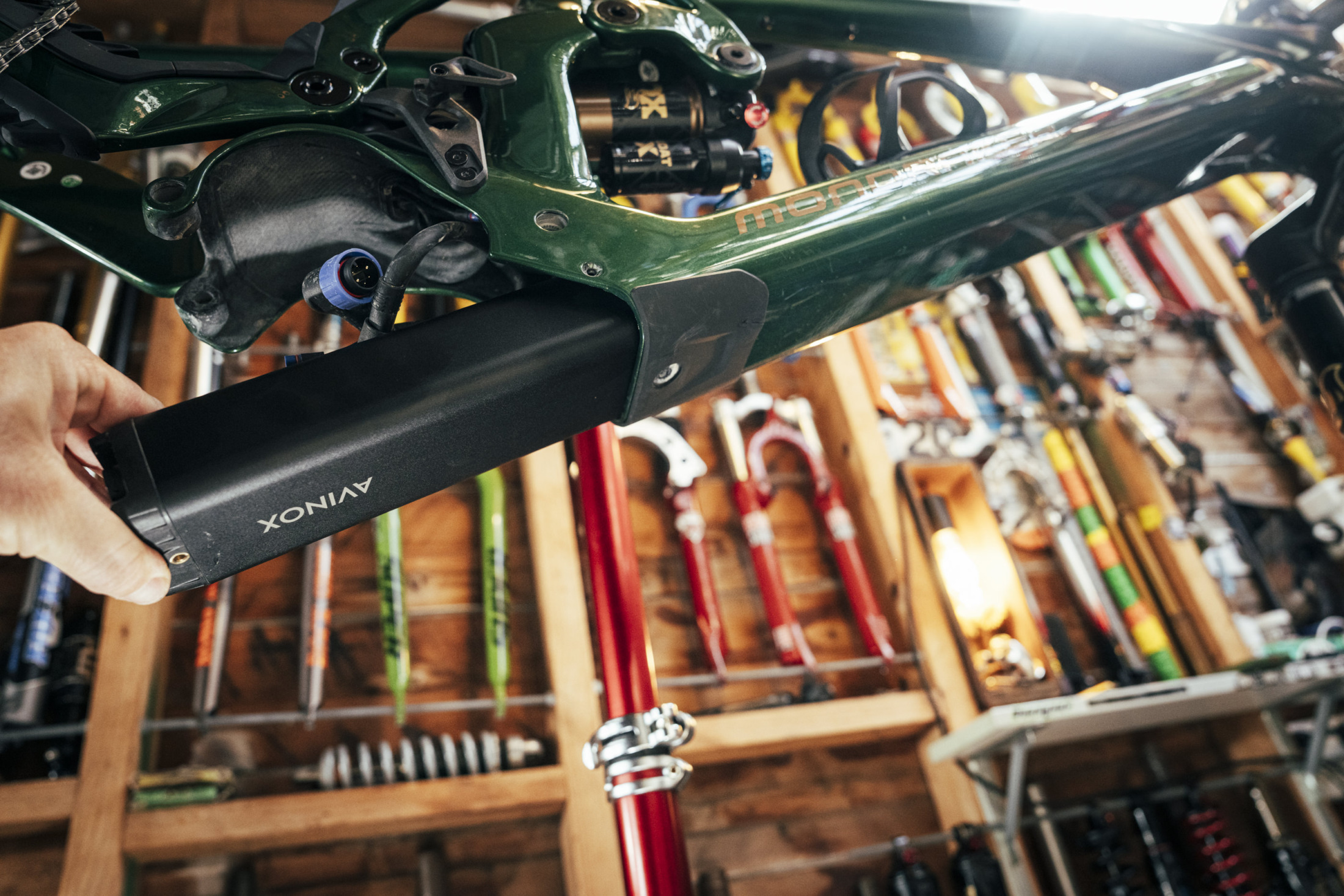
That’s well beyond the current figures from Bosch, whose CX-R tops out at 100Nm and 750W, and Specialized, whose latest 3.1 system produces 105Nm and 810W, or 111Nm and 850W in S-Works trim. On paper at least, the M2S represents a major step up in outright output, and it’s a big reason why so many brands suddenly seem keen to build around Avinox.
Yes, the Zendit is one of the first major bikes to launch with the new Avinox M2S system, which you can read more about in our full Avinox M2S first look.
Mondraker Zendit price & specs
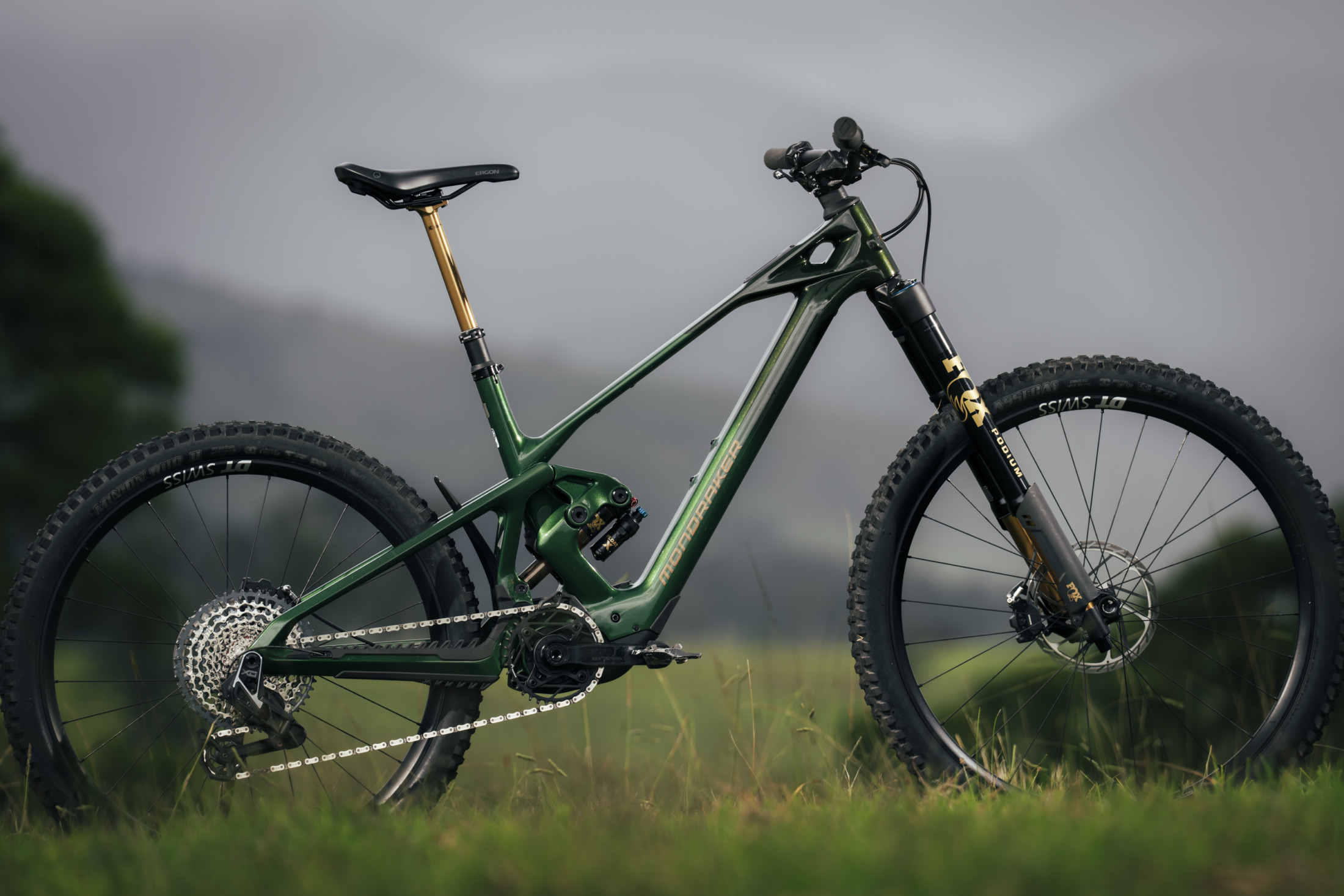 Three complete builds are available, all sharing the same carbon frame and 800Wh system.
There are three complete builds in the Zendit range. All three complete bikes share the same Stealth Air Carbon frame and Avinox 800Wh system.
It wasn’t that long ago that we weren’t especially convinced by the idea of e-MTB-specific components. Tyres, wheels, saddles and drivetrains often felt like marketing was getting a bit ahead of itself. Add the Avinox M2S into the mix though, and it starts to make more sense. The Zendit has enough power to chew through parts that aren’t up to the job, or at the very least wear them out much faster than a regular mountain bike, or even a non-Avinox e-MTB would.
We’ll report soon if all these parts are up to Zendit’s quest for terrain-covering speed.
Mondraker Zendit XR
Frame | Stealth Air full carbon, ZERO suspension design, 165mm travel
Fork | Fox Podium GRIP X2 Factory, 170mm
Shock | Fox Float X2 Factory, 205x65mm
Wheels | DT Swiss Hybrid HXC 1500 Spline carbon
Tyres | Maxxis Assegai DD MaxxGrip 29×2.5in front, Minion DHR II DD MaxxTerra 27.5×2.5in rear
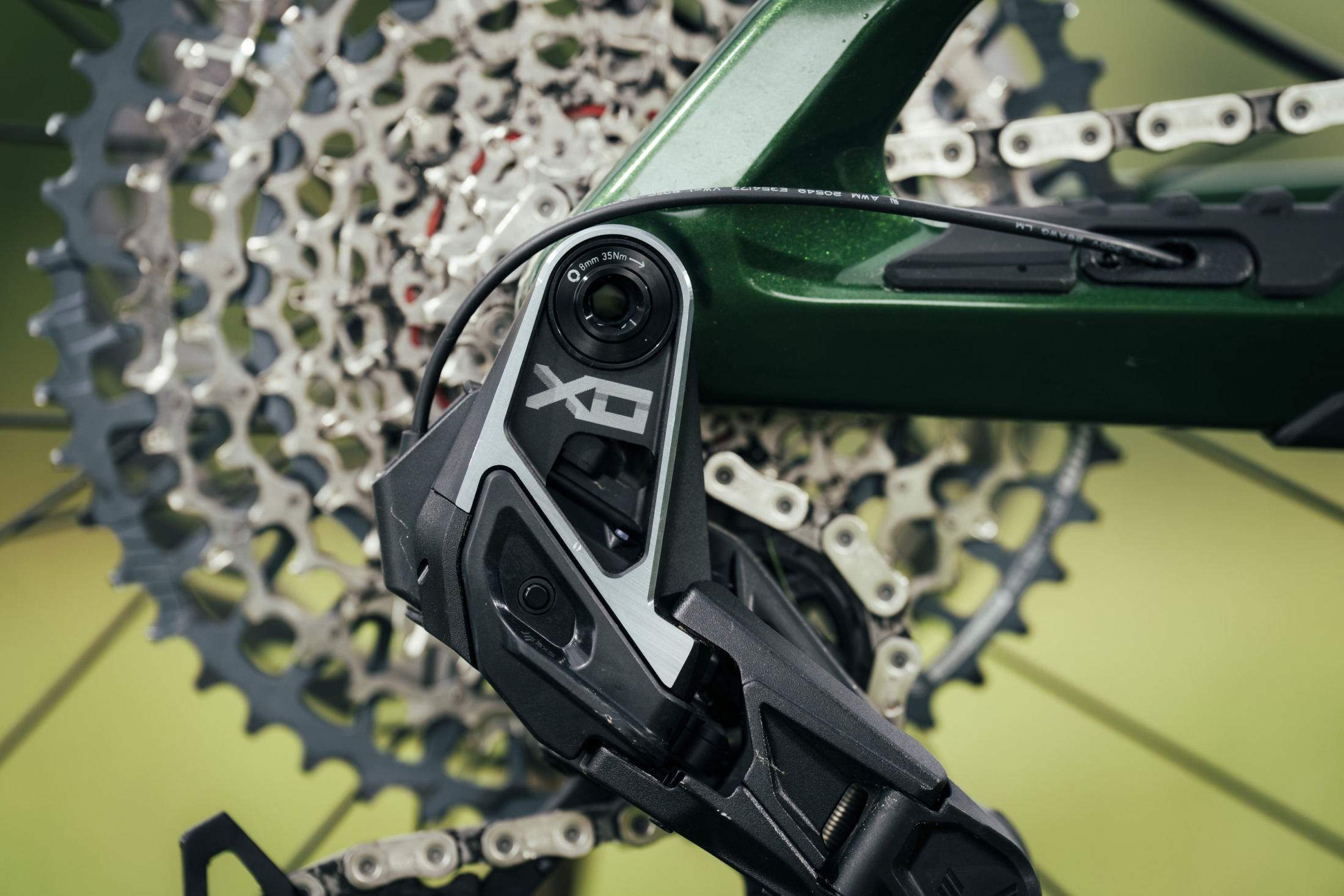
Drivetrain | SRAM X0 Eagle AXS T-Type w/36T chainring & 10-52T cassette
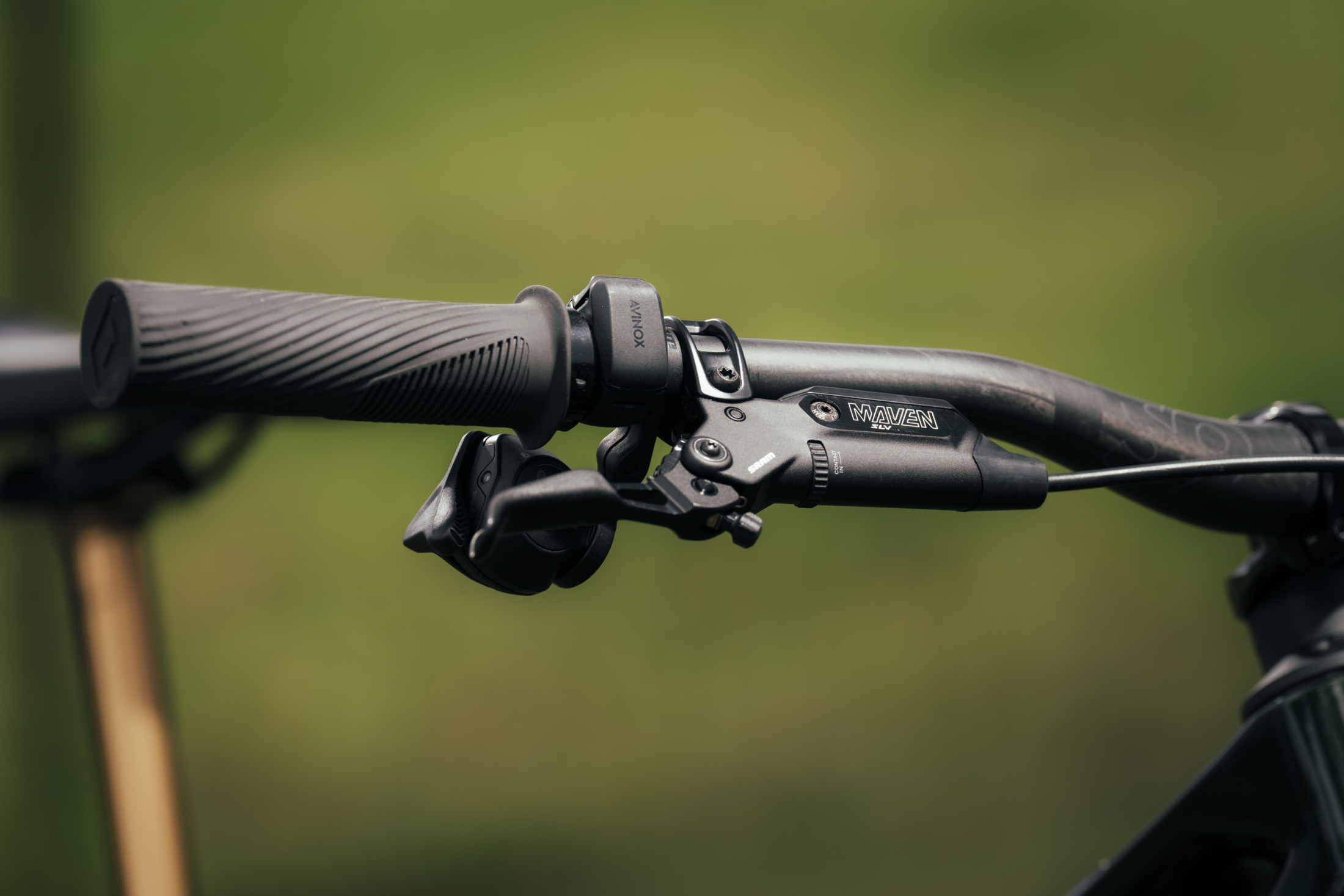
Brakes | SRAM Maven Ultimate w/220mm front rotor & 200mm rear rotor
Seatpost | RockShox Reverb AXS
Motor | Avinox M2S
Battery | 800Wh integrated
Charger | 12A
Display | Avinox DP100 w/BC100 wireless controllers
Claimed Weight | 23.1kg
Price | $20,999 AUD
Mondraker Zendit RR S
Frame | Stealth Air full carbon, ZERO suspension design, 165mm travel
Fork | Fox Podium GRIP X2 Factory, 170mm
Shock | Fox Float X Factory EVOL LV, 205x65mm
Wheels | DT Swiss Hybrid HX 1700 Spline
Tyres | Maxxis Assegai DD MaxxGrip 29×2.5in front, Minion DHR II DD MaxxTerra 27.5×2.5in rear
Drivetrain | SRAM X0 Eagle AXS T-Type w/36T chainring & 10-52T cassette
Brakes | SRAM Maven Silver w/200mm rotors front and rear
Seatpost | Fox Transfer Factory
Motor | Avinox M2S
Battery | 800Wh integrated
Charger | 4A
Display | Avinox DP100 w/BC100 wireless controllers
Confirmed Weight | 23.00kg
Price | $17,499 AUD
Mondraker Zendit RR
Frame | Stealth Air full carbon, ZERO suspension design, 165mm travel
Fork | Fox 38 Factory GRIP X2, 170mm
Shock | Fox Float X Factory EVOL LV, 205x65mm
Wheels | DT Swiss Hybrid H 1900 Spline alloy
Tyres | Maxxis Assegai EXO+ MaxxGrip 29×2.5in front, Minion DHR II DD MaxxTerra 27.5×2.5in rear
Drivetrain | SRAM S1000 Eagle AXS T-Type w/36T chainring & 10-52T cassette
Brakes | SRAM Maven Base w/200mm rotors front and rear
Seatpost | Onoff Pija adjustable dropper
Motor | Avinox M2S
Battery | 800Wh integrated
Charger | 4A
Display | Avinox DP100 w/BC100 wireless controllers
Claimed Weight | 22.8kg
Price | $14,499 AUD
Sizing & fit
Based on the geometry chart, the Zendit is not a small bike. Reach numbers are generous through the size range, and the long front centre combined with the fairly upright effective seat angle should place most riders in a strong seated climbing position without making the cockpit feel cramped.
One thing worth noting is the interrupted seat tube. Like other Mondrakers, it limits how far the dropper can slam into the frame, so riders will want to pay attention. At around 180cm tall, Mick found the seat on the M/L just a touch high with the Fox Transfer at full extension. Thankfully, the bike is included with the Fox travel-reducing spacers, so it’s an easy fix if you need a bit more clearance.
Suspension setup
Zendit’s rear suspension has been one of the more interesting parts of the first ride experience so far. With the rear shock tucked inside the frame like that, setting sag isn’t quite as straightforward as on a bike with an exposed shock where you can easily eyeball the sag ring.
The good news is Mondraker publishes pressure guides for both the fork and rear shock, which made it easier to get a decent baseline setup without too much mucking around.
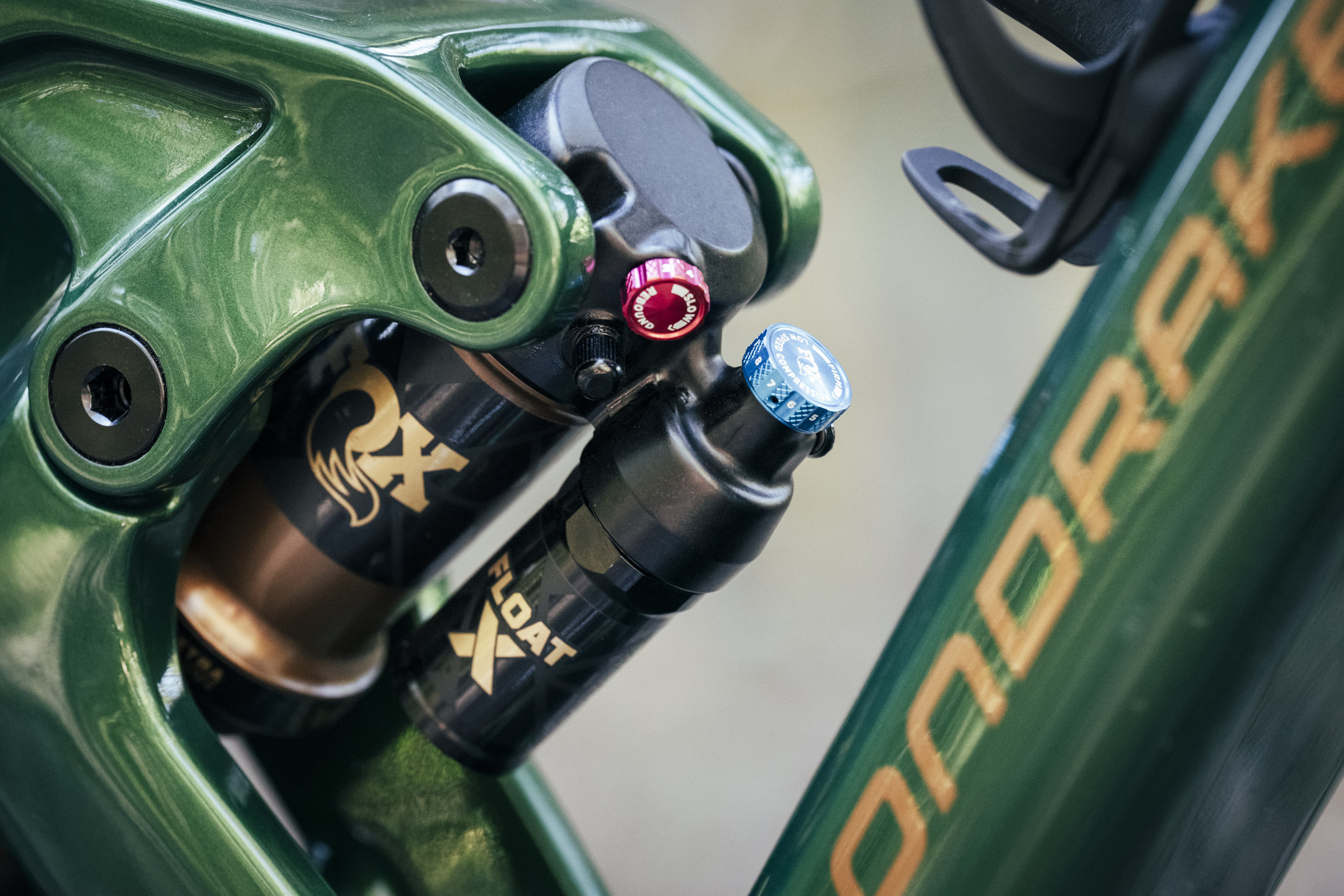 The rear shock is tucked away neatly, though setting sag isn’t quite as easy as on an exposed shock.
The shock’s compression tune feels fairly light, and we ended up running the low-speed compression dial nearly all the way closed.
There’s loads of grip, and the rear wheel does a great job of staying connected on rough ground, but the flip side is that the bike can sit fairly deep in its travel when you’re really loading it up on steep, awkward climbs.
That’s especially noticeable with the shock fully open. In that setting, the rear end feels very calm and very fluttery over chatter and technical rubble, but on punchy step-ups and ledges there’s a slightly gooey feel that can take some urgency out of the bike.
Flick the climb switch on and it changes straight away. The rear rides higher, there’s more support under your feet, and it becomes much easier to punch through awkward uphill moves without the back end wallowing as much. The trade-off is less comfort and a rougher ride, and on loose climbs in full Turbo or Boost, it felt like we were in a rodeo, firing rocks and sticks off the wildly spinning rear wheel. But it’s a useful reminder that on a bike with this much force on tap, suspension setup matters quite a lot.
Mondraker Zendit weight
Weighed without pedals and set up tubeless, our M/L Zendit RR2 weighed 23.00kg. That is a healthy number for a full-power, 165 mm-travel e-MTB with an 800 Wh battery!
Testing the Mondraker Zendit
Our first rides on the Zendit have been less about reaching a definitive verdict and more about working out how the bike behaves and which parts of the package really define it. It’s a busy space, with more options than ever. And with the Avinox tsunami well underway, the discussion has shifted from Amflow vs. the rest to which Avinox bike suits who.
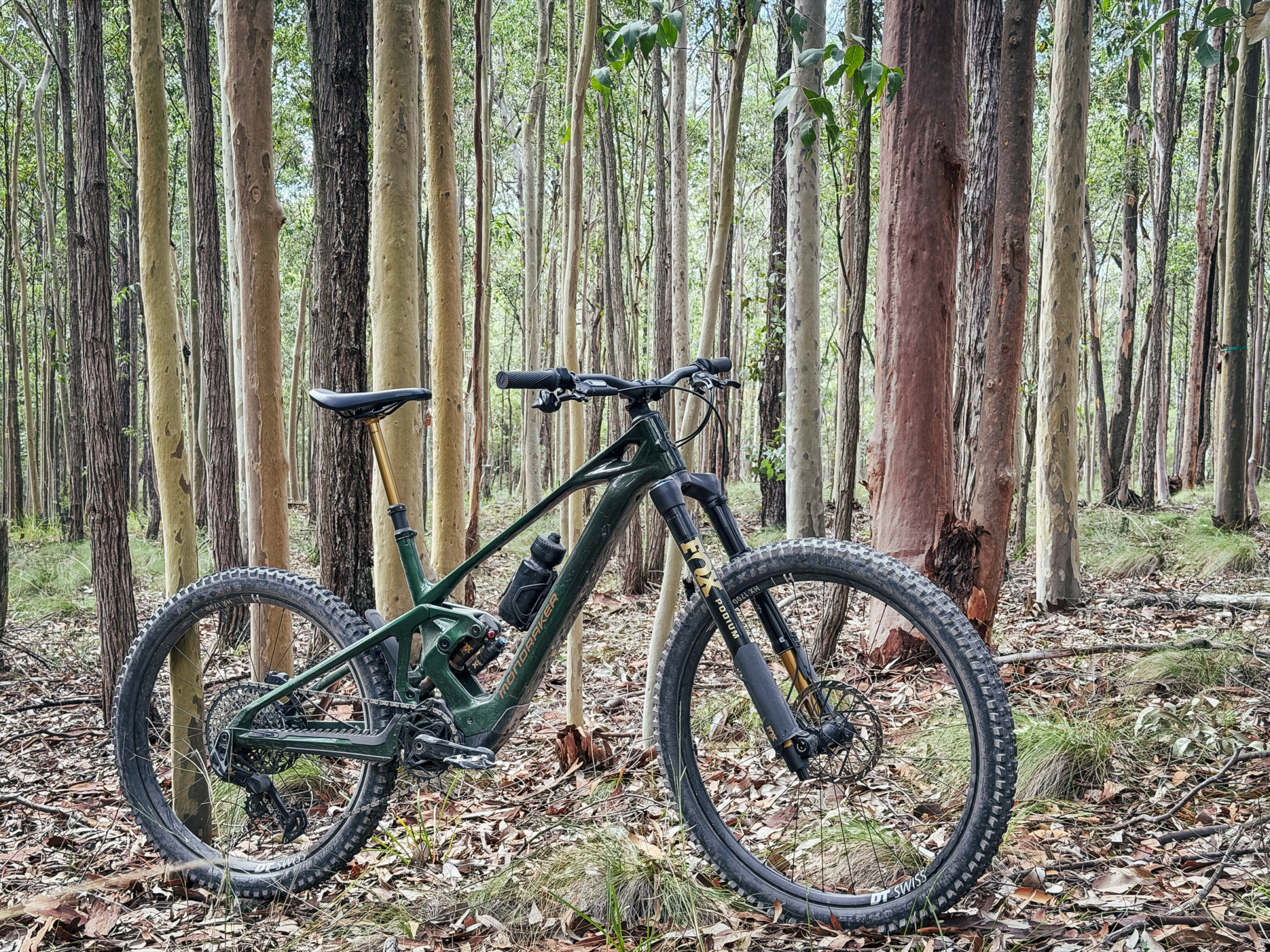 Getting lost and found again – opening up possibilities on super-hard back-country terrain
Straight away, the rear suspension stood out. There’s a lot of movement in the bike; it feels cloud-like at times, but it isn’t vague. The chassis tracks well, the back end stays planted, and the whole bike has a calm, composed feel when the trail gets rough. The gooey 2.5in tyres, aluminium wheels and cush grips all play a support role in making this bike feel sensational over rough and loose terrain.
The other thing that became obvious very quickly is that the Zendit is mighty confident. It absolutely has the ability to flatten ugly terrain on the way up, but it also has adjustability, enough support and enough variation in behaviour that it feels like a proper bike, not just a frame hanging on to a motor.
We found ourselves standing back in disbelief, which is what makes it interesting after the first few rides.
How does the Zendit climb?
Very well.
The better answer is that the Zendit climbs with a lot of grip, a lot of momentum and a very strong seated position, but the exact feel depends heavily on how you set the bike up.
With the shock open, it’s super calm and very tractable. On ugly technical climbs, it sticks impressively well to the ground, and that active rear end helps the tyre find grip where a firmer bike might skip. But there is a slight trade-off.
With the Float X2 climb switch engaged, the rear sits higher, and the bike drives forward much more directly. On repeated test runs up the same rough climb, that made it easier to carry speed over ledges and awkward step-ups, and the bike felt noticeably more efficient in the process.
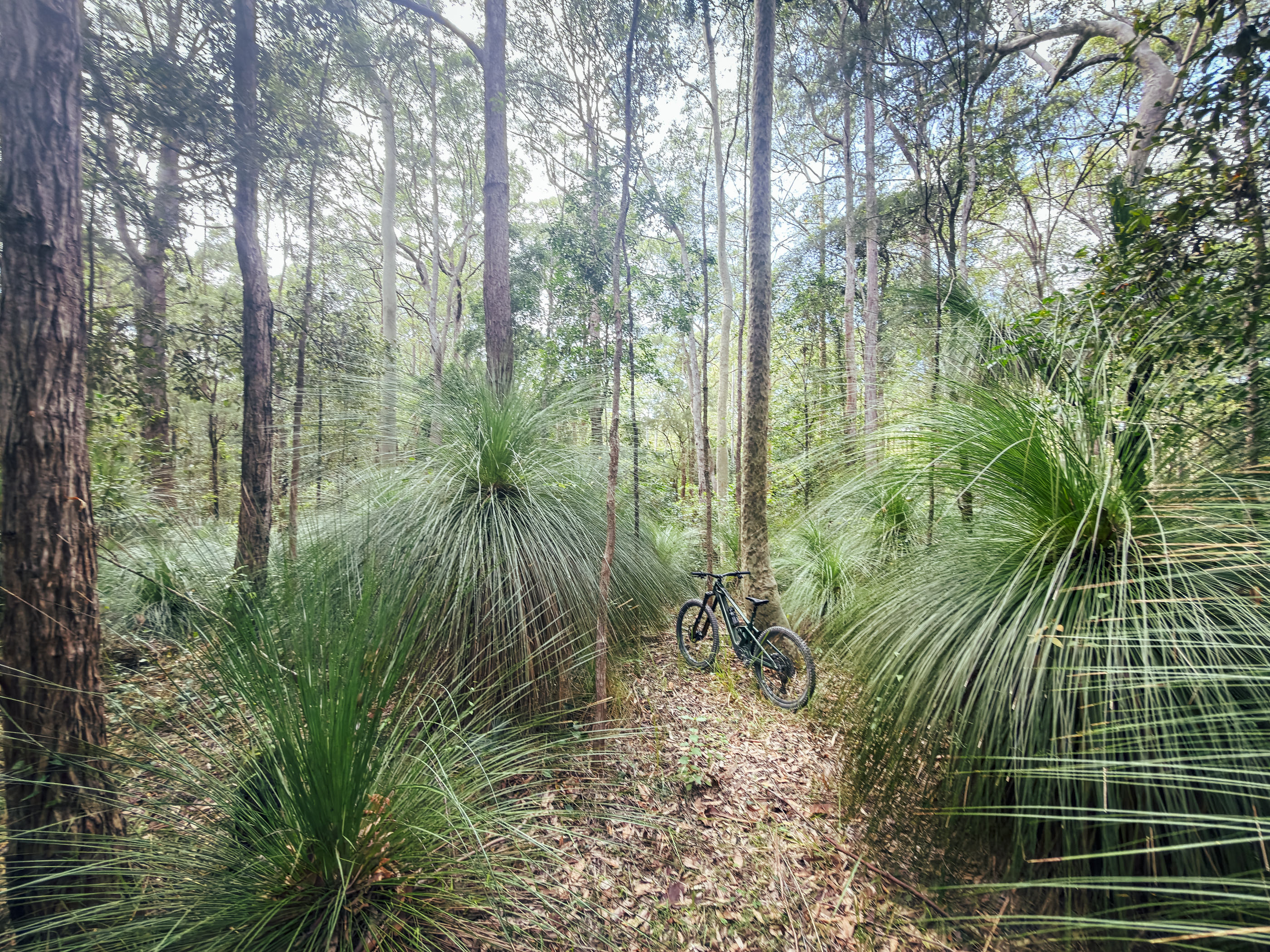 Getting lost , climbing up and down the gnarliest terrain
That was one of the biggest takeaways for us. Zendit’s power is one thing, but how the suspension handles that power matters just as much.
Using Avinox’s auto mode has also impressed in some ways and surprised in others. Compared to earlier e-bikes, it feels smooth and far less artificial, but there are moments where the response can feel a little too eager in slow-speed technical terrain. Small pedal inputs can trigger a bigger-than-expected surge when you’re trying to lift over a log or clear an awkward ledge, and we suspect lighter riders will feel that more keenly than heavier ones.
Turbo, meanwhile, is exactly what you’d expect. Point it at something steep, loose and rough, and the Zendit devours ground. It doesn’t just make climbing easier; it shortens the whole process. The pauses, the stalls and the acceleration time out of each turn all shrink. If descents are your priority, you’ll get to them waaaay faster.
Boost mode is almost laughable, way too much in most situations, but on the right surface and gradient, it zooms up and climbs in fast-forward.
Motor tuning will be absolutely imperative. And especially for lighter riders, it’s worth it for safety’s sake.
And what about descending?
It’s early days, but the first impression is that the Zendit feels every bit like a proper big-bike e-enduro machine on the way back down.
The geometry is aggressive, the travel is generous, and the rear suspension has a glued-to-the-trail quality that should work beautifully once speeds go up. There’s enough support in the back end that it feels like something you can push against rather than just sit on.
Hanging off the back, sliding down the steepest trails we could find, the Zendit was pretty chill about it all, though on super-steep or slow switchbacks, even our best French-style enduro nose-wheelie turns couldn’t hide the length, and it required some pre-planning to get around the tight ones.
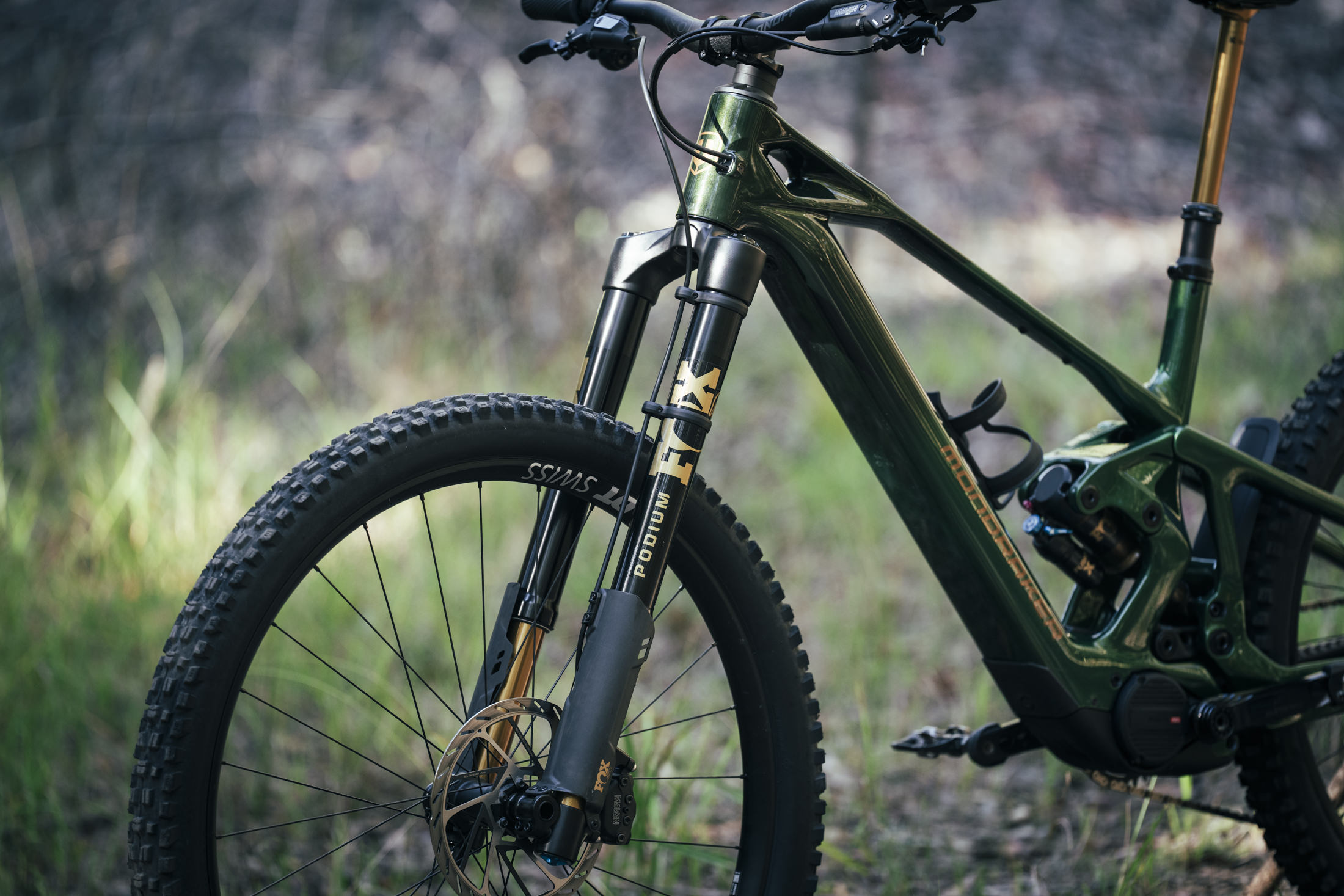 Fox’s Podium fork feels like a pretty natural match for a bike like this.
What stood out to us was how often the Zendit encouraged a more seated style of riding. It’s one of those bikes where you can keep the cranks turning, drop the seat a few centimetres, stay centred and let the bike monster-truck its way into things, around them, over them and straight through the mess. At times, that made it feel almost too easy. We found ourselves sitting more, doing less, and just letting the bike turn ugly trail into smooth forward motion.
That’s impressive, but it did also make the ride feel a little less involving at times. Compared to a regular mountain bike, or even something like the Levo, which feels sprightlier and a bit more engaged underneath you, the Zendit can feel more like a very capable, cushy, blunt instrument. Fast, planted and hugely effective, but not always quite as interactive.
Component highs & lows
There’s a lot of fancy hardware in the Zendit range, particularly at the top end.
The XR is full halo-bike territory with a Fox Podium fork, Float X2 shock, carbon DT Swiss wheels, SRAM Maven Ultimate brakes and Reverb AXS dropper. The RR S still looks very serious, and the RR brings the same frame and power system at a lower price with more attainable parts.
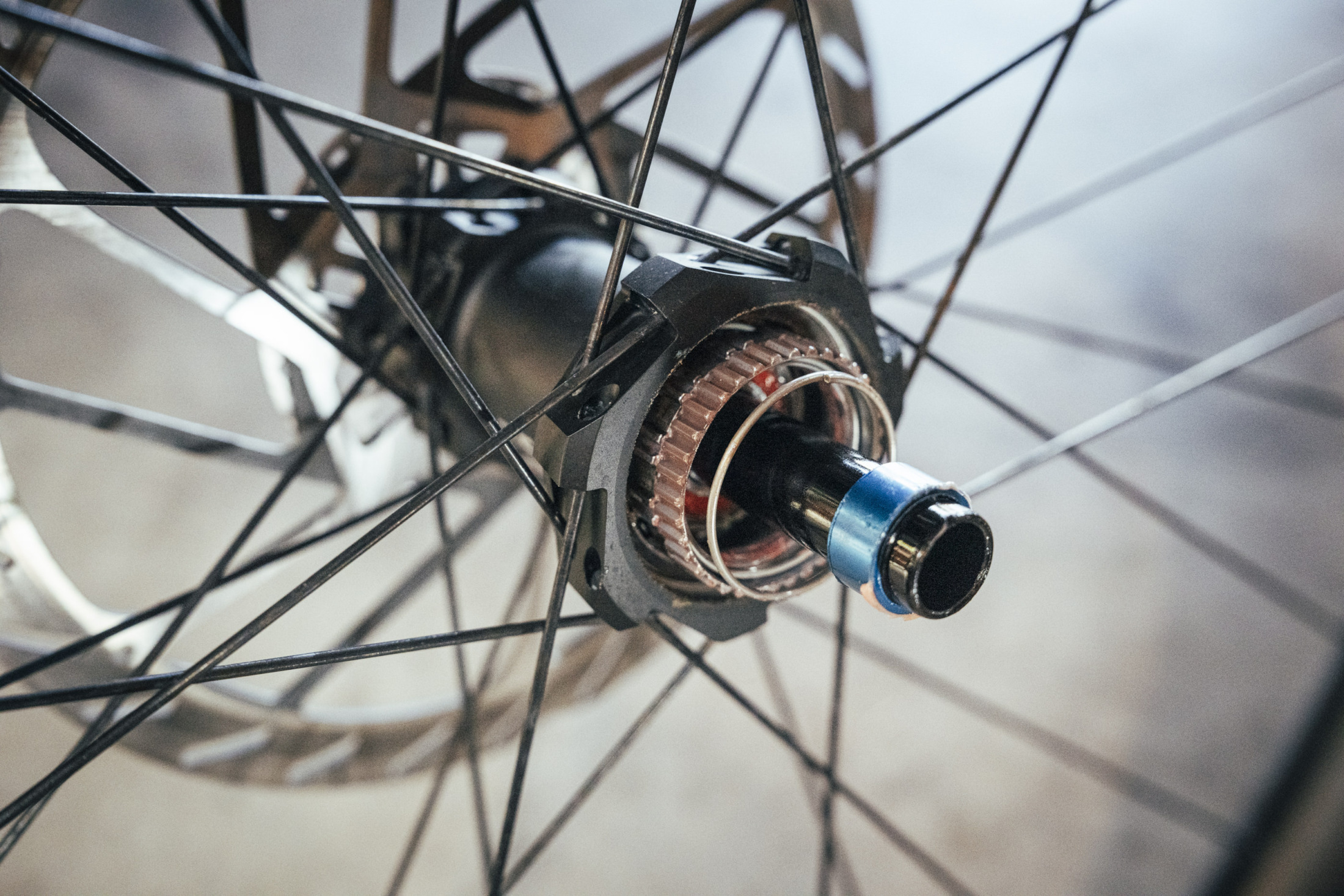 DT wheels with the new DEG DF anti-pedal-kickback hub, very nice spec!
The DT Swiss HF 1700 wheels are a proper highlight too, because they come with DT’s new DEG DF anti-pedal-kickback hub tech as standard. That allows 10 degrees of freehub rotation before the ratchet engages, which effectively removes pedal kickback from the chat.
That fork! Ahhhh, we absolutely love the Fox Podium, and if there were ever a bike built to make the most of that mighty bump-deleting fork, it’s this one.
The other obvious talking point is battery flexibility. An internal 800Wh battery is great for range, but there’s no range extender, and the battery isn’t quickly removable for easy trailside swaps or charging away from the bike. Depending on how you ride, or where you live, that may or may not matter.
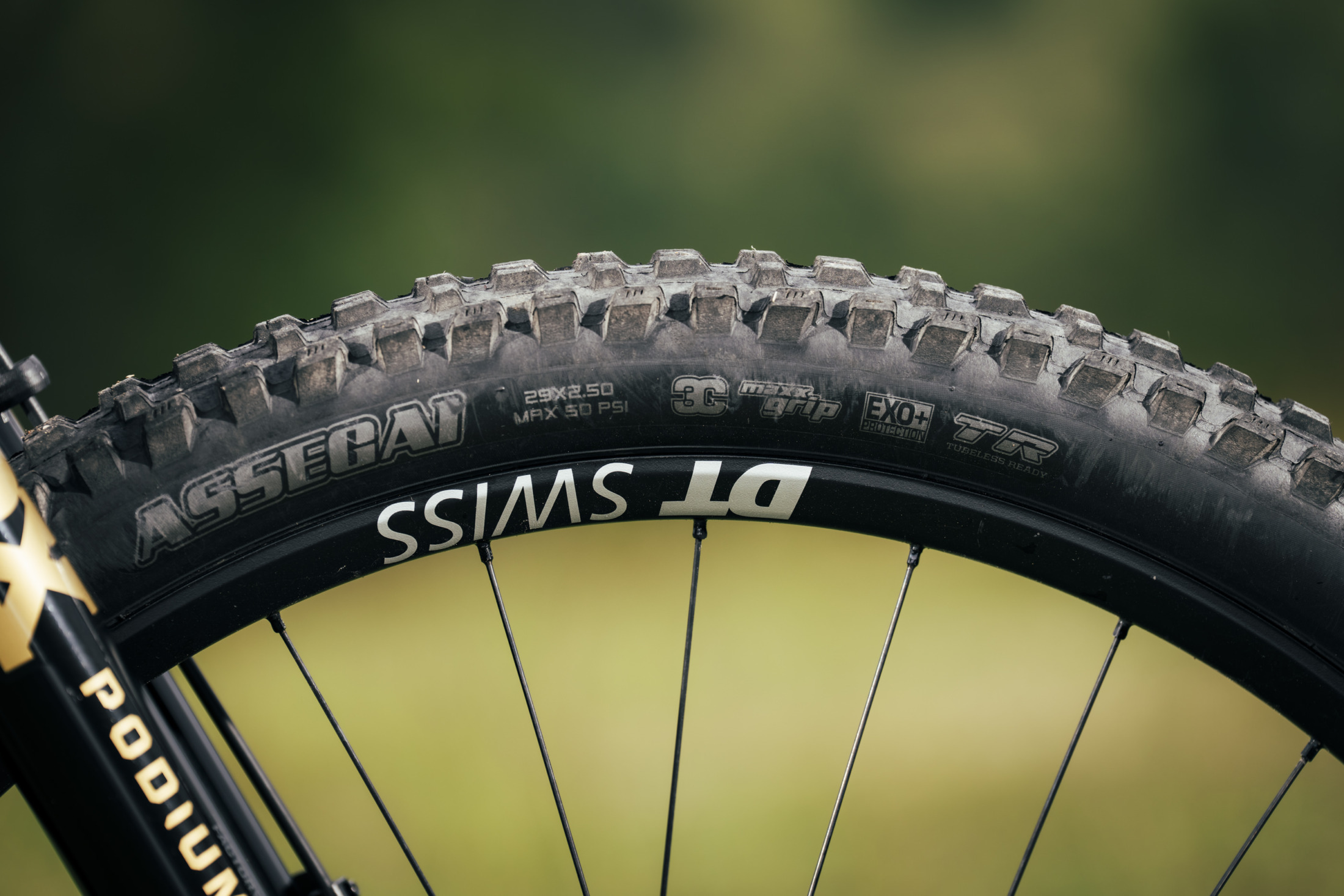 2.5in Maxxis combo is a great match for this bike.
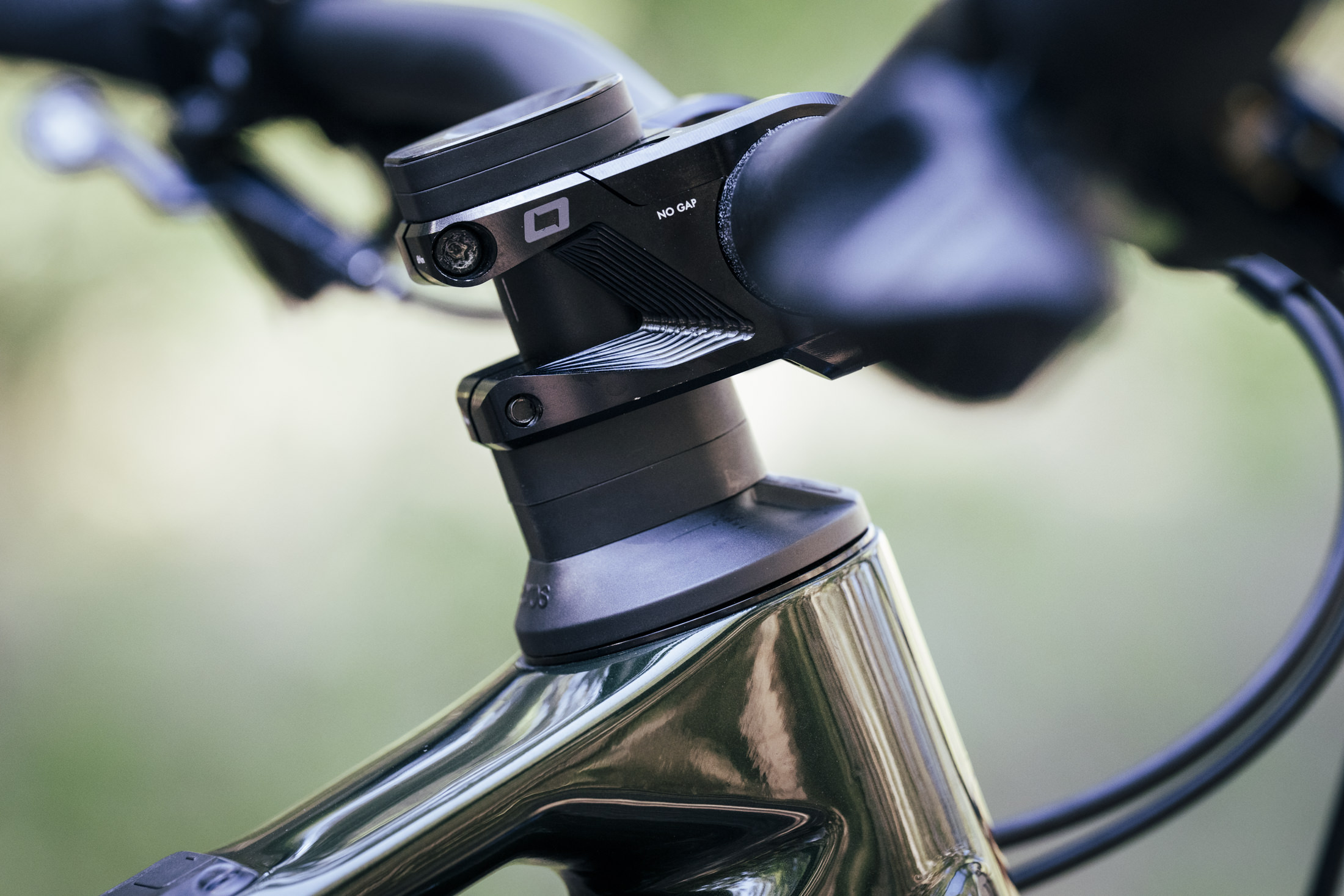
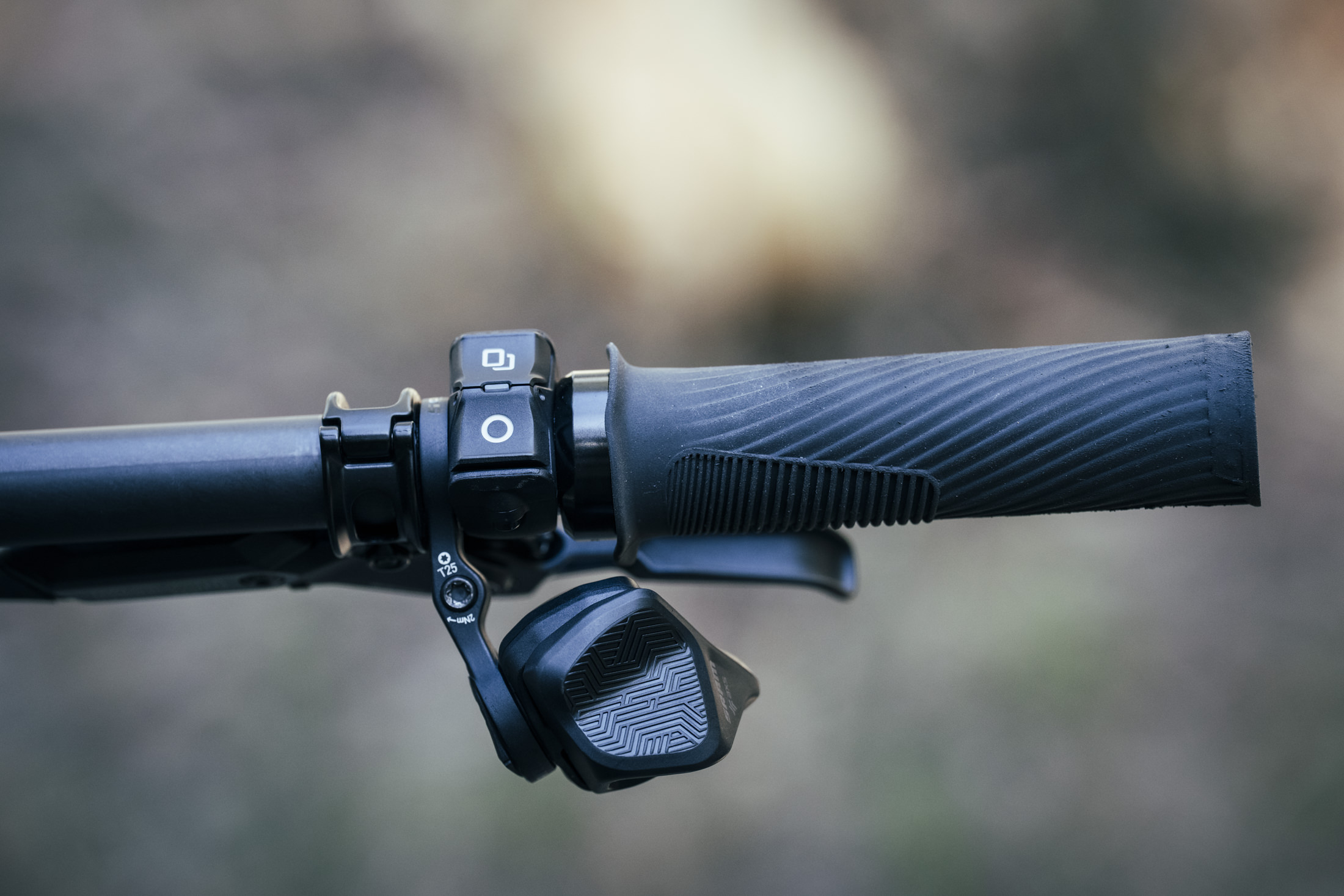
We did run into some Maven brake fade on longer descents. The metallic pads and 200mm rotors seemed to glaze up a bit and go a little sleepy when grabbed hard, which isn’t ideal on a bike this fast. We’ve since cleaned the pads and given the pistons a good massage, so we’ll keep tabs on that and update in our full video review.
Flow’s Early Verdict
After a handful of ridiculously fun, chaotic and mildly eye-widening rides, the Mondraker Zendit already looks like a very appealing bike in the hands of the right rider.
Yes, the new Avinox M2S system is going to hog plenty of the attention. That’s unavoidable. But the more interesting story here is how much work Mondraker has clearly put into the frame, the kinematics and the overall ride feel, because this thing would still be an interesting bike even without the nuclear-grade headlines coming from the motor.
The rear suspension is active, calm and hugely grippy, the geometry is right where you’d want it for a modern long-travel e-enduro bike, and the ability to fine-tune the setup with the climb switch, geometry chip and rear wheel configuration gives the Zendit more depth than a quick glance suggests.
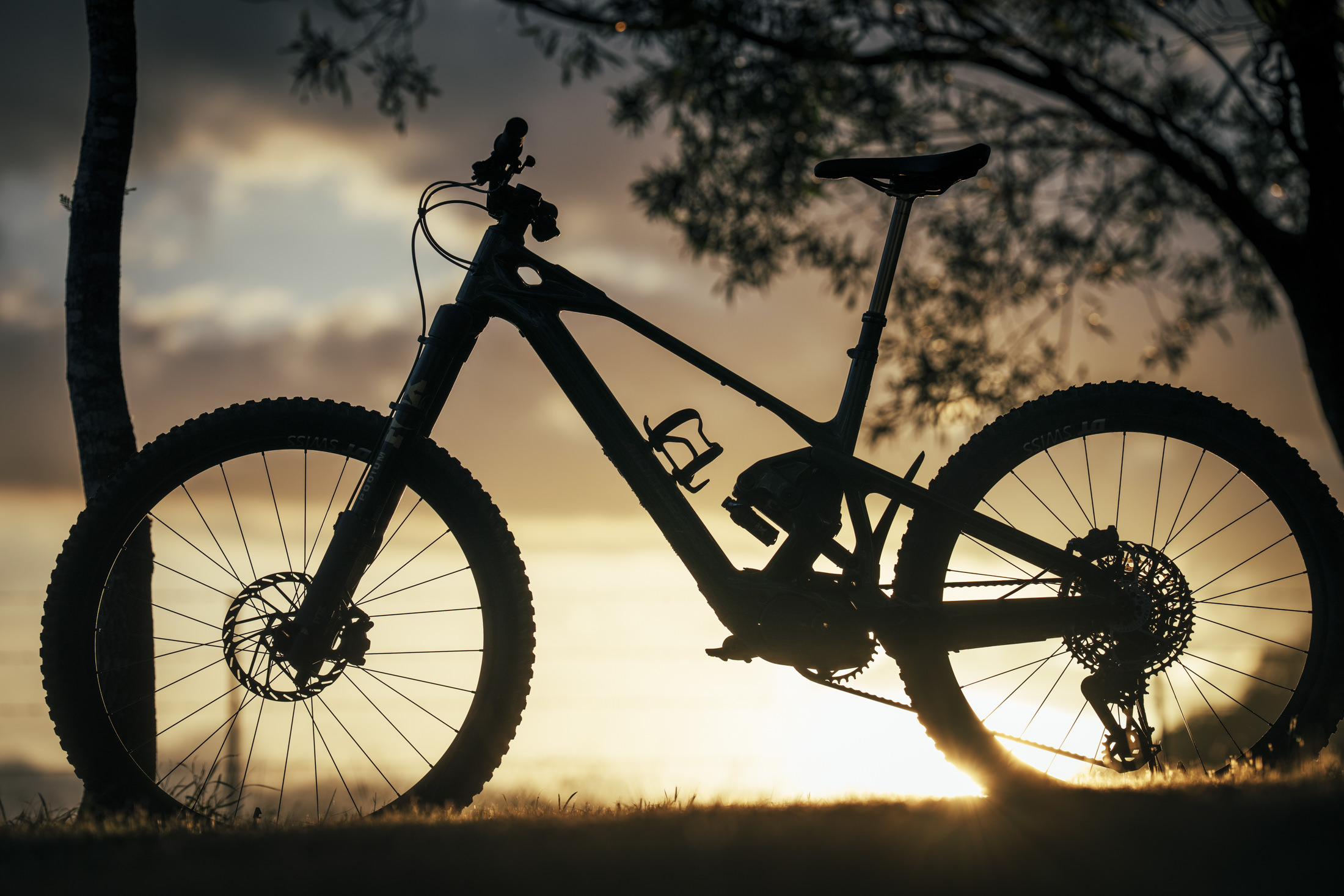 Quite the silhouette, eh!
It also feels like a bike that will reward more time, because we’re only just scratching the surface of what it can do. First impressions are very positive. The Zendit is aggressive, composed and absolutely packed with potential, and we’re very keen to keep pushing on with the setup to see just how hard this thing can be ridden, and who it’ll suit best.
Over the next few weeks, we will return with a video review, where we’ll dig further into the adjustability, motor tuning, app functionality, fork and shock setup, geometry options and how the Zendit stacks up against other bikes running the new Avinox M2S system.
More to come.
Editorial Guidelines
At Flow Mountain Bike, we’re committed to delivering engaging and trustworthy content, from product reviews to destination showcases, news, interviews, and features. While many of the brands and destinations we cover may advertise with us, our editorial team operates independently, ensuring our content is guided by expertise and passion—not commercial influence. Sponsored content is always clearly disclosed, and we remain dedicated to providing honest and unbiased coverage across everything we publish. For more details, see our Transparency Report.