
Comment: “Be aware of ongoing steps to privatise by stealth – like the Request for Proposals for outsourcing of ophthalmology for the entire country.” This was a message forwarded to me by a concerned emergency medicine specialist. Many patients with severe eye trauma turn up in emergency departments. It is a major public health problem.
The prompt for the specialist to message me was an announcement on the Government’s procurement website of a Request for Proposals tender for the appointment of ‘service providers’, who meet clinical, commercial, and other requirements. The role of this panel is to advise Health New Zealand on outsourcing all its ophthalmology services currently provided in public hospitals through a national procurement process. The tender opened on March 5 and closed on April 1.
The advertisement states that in all its four regions, Health NZ does not have “… the capacity to provide all the Ophthalmology services needed to meet the current demand for their population.” Consequently it has “identified a need to outsource” them. This would be for an initial period of five years with a right of renewal for a further five years.
From the information provided on the procurement website, the outsourcing contracts are likely to be predominantly regional or even more locally based linked to a specific hospital. This is because of the dispersed nature of the private eyecare sector.
Startling and significant
Although there has been a little privatisation of ophthalmology services since the 1990s this has mainly been in some smaller hospitals. However, nothing on this scale has ever been seriously planned before. Further, it would be the first time a whole country-wide public hospital clinical service had been privatised. This is what makes Health NZ’s proposal so startling and significant.
The ‘service providers’ to be appointed to the panel are most likely to come from existing private clinic owners or newly established consortiums based on clinic groupings. A consequential ethical issue is that they are, directly or indirectly, also likely to be potential beneficiaries; rather akin to foxes being put in charge of hen houses.
Recently established health advocacy organisation Kaitiaki Hauora – Together for Public Health, through its spokesperson Louisa Wall, has made valid criticisms of the process including the undermining of the collective responsibility of our universal health system; inequitable impact on Māori, Pacific, disabled, rural and low-income communities; lack of transparency; and precedent-setting for other public hospital services.
‘Health NZ should learn from the past and diagnose the problem better. It can’t overturn simplistic Government ideology but it should have the courage to advise the Government on what it won’t want to hear.’
Understanding ophthalmologists and ophthalmology
An ophthalmologist is a medical doctor who has undertaken additional specialist training in the diagnosis and management of eye disorders. As a medical speciality the clinical practice of ophthalmology has gradually evolved over the years from being mainly surgical to mainly medical. It is also one of the more capital-intensive branches of medicine.
There are about 12,200 vocationally (specialist) registered doctors (including general practitioners) in Aotearoa New Zealand. Ophthalmologists comprise about 175 of this total. Many work across public (for Health New Zealand) and private sectors (about 85 work primarily in the 90 or so private ophthalmology clinics).
Eye or ocular trauma is a significant public health problem in New Zealand. Tens of thousands of injuries are reported over 10-year periods. Primarily they are managed in community settings or hospital emergency departments.
Practicalities
As ophthalmology is one of the smaller critical branches of medicine there is a serious question over whether there is sufficient critical mass in the private clinics to generate the necessary capacity to assume the additional responsibility of operating a public hospital ophthalmology service.
The initiative will also struggle because of the small size of the overall ophthalmological workforce. Already stretched, it is unlikely that there is the workforce capacity across both the public and private systems necessary to achieve Health New Zealand’s expressed objective to meet the current demand for eyecare.
With the small size of this specialist workforce and about 90 private clinics, the average number of ophthalmologists working in them will be small. Auckland is where the private market is strongest. Auckland Eye is reported to be the largest clinic with 20 ophthalmologists. The Thorndon Eye Clinic in Wellington appears to have the biggest number of ophthalmologists working privately in the capital. Of the remaining five or so clinics, Wellington Eye has one for example.
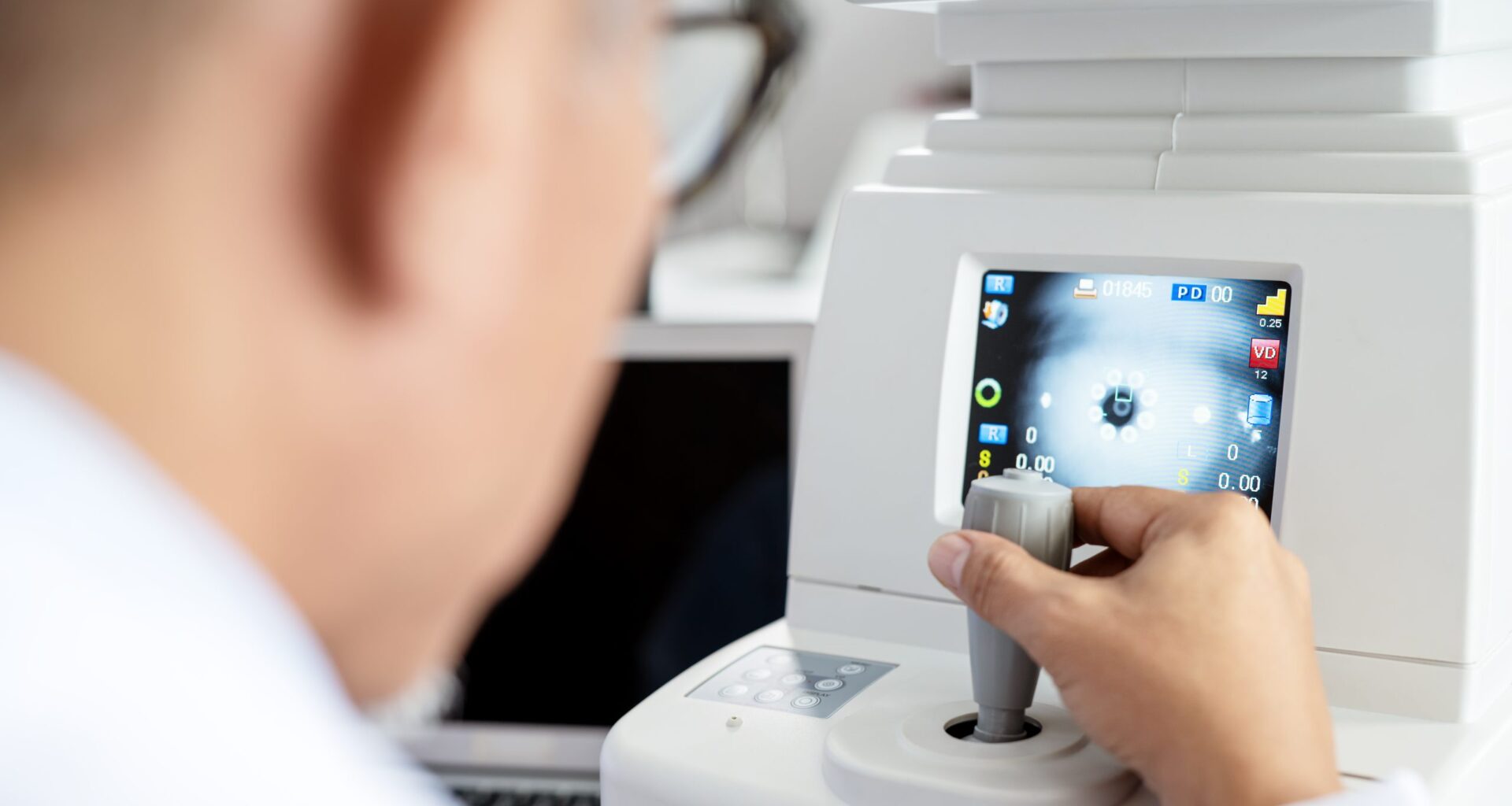
Sustaining an effective ophthalmology service, whether public or private, requires significant investment in sophisticated lasers, advanced imaging technologies, and diagnostic equipment. This high cost makes it difficult for new small private clinics to be established.
The ability of the private eyecare system to expand on its own is limited because of critical mass. It requires the rundown of the public system but, even with this, expansion viability is questionable.
Simplistic ideology trumps diagnosis
The Government has a strong but misplaced ideological belief in the ability of the for-profit private health system to be the solution for many of the problems of the public system.
The planned outsourcing is akin to a doctor treating a patient without first doing a diagnosis. Health New Zealand’s justification is that its ophthalmology services can’t meet population demand. But this is an outcome, not a cause.
The cause rests primarily in the failure of Health NZ to invest in its medical specialist workforce. At the same time acute and chronic illness demand on hospitals has increased because of entrenched impoverishment, population aging, and population growth.
The net effect is severe specialist shortages across almost all branches of medicine, including ophthalmology, leading to a workforce suffering from fatigue and burnout. Running down the public system creates the opportunity for outsourcing. However, outsourcing won’t fix the problem; investing sufficiently in workforce capacity would.
What makes this outsourcing initiative even more concerning is that Health NZ has failed to learn from the debacle it is currently facing with the privatisation of several public hospital laboratories, particularly since the mid-2000s.
Because of the need to maximise profits, the workforce in these laboratories has had to put up with a failure to adequately invest in essential equipment and lower salaries compared with their counterparts in non-privatised hospital laboratories. The inevitable outcome has been low morale and a depleted workforce as skilled staff leave to go elsewhere.
Health NZ should learn from the past and diagnose the problem better. It can’t overturn simplistic Government ideology but it should have the courage to advise the Government on what it won’t want to hear.