
A Dunedin duo — featuring a high-flying academic — became entwined in a crime syndicate’s importation of at least $4m of party drugs, a court has heard.
Anthony Kane Hawker, 31, appeared in the Dunedin District Court this afternoon where he was jailed for four years after admitting 11 charges.
Reghan William Shaw Laurie, 24, was sentenced to seven months’ home detention on three counts.
The court heard the university psychology student Laurie – who was awarded a lucrative scholarship at the time of his crimes – had completed his Masters thesis while on bail.
Judge Emma Smith described Laurie as formerly “a man of incredibly good character and disposition”, a reputation which had now been compromised.
She rejected an application for permanent name suppression.
In January last year, police and Customs launched “Operation Unit” after noticing a boom in the flow of controlled drugs to the region.
Consignments containing massive volumes of class-B Ecstasy were intercepted and soon led to police identifying the primary catcher as Hawker.
According to court documents, Laurie was enlisted by him to help retrieve the packages but was involved on only three occasions.
Intercepted communications from an encrypted messaging service on Hawker’s phone shed light on the criminal syndicate’s hierarchy.
“BUGATTII II” was referred to as “boss” in the messages and another person codenamed “BRX3” also sat above the defendants in the chain of command.
Their identities were never discovered.
The two anonymous handlers would monitor the status of the packages once they had cleared Customs and often arranged for them to be redirected to the depot for collection by the defendants.
A parcel listed as “light manual clamping machine” was sent from Le Mans, France, destined for a “Stuart Yates” at a St Clair business.
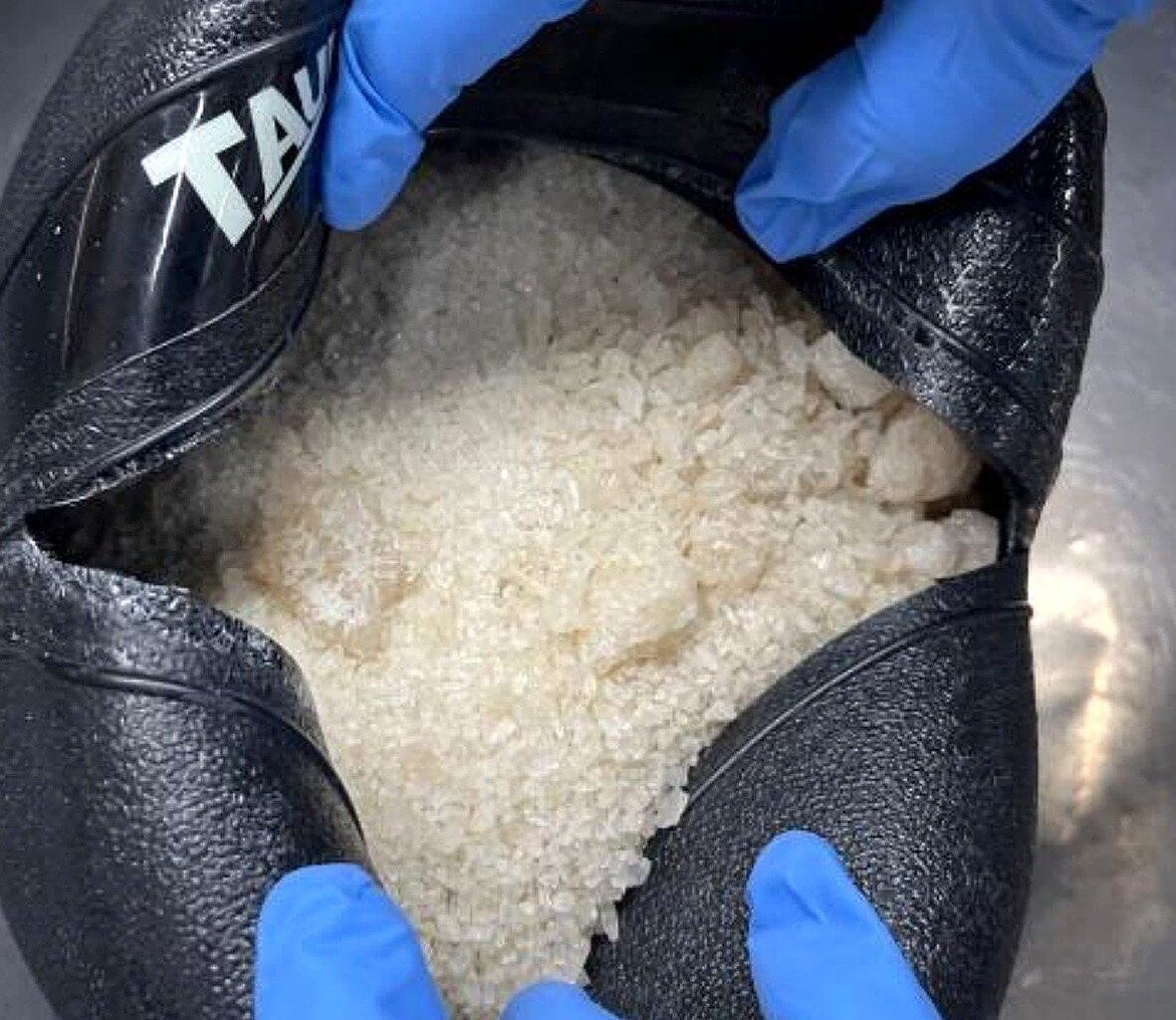
On January 21 last year, Customs examined the contents and discovered nearly 6kg of Ecstasy inside the hollowed-out rectangular devices.
If broken down into smaller quantities, the haul was worth a potential $1.2m.
Further enquiries revealed a similar package — this time listed as “Porsche microfibre cleaning cloth” — had been bound for the same address earlier that month.
But before it could be dispatched, someone called the courier company and had it redirected to Hawker’s home.
With that, police had their lead and Customs identified another parcel which had been delivered to a Dunedin nail salon the same month.
Laurie picked it up from the business and less than an hour later, posted it to an unknown Auckland address.
The syndicate’s message thread, viewed by police, appeared to show BRX3’s unease that Hawker had brought in another catcher.
“This is your job you gave to someone else on the low,” he wrote. “And I get killed for you if it goes wrong.”
The remainder of the police operation, which lasted only a few weeks, followed a similar pattern.
When Customs seized a package containing another illicit haul, they would search for previous consignments to or from identical parties, which led them to other shipments that had slipped the net.
The parcels were often listed as car parts but there were others described on documents as “yoga equipment”.
Authorities in Kentucky examined one from Germany, which was sent to a Mosgiel address.
Inside an exercise slam ball was 3.6kg of class-C Ketamine with a street value of $792,000.
They removed the drugs and allowed the package to continue on to its destination where Hawker picked it up.
“All that effort for an empty box,” BRX3 later messaged the defendant.
Across the four interceptions $3,365,600 of Ecstasy was seized, plus the Ketamine in the US.
Five further packages, which were the result of charges, contained unknown quantities of illicit substances.
Hawker, who was paid about $2500 for each collection, was arrested in Christchurch in February last year.
When police searched his Dunedin home and a vehicle, they found more than 3g of Ecstasy, 70g of cannabis and $4580 cash in the boot.
Laurie was arrested in Queenstown and admitted he had been working on the directions of his friend.
Hawker told Probation he had become part of the criminal enterprise initially because the financial lure was “irresistible” but claimed a man with a firearm had threatened him to ensure his continued involvement.
Judge Smith acknowledged the “atrocities” the man had suffered as a child and endorsed his intentions to study while in prison.
In his pre-sentence interview Laurie said he thought he was simply helping out a friend and felt manipulated.
There was no evidence of him making any money from his limited role, the judge accepted.