
First published on 
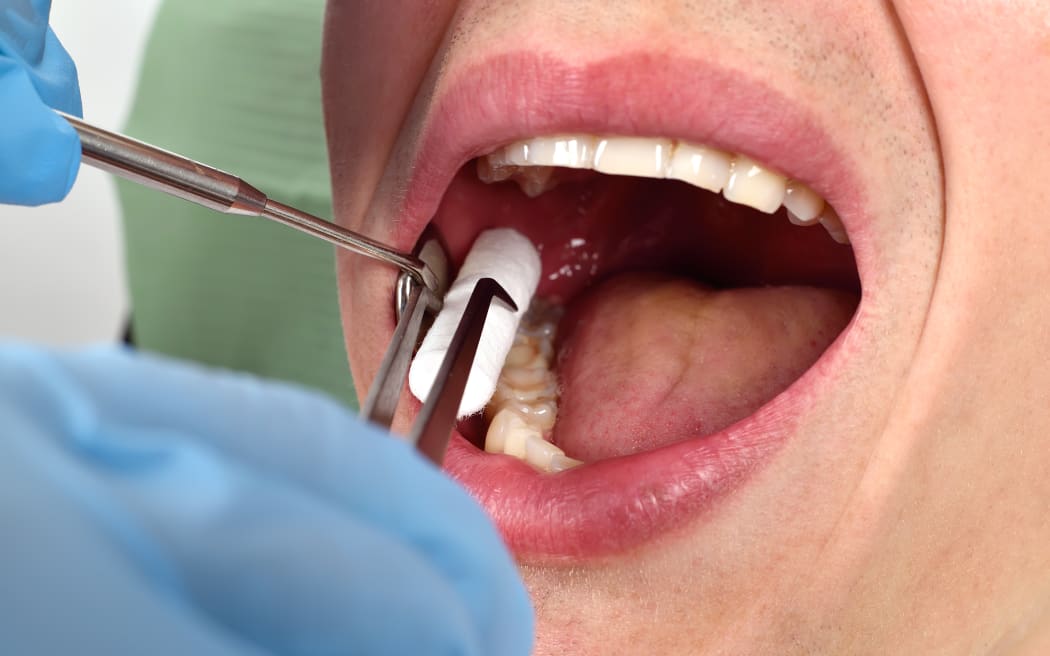
The tribunal found the dentist had put his patients at risk through his drug use.
Photo: 123rf.com
Warning: This story mentions intravenous drug use.
Despite injecting high doses of fentanyl every day after work, a dentist denies being under the influence while treating patients.
The dentist, whose name is permanently suppressed, was before the Health Practitioners Disciplinary Tribunal in Auckland, facing a charge of professional misconduct.
He admitted to using his dental supply orders to access the pharmaceutical-grade opioid for personal use from June 2022 to June 2023.
His habit and tolerance rapidly increased, but he claimed he only took the drug after work, stopping before midnight, so it wouldn’t affect his behaviour the next day.
He denied putting his patients at risk by being under the influence of or withdrawing from the drug during their treatment.
” reject putting the patients at risk,” he told the tribunal. “[I was] not working under the material influence of fentanyl.”
A ‘foolish’ decision
In June 2022, because of a “number of stresses” in his life, the dentist made the “foolish” decision to try fentanyl.
“To take the edge off,” he said. “I found that fentanyl gave me the feeling of euphoria, relaxation and a chilled feeling.”
The agreed facts said he used his “practitioner’s supply orders” to source fentanyl from six pharmacies in Auckland about 40 times over the following year.
He also “borrowed” from stock at one of his workplaces and ordered fentanyl from a pharmaceutical wholesaler.
The dentist worked at clinics across Auckland, performing complex oral surgery procedures.
He would use his own equipment meant for the intravenous sedation of his patients, such as a cannula, to give himself increasingly higher doses of the drug.
His habit quickly went from lower doses to higher ones of 5000mcg per use.
On 8 June, 2023, he was refused a supply from a Countdown pharmacy, as staff there had become suspicious of his orders.
In the days after, he stopped using fentanyl, engaged Community Alcohol and Drugs Services, and came clean to his then-partner and co-workers.
He also experienced severe withdrawal symptoms, including muscle aches and fever.
Alerted by the Countdown pharmacy staff, the Dental Council sent the man a letter, suspending him from practising, until he had seen a psychiatrist.
He consulted a psychiatrist and the suspension was lifted on 31 July, 2023.
After this, he undertook “stringent” drug testing ordered by the council, up to February this year, with no “adverse” results, the dentist said.
“I’m sure this matter is behind me now.”
Severe substance abuse disorder
The Professional Conduct Committee (PCC) of the Dental Council called one witness to the tribunal – psychiatrist and addiction specialist Dr Samuel McBride.
McBride calculated from the agreed facts that the dentist had ordered 5780ml of fentanyl for himself from pharmacists in his year of use.
Because of the increasing doses and the climbing number of pharmacy visits, he believed the dentist suffered from a severe substance abuse disorder at the time.
This meant the dentist’s intoxication, withdrawal and addiction to the drug would have had serious physical, emotional and cognitive effects that would have affected his work.
Possible effects included a loss of concentration, slowed movements or, at worst, losing consciousness “during procedures”, McBride said.
Withdrawal from the dentist’s heavy use of the opioid could cause tremors, agitation and sweating, he said.
A tremor, in particular, could impair the “fine motor skills” and concentration required to perform dental procedures.
Despite this, when the dentist gave his evidence, he said, until he quit “cold turkey”, he never experienced withdrawal symptoms, apart from a few mild instances of “restless legs”.
Nobody noticed a change
The dentist’s lawyer, Harry Waalkens, KC, put it to McBride that none of the dentist’s co-workers or partner noticed a change or decline in his behaviour.
McBride said the dentist not experiencing such withdrawals made him suspect the man was taking fentanyl more often than just after work.
Waalkens also pointed out none of the dentist’s patients had complained nor was there evidence he had caused any harm to them during his addiction period.
McBride used an analogy, saying regardless of whether a drink-driver has driven 10 times drunk without causing an accident, it’s still dangerous.
The charge against the dentist was whether he put his patients “at risk” of harm, not caused harm directly, McBride reminded Waalkens.
‘Caught up in a haze’
After the dentist’s fentanyl use was discovered, he told a doctor he was “caught up in a haze” of his addiction.
The man told the tribunal that he meant he was caught up in his addiction and not thinking about the consequences.
During his cross-examination, PCC lawyer Hayden Wilson zeroed in on the phrase, saying not thinking about the consequences was the same as putting patients at risk.
“You didn’t think about whether it was good for your patients either, did you?” Wilson asked.
“In hindsight, no,” the dentist replied, but he would still not agree that he put his patients at risk.
The verdict
Chaired by lawyer Truc Tran, the panel established the particulars of the charge the dentist had admitted to.
They also found he had put patients at risk by consuming fentanyl after hours.
There was no evidence the dentist used the drug during clinical hours, Tran said. This amounted to malpractice, negligence and was likely to discredit the profession.
It was also serious enough to warrant a penalty, Tran said.
The penalty
The dentist was censured, ordered to pay a $6000 fine, and 35 percent of the PCC and tribunal’s costs.
The panel wanted to support the man’s further rehabilitation with two years of “health monitoring”.
Conditions of the monitoring included not being allowed to prescribe controlled drugs, perform IV sedation or self-prescribe.
For two years, he must tell any future employers or business partners of the tribunal’s decision and orders.
For reasons that couldn’t be disclosed, the panel granted the dentist permanent name suppression.
* This story originally appeared in the New Zealand Herald.