
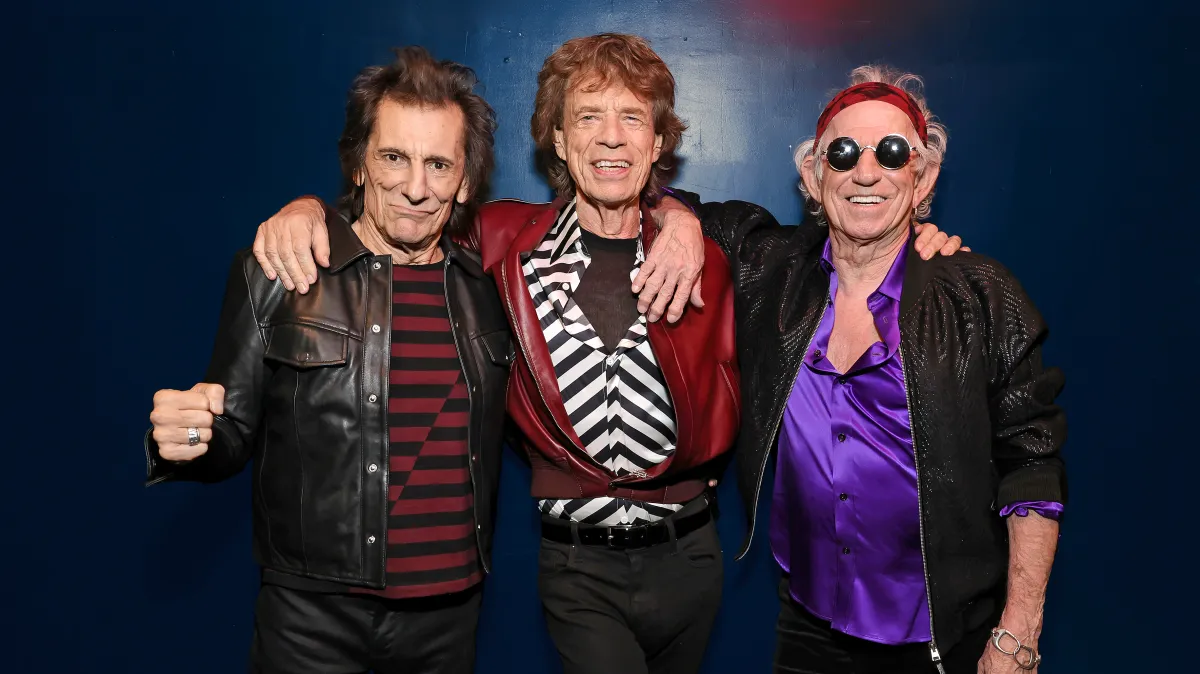
On Thursday morning someone — let’s call him a crazy fan — played me a song by a mysterious band called the Cockroaches. This came after posters for the group, named after a legendarily hardy insect, appeared around Camden Town, north London. Getting going with an electric blues riff not a million miles from the one that starts up Start Me Up by the Rolling Stones, Rough and Twisted builds with a bit of soloing from a second guitar, a primeval thud from the drums and the unmistakable yowl of one of the most famous singers in the world. He’s asking for someone to drive him down a rough and twisted road all the way to Puerto Rico, where the tide ebbs and flows and you do feel that something sexual may be happening along the way. Yes, if you haven’t guessed already, ol’ Rubber Lips and the gang are back.
Rough and Twisted, available as a vinyl-only “white label” release from April 11, is classic Stones: a killer riff, a rambunctious harmonica solo from Mick Jagger, a devil-may-care spirit and the feeling that, six decades on from first crawling out of a notoriously squalid flat in Edith Grove, southwest London, to play the blues in smoke-clogged pubs and clubs along the Surrey Delta, the Rolling Stones are still a chaotic bar band forever on the verge of collapse, happiest in the most low-down dives. As Jagger sings, “You just took me to a flyblown town in the middle of nowhere. The smell was acrid and toxic. Couldn’t breathe the air.”
You would never guess this is the singer of a band who have sold more than 250 million albums, played the biggest stadiums in the world and made multimillionaires of the three surviving members, but therein lies the appeal. With the Stones, you still get the feeling they are making it up as they go along, even after having 64 years to get used to the whole “being in a band” thing.
Rough and Twisted paves the way for an as-yet-unnamed Rolling Stones album coming out in July. Like 2023’s Hackney Diamonds, it was recorded with Andrew Watt. The 35-year-old New Yorker started out playing guitar and co-songwriting for pop acts such as Justin Bieber and Miley Cyrus but his love of classic rock led to him producing albums by Ozzy Osbourne and Iggy Pop before falling into the Stones camp.
When I spoke to the Stones in 2023 they all said Watt’s enthusiasm was galvanising. It explains why he has been asked back — that and the fact that Hackney Diamonds was their biggest commercial and critical hit in years, going to No 1 in 20 countries and selling more than a million copies. Watt has also produced a forthcoming Paul McCartney album, due for release in late May. This means that in the absence of Glastonbury this year, a Beatle and the Stones will be dominating the summer music schedule, bringing a much-needed dose of Sixties spirit to our less than love-infused modern age.
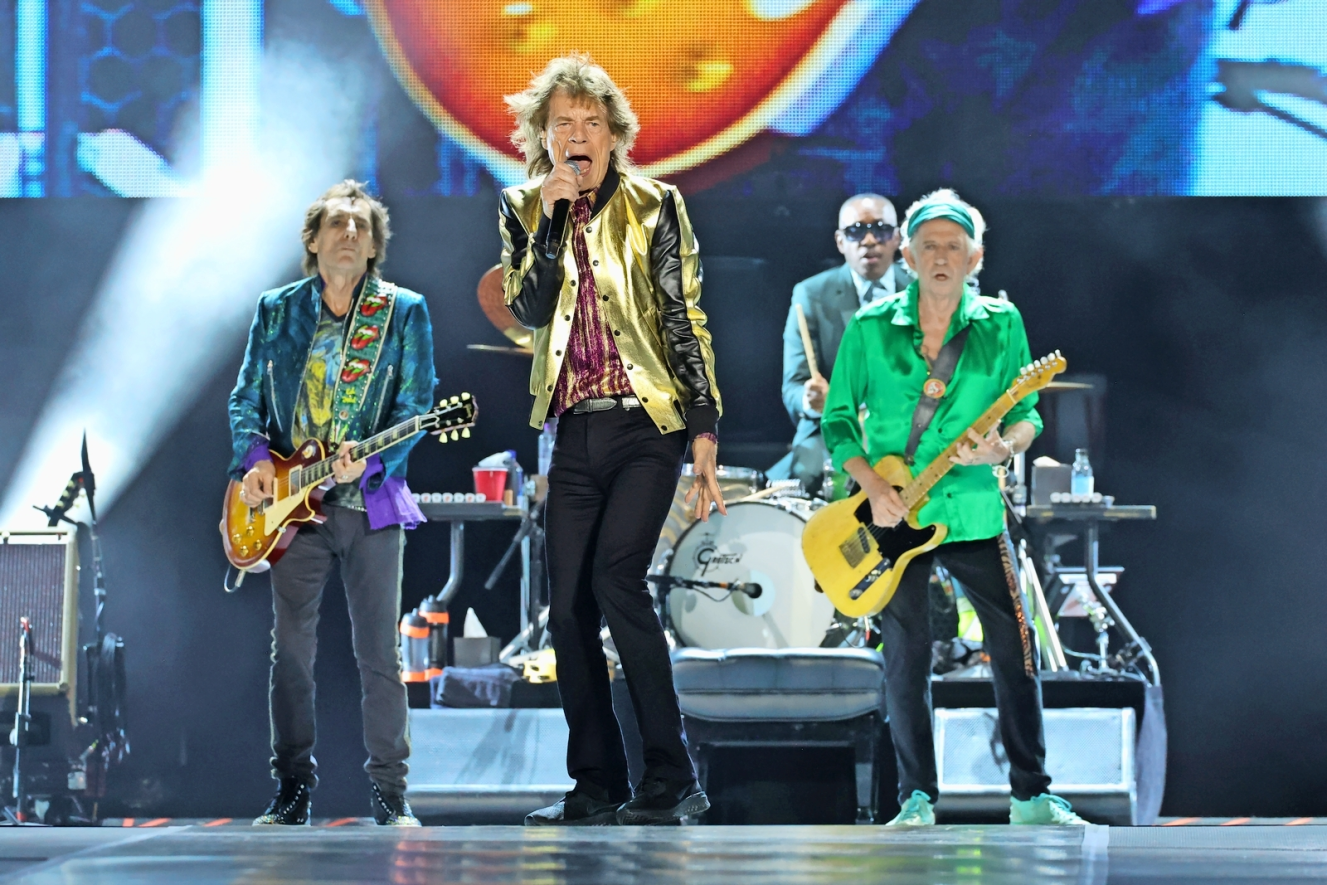 Performing in New Jersey in May 2024Mike Coppola/Getty Images
Contrary to reports, the album, their 25th, won’t be the Rolling Stones’ last. There are at least ten songs in the bag for another one and I can’t imagine Jagger giving up on the band until he can no longer fit into his 26in-waist jeans, which will be never. I haven’t heard the rest of it, but if Rough and Twisted is indicative of the album as a whole, this is the sound of the Stones doing what they do best, bringing in a few guest stars along the way and reminding everyone that nobody can take the blues and make it as raw, dirty and enjoyably unwholesome as they do.
What we won’t be seeing are any live dates for the foreseeable future: the band have scotched rumours they’re planning a series of residencies in place of a gruelling world tour. “The Rolling Stones will play when they decide to, not before. There are no concerts planned,” a spokesman for the band confirms. Keith Richards, 82, is in Connecticut, about to become a great-grandfather for the first time after his granddaughter, the model Ella Richards, announced her pregnancy in March. And although a Hyde Park concert in 2022 had him cranking out the riffs to Gimme Shelter and Jumpin’ Jack Flash with as much verve as ever, arthritis has made playing harder for him; plans for a 2026 tour were axed late last year after Richards felt he couldn’t commit.
Jagger — who at 82 still seems entirely capable of keeping up with his 38-year-old American partner, Melanie Hamrick, a former ballet dancer, now choreographer — is working on The Man Who Invented Rock’n’roll, a film about Sam Phillips of Sun Studio in Memphis, Tennessee, fame. Ronnie Wood is variously playing with Eric Clapton, Van Morrison and doing solo gigs throughout the year. Right now the Stones are confining themselves to the studio while shoring up their legacy. And what a legacy it is.
“I’m not trying to make the Rolling Stones not sound like the Rolling Stones — that would be really stupid,” Jagger told me in 2023, talking about his battle to ensure Hackney Diamonds slotted into band tradition while updating it at the same time. “But the temptation a lot of producers have is to remake their favourite Stones album. I had to say to Andy [Watt], ‘We’re not making Sticky Fingers Mark II here. A few references are OK. Loads of references are not OK.’”
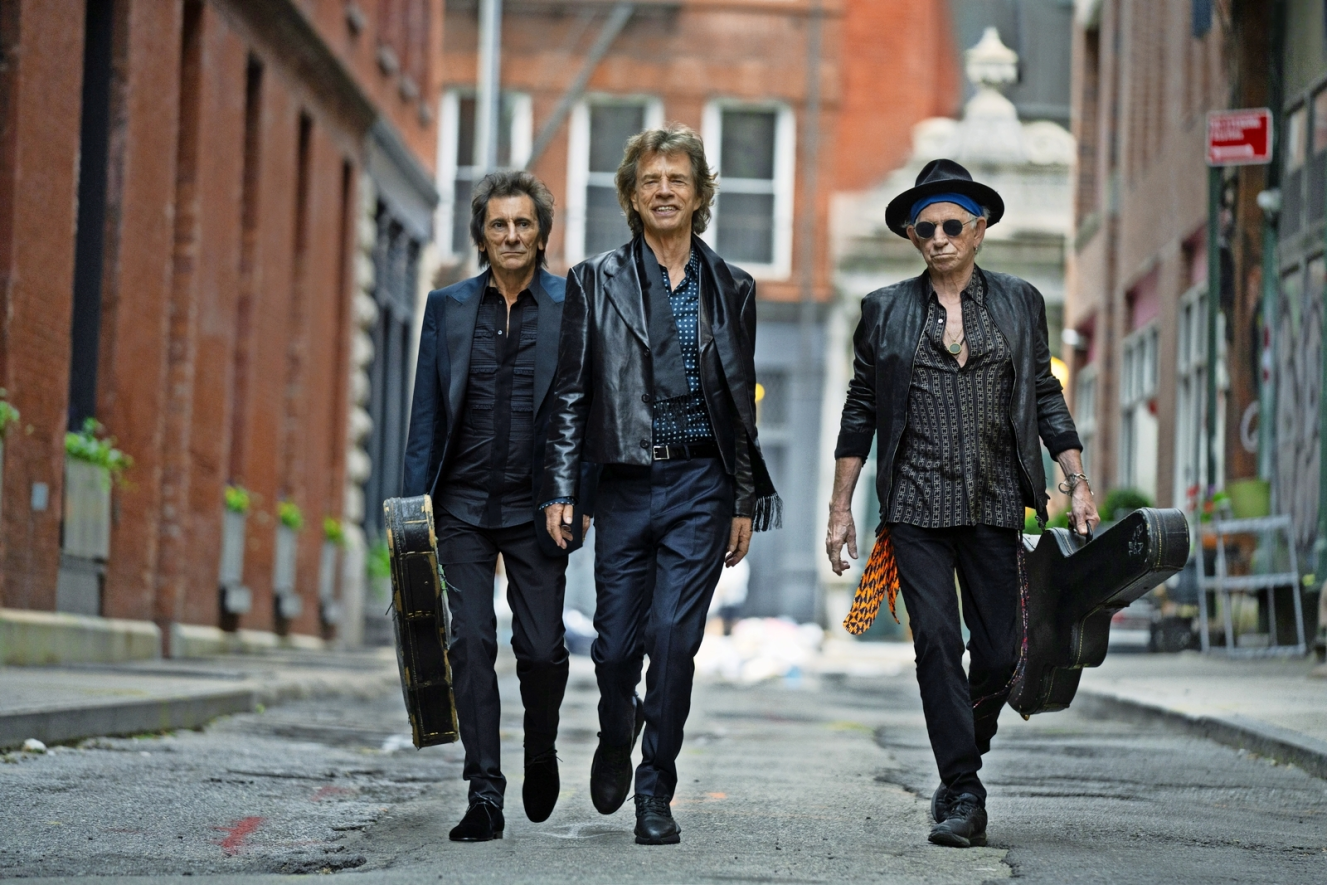 “They have survived busts, arrests, heroin addictions, fallouts, changing fashions, the hospitalisation of Richards in 2006 and the death in 2021 of Watts”MARK SELIGER
Jagger has always been the one to push forward, from embracing punk and disco on Some Girls in 1978 to reggae on Undercover in 1983. “You’ve noticed, then,” Richards told me. “I have to live with it. But that’s Mick’s thing: ‘Let’s do it.’”
The tension between the forward-thinking Jagger and the classicist Richards was there at the beginning of their songwriting partnership — even before, if you consider that the Stones formed as a covers band at the behest of their original leader, Brian Jones. “We didn’t set out to do anything else,” Jagger said in 2023 of the blues-hollering early days. “We were very preachy about bringing blues to a broader audience and all that bollocks, because when you’re young that’s what you want to do.”
It was Andrew Loog Oldham, at 19 even younger and more outlandish than the Stones when he started managing them in 1963, who forced Jagger and Richards to swallow their purist bluesman pride and write songs, locking the pair in a kitchen until they came out with the baroque As Tears Go By. Oldham also spotted the need for some bad boys to counter the loveable, mop-topped Beatles, planting the 1964 newspaper headline, “Would you let your daughter marry a Rolling Stone?” and pushing the image of the Stones as surly rebels. Mother’s Little Helper, Let’s Spend the Night Together and Paint It, Black captured Swinging Sixties Britain with vitamin-deficient insouciance, and that, I would argue, led to the traumatic events that gave them the toughness that explains why they’re still with us today.
In 1967 the band were seen as enough of a threat for the police to raid Richards’ Redlands house in Sussex and arrest him and Jagger on drugs charges. They were thrown in jail; Jagger was given a three-month sentence for the crime of possessing four pep pills, bought legally in Italy, and Richards was sentenced to a year for allowing his house to be used for the smoking of cannabis. It can be no coincidence that the verdicts — Jagger’s sentence was reduced to a conditional discharge and Richards’ conviction quashed after the famous “Who breaks a butterfly on a wheel?” editorial in The Times by William Rees-Mogg — marked the beginning of the band’s golden age as rock’n’roll outlaws, at odds with the establishment but having too much of a jagged edge to fit in with the hippy movement. Listen to albums such as Beggars Banquet and Let It Bleed now and they still sound as dangerous as they are seductive.
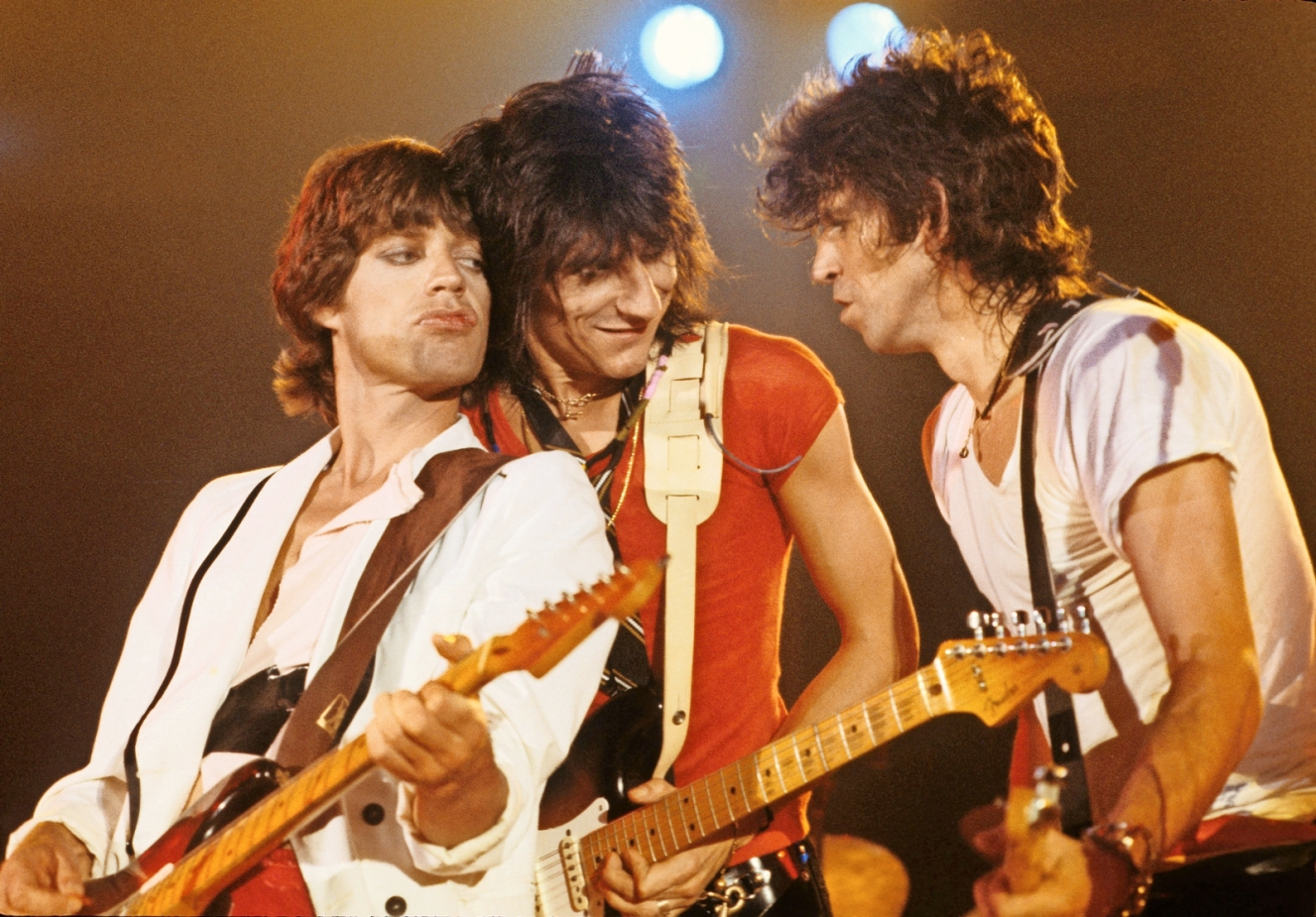 Performing in Oshawa, Canada, in April 1979Richard E Aaron/Redferns/getty images
Before long — and the turning point was the notorious free concert at Altamont Speedway in California in December 1969, where the hiring of Hell’s Angels as security proved a disastrous act of countercultural idealism, ending with the death of a fan — the Stones had to turn into a serious proposition if they were to survive. Since the early Seventies the band have essentially operated as a bringer of good times rather than revolutionary threat, particularly after the ever-enthusiastic Wood joined Jagger, Richards, Bill Wyman and Charlie Watts in 1975.
“I wake up and think, ‘I’m in the Rolling Stones,’” Wood told me in 2023, still sounding astonished at the idea. As for the Jagger-Richards dynamic at the heart of the band, Richards has a simple way of defining it: “It’s a controlled madness. He’s the controller and I’m the madness.”
The truly remarkable thing about the Stones is that such a volatile entity, which for much of the Eighties was marked by Jagger and Richards hardly talking to each other, has lasted longer than many blue-chip companies. They have survived busts, arrests, heroin addictions, fallouts, changing fashions, the hospitalisation of Richards after his fall out of a coconut tree in 2006 and the death in 2021 of Watts, who was long seen as the glue holding the band together. Now they have a new album coming. It’s tempting to go into a lengthy investigation to unlock the secret to the Rolling Stones’ eternal life but perhaps Richards has the best answer: “Hey, whatever it is, bottle it, baby.”