
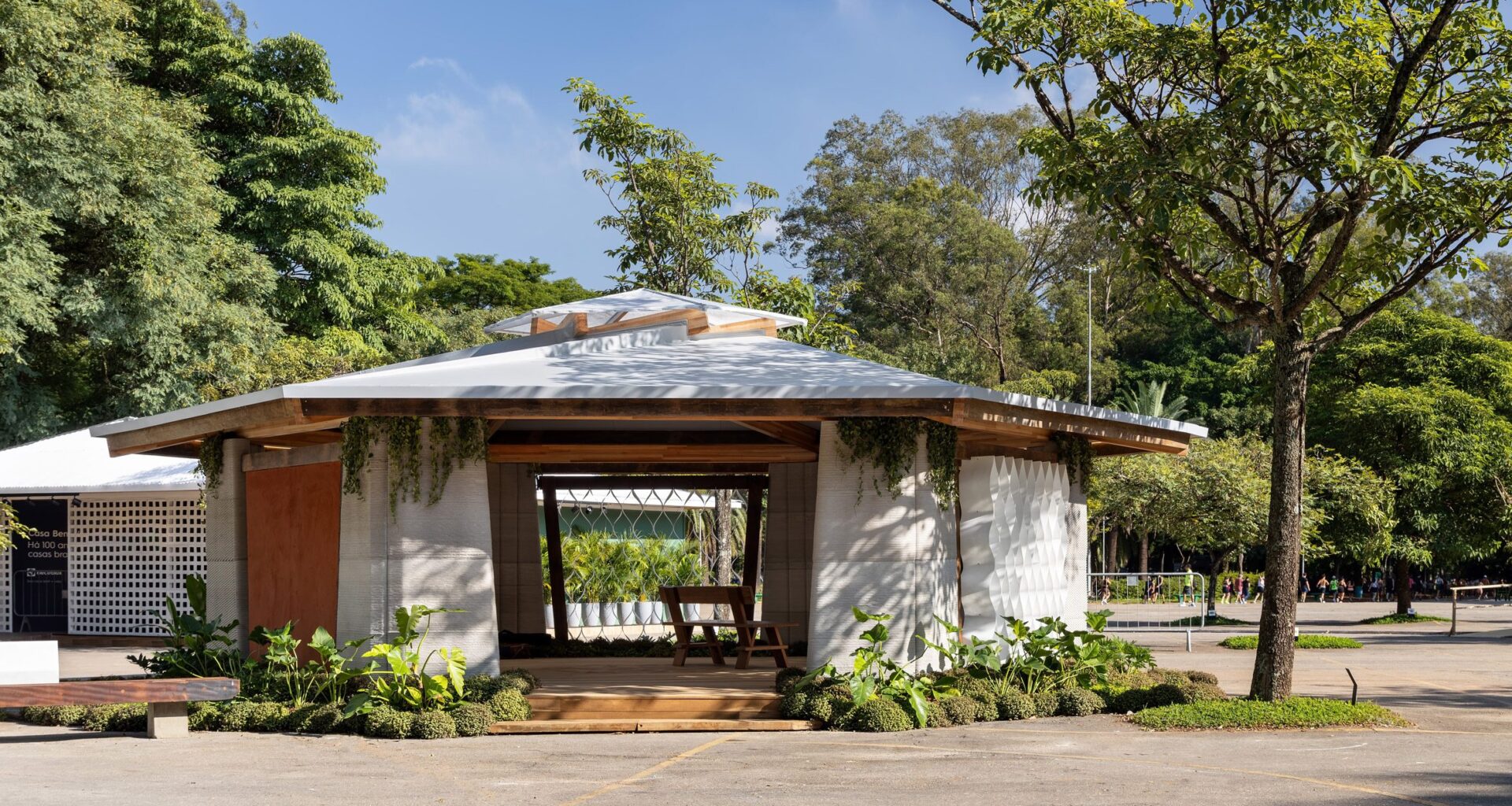
Brazilian architecture studios Superlimão, H2C Arquitetura and Vida de Vila have created experimental pavilions in Ibirapuera Park in São Paulo for the first edition of the Brazilian Architecture Biennial.
The three pavilions were presented in an exhibition called Pátio Metrópole outside of Oscar Niemeyer’s Pavilion of Brazilian Culture in the urban park. Each presented technological solutions, ancient and modern, to Brazil’s climate.
 Superlimão 3D-printed the structure of its pavilion for the inaugural Brazilian Architecture Biennial. Photo by Everson Martins
Superlimão conceived Casa Superlimão, a structure made with a 3D-printed concrete – a technique “little-used in Brazil”, according to the studio.
These sections constitute the main structure of the pavilion and were conceived based on banana leaf stems, following the “biomimetic logic” of the pavilion as a whole.
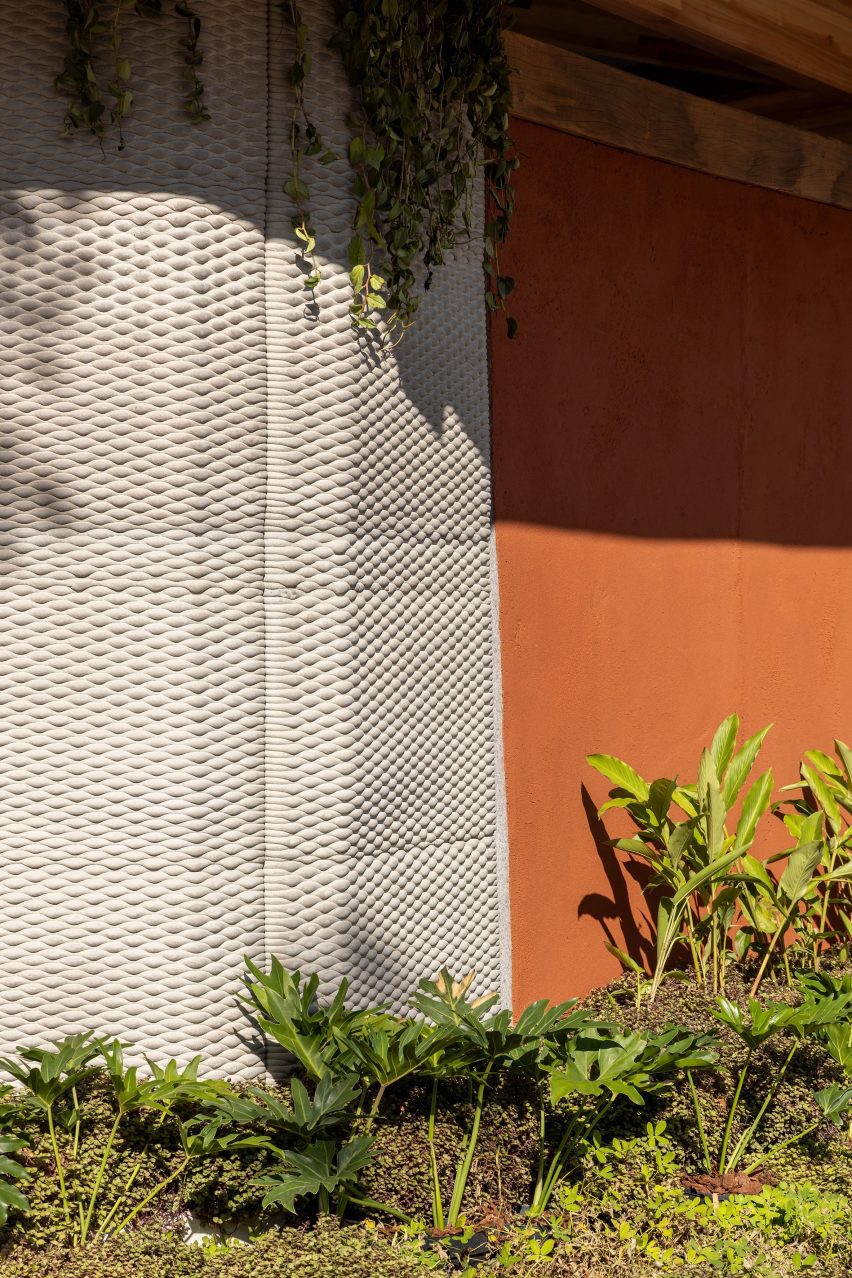 The layering of the 3D-printed walls mimics a banana leaf stem’s structure. Photo by Everson Martins
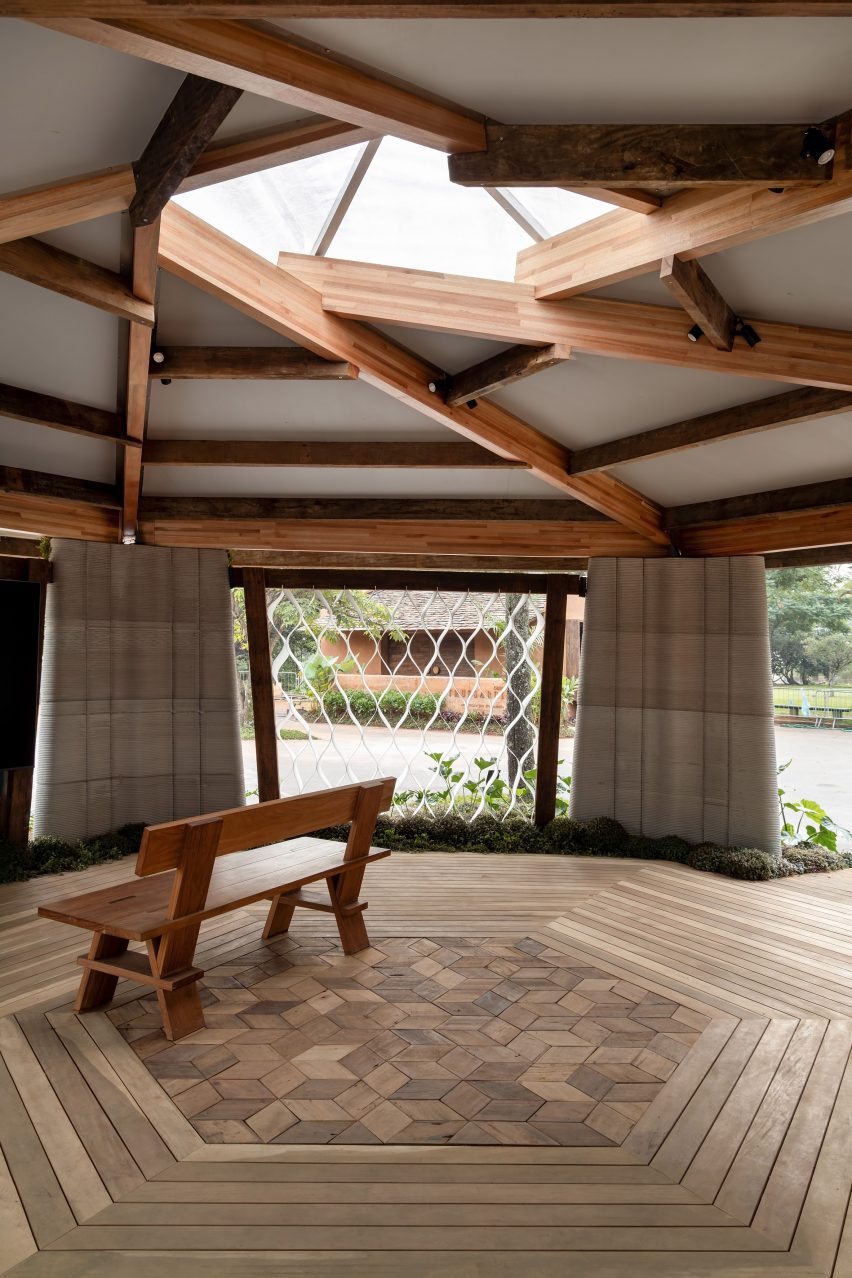
The building has a reciprocal-support roof structure made of engineered wood that frames an oculus, and features a modern take on cobogó, the traditional ventilating breeze blocks. Additional wall sections were made from recycled PET wool.
“Architecture has always responded to climate, territory, and available conditions,” said Superlimão partner Lula Gouveia.
“Many solutions we now call traditional emerged from this constructive intelligence. The project revisits this knowledge and places it in dialogue with current technologies.”
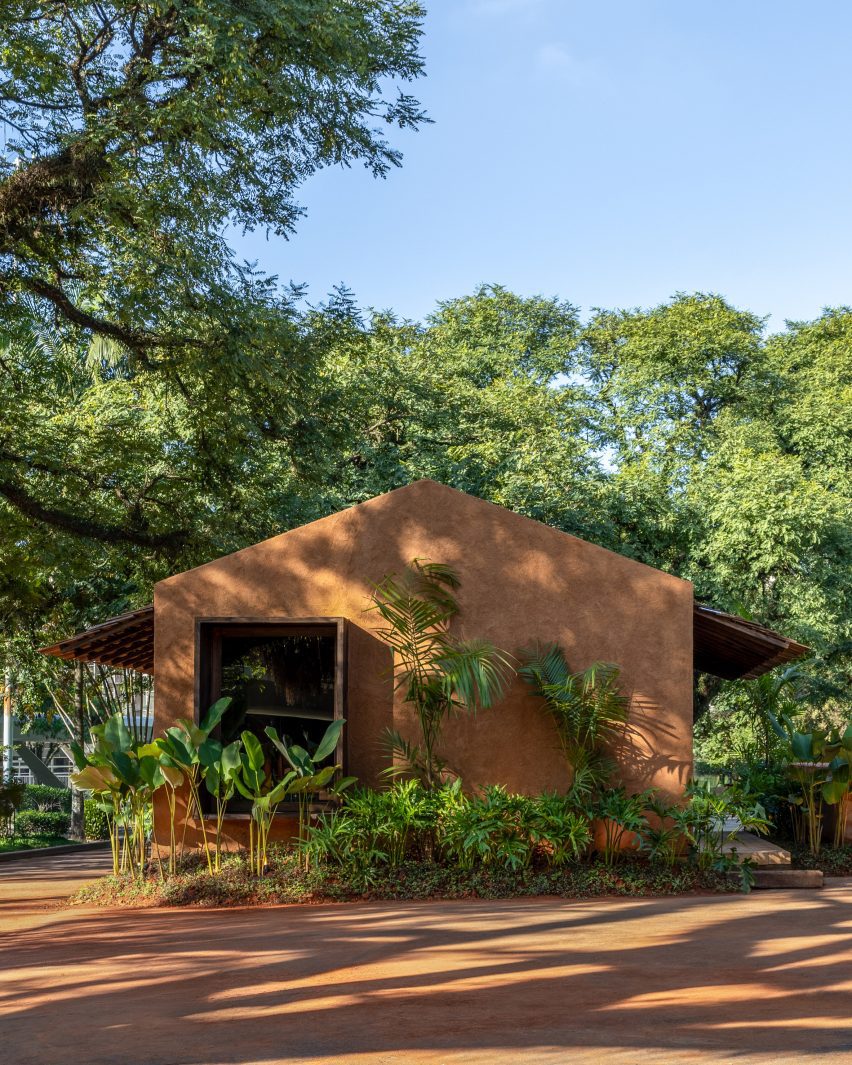 Vida de Vila created a pavilion based on traditional building methods. Photo by Sirlei Oldoni
Casa Superlimão was meant to replicate indigenous and temporary structures while using contemporary techniques.
“The idea was to bring something that any Brazilian could identify with, regardless of the region they live in,” Gouveia continued.
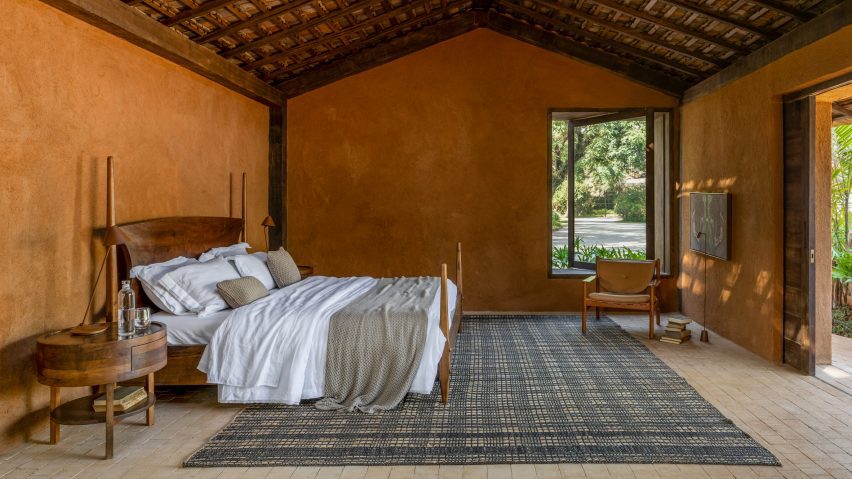 Vida de Vila reused wood for the rafters and laid out the pavilion in a traditional manner. Photo by Sirlei Oldoni
Also designed in reference to vernacular architecture was the pavilion Casa Trussardi by Vida de Vila, a studio based in the north of Brazil.
Built using taipa cladding, a regional earthen material, the structure was designed to showcase the studio’s updates on traditional Brazilian building materials.
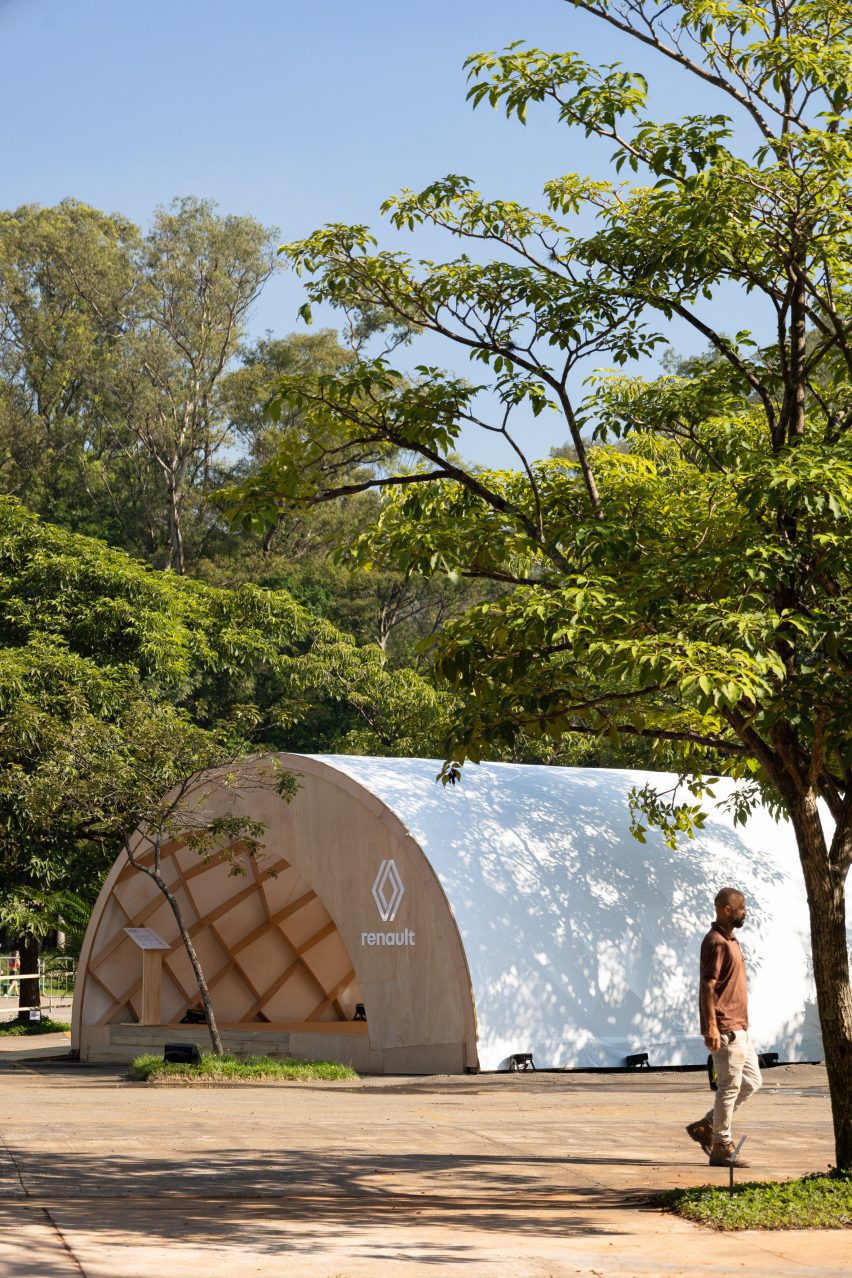 H2C Arquitetura created a demountable structure wrapped in a composite fabric “skin”. Photo by Adriano Pacelli
It features a thatched roof with airy interiors, reclaimed-wood structural elements, and earthen tiles on the floor.
Outside, a rammed-earth partition fronts the house-like pavilion.
“Casa Trussardi synthesises, at a domestic scale, some of the research and practices developed by the studio in recent years around earthen architecture, the use of natural materials, and the incorporation of traditional building knowledge into contemporary design,” said the studio.
Amazon River becomes permanent home for Carlo Ratti and Höweler + Yoon’s AquaPraça plaza
The final pavilion featured as part of Pátio Metrópole was H2C Arquitetura‘s Casa Leve, made in partnership with French automotive company Renault.
Casa Leve features a demountable structural system that, like the ceiling in Casa Superlimão, relies on a reciprocal support system, where the different pieces of wood are arranged to support the others.
The cross-hatched marine plywood structural system forms a tunnel that was then wrapped in a “high-performance tensioned membrane” made of composite fabric that wraps it like “skin”.
It was designed to test the limits of light-weight, transportable structures.
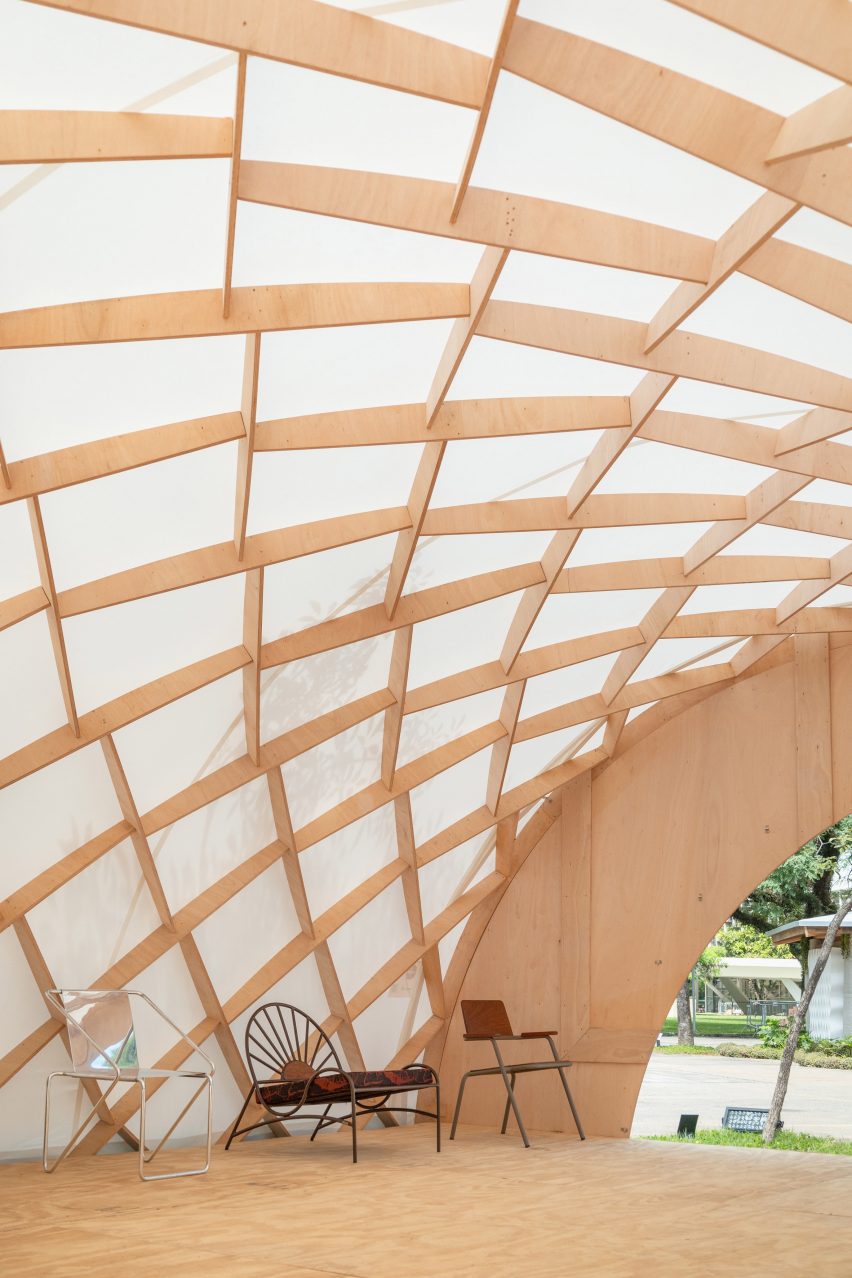 A reciprocal support wooden grid holds up the ceiling. Photo by Adriano Pacelli
All three studios cited an adherence to the mission of the Brazilian Architecture Biennial (BAB) in its first year.
BAB’s founders have called it a “complete program” and brought on Brazilian architect Leonardo Zanatta to carry out the masterplan of the programme, which includes more pavilions and exhibitions spread over the park.
“BAB proposes that architecture be seen as experience – a way of reading Brazil through spaces that articulate territory, materiality, technology, and everyday life,” said BAB co-founder Raphael Tristão.
“The visit is designed as a complete program: to enter, circulate, pause, and look again at what shapes us and how we inhabit.”
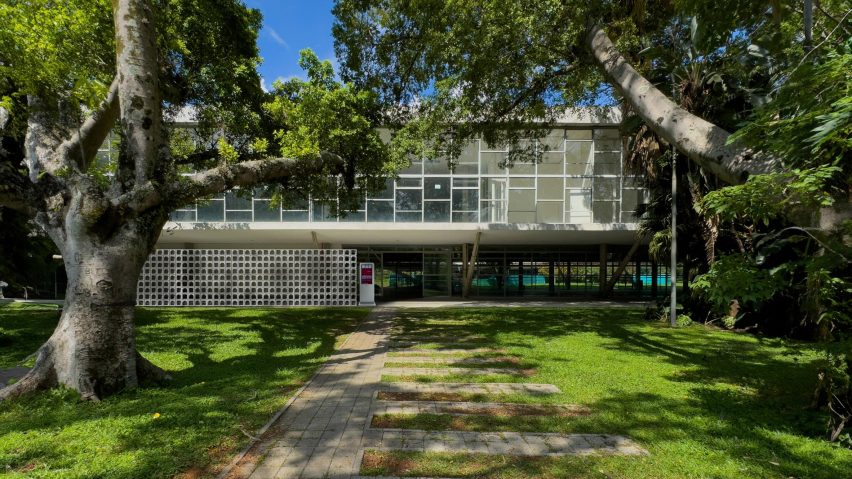 The pavilions were positioned outside of an Oscar Niemeyer structure in Ibirapuera Park
Other inaugural architecture and design events include Montreal Design Week, coming at the end of April.
In the spirit of experimental pavilions, American architecture studio Lake Flato and engineering/design studio Structurecraft created a pavilion with dowell-laminated timber for the Mass Timber Conference in Oregon last week.
Brazilian Architecture Biennial runs from 25 March to 30 April at Ibirapuera Park in São Paulo. For more international happenings in architecture and design, visit Dezeen Events Guide.