
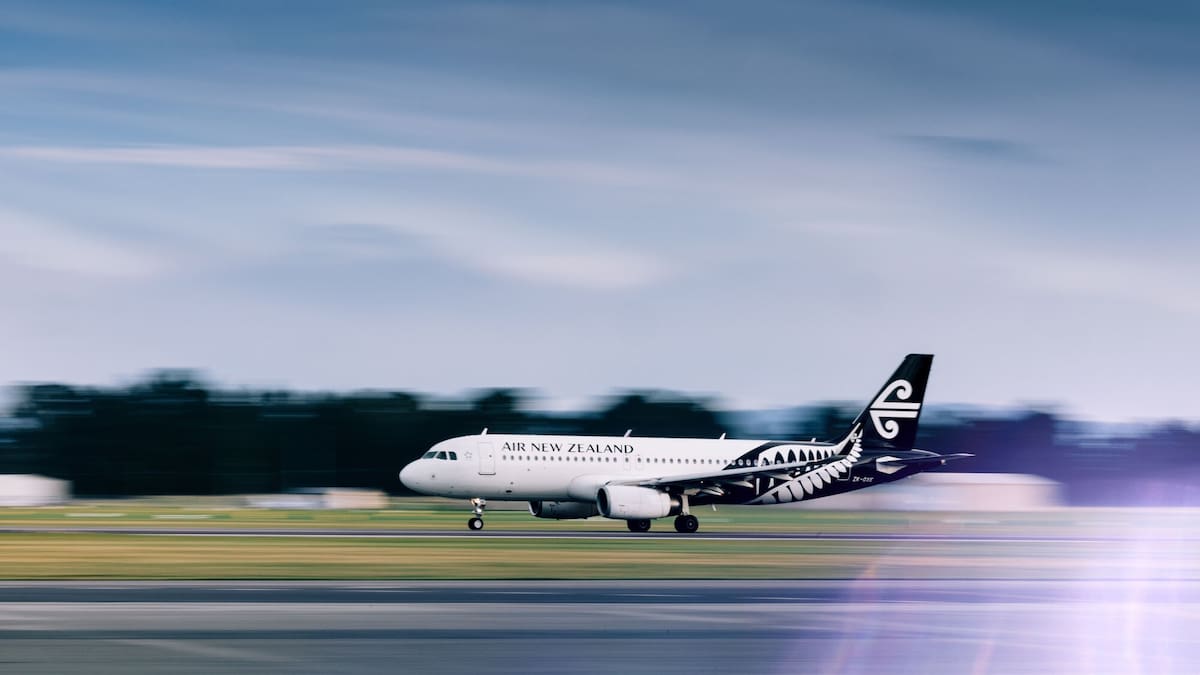
The symbolism writes itself. Air New Zealand, like the kiwi, has become a flightless bird: Grounded by contradictions, unable to soar because it refuses to commit. Government ownership was supposed to protect the national interest. Instead, it has created an airline that enjoys privileges without facing consequences: Government contracts, preferential treatment, implicit bailout guarantees, all without the full discipline of the market or the scrutiny of complete public accountability.
When things go wrong, taxpayers are on the hook. When things go right, shareholders collect the dividends. The public never wins.
The world is on fire. Air NZ has a newsletter
On April 8, 2026, CEO Nikhil Ravishankar sent customers a warm email. Jet fuel, he explained, had surged from around US$85–90 a barrel to above US$200, doubling Air New Zealand’s fuel bill from roughly $4 million a day to $8.5m. Schedule cuts for May and June were confirmed. More were coming.
This is not solely an Air New Zealand problem. Iran’s effective closure of the Strait of Hormuz has removed more than 20% of the global seaborne jet fuel supply. Ryanair’s Michael O’Leary has warned of summer cancellations of 5-10% if the strait stays closed. United Airlines CEO Scott Kirby has warned his carrier’s fuel bill could double to US$20 billion. Lufthansa’s CEO has assigned contingency-planning teams. More than 14,000 flights globally have been cancelled since late February.
Air New Zealand enters this crisis already weakened. Forsyth Barr analysts project a net loss of $226m in FY2026, and $148m in FY2027 if fuel costs remain elevated. The share price reflects it, trading near its 52-week low at $0.48, down from $0.64.
Air New Zealand delivers neither the efficiency of true competition nor the service standards of genuine public ownership, writes Nick Stewart.
Watch for the capital raise. When losses of this scale materialise, the government (as 50.1% shareholder) will face a choice: Write another cheque to protect its stake, or dilute and begin retreat. Either way, taxpayers are implicated. Budget 2026; hold your breath.
Chatbots and contempt
Try engaging with Air New Zealand’s customer service and you’ll find the true face of modern collectivist enterprise: Declining standards and a corporate culture that treats human interaction as an inconvenience to be automated away. You’re more likely to engage with a chatbot than a human – and the human, when you find one, acts like a chatbot anyway.
This is the airline’s answer to its problems: Not better people, better planes or better service, but better systems for apologising for the absence of all three.
The hospital pass
That’s what recommending Air New Zealand has become, and nowhere is the gap between price and product more vivid than in business class. Business Premier, the airline’s flagship cabin, seats passengers in an inward-facing herringbone configuration angled toward the aisle, facing strangers across the cabin. It’s a layout the rest of the industry largely abandoned years ago in favour of the reverse, which offers genuine privacy. There’s no door on the standard seat either; that requires an upgrade to Business Premier Luxe – specifically, $820 extra on long-haul.
So, you say nothing when visitors ask for recommendations. You let them discover it themselves.
You’d book Qantas if you could, but with Emirates disrupted by Iranian airspace closures, alternatives from New Zealand are thinner than they used to be.
Choose
Our national carrier should be either a source of genuine pride (fully public, properly accountable, serving citizens) or a true competitor: Privately owned and driven to excel.
Make a choice. Commit to something. Because right now our national carrier charges like Singapore Airlines, seats you in a layout from 2005, asks $820 extra for a door, sends a chatbot when you complain, and may shortly be asking the government for more money.
That’s not the warm embrace of collectivism. That’s the slow squeeze.