
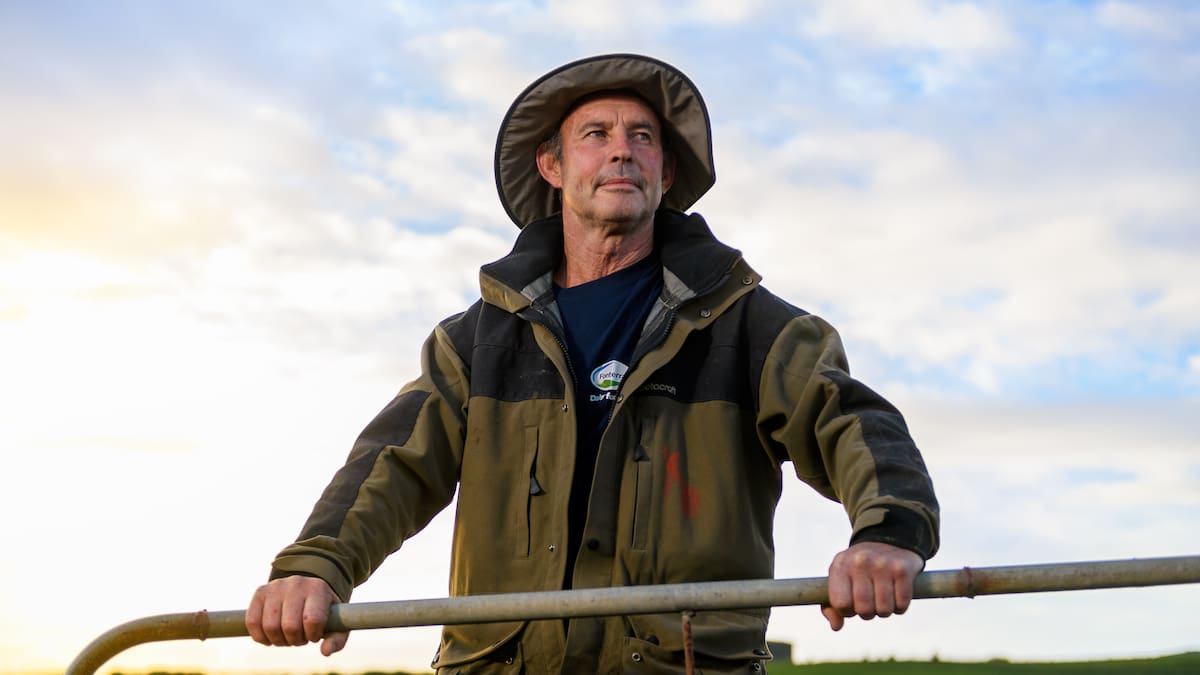
This week, ANZ said its NZ dollar Commodity Price Index for March rose 6.4%, month-on-month to a record high.
“It’s definitely something that’s providing a rare tailwind at the moment, particularly as the juice from lower interest rates has effectively been running out,” ASB’s chief economist Nick Tuffley told the Weekend Herald.
“In general, when you step back, our export performance – particularly in those key primary sector exports – has been very resilient when you’ve been facing a world where the global recovery has been knocked about by US tariffs coming into place last year and now, of course, the latest round of uncertainty,” Tuffley said.
“When it comes to dairy, prices are still holding up at a pretty decent level, which will also help offset some of those cost headwinds that have been coming up.
“It still means that dairy farming for the vast majority of people is returning fairly solidly over the season, on top of a pretty decent season last year,” he said.
ASB chief economist Nick Tuffley. Photo / NZME
ASB’s analysis of the $3.2b capital repayment alone suggests about half of that will go into farmer savings or debt repayment to shore up their balance sheets.
As for the other half, Tuffley said it will make a difference for the economy in the long run.
“As it’s spent and, when you allow for the multiplier effects through the economy, it’s potentially going to add something like 1% of GDP to activity over time.
“That’s pretty substantial in terms of the added windfall.”
But Tuffley said the benefits of the cash injection will not play out immediately.
Farmers will be weighing up their options as to whether to pay off debt, spend more on farm improvements, or diversify.
“Some people will have an eye on the transition away from farming to a quieter life.”
Fonterra paid a record $10.16 per kg of milk solids last year, and the current season, which ends on May 31, is also shaping up to be close to $10/kg.
Tuffley said there had been a shift in farmers’ investment behaviour in these improved times.
In the past, farmers have tended to rush out when prices are high to expand their operations through new conversions or buying a neighbour’s farm, he said.
“You often have this rush to gear up a little bit, but now I think it’s a lot more nuanced.
“There’s more focus on moving beyond just continuing to expand herd sizes, as an example.
“So whilst you might get a bit of consolidation, farmers seem to be less prone to this rush to secure more land, or to secure more livestock.”
Shifting environmental considerations have also led to farmers taking a more conservative approach, he said.
“On the banking side, there’s a lot more focus on resilience – ensuring that there’s some principal repayment occurring and that they are well positioned to ride out the peaks and the troughs of the cycle.”
Fonterra’s repayment will likely raise some succession issues for some, as the average age of the typical dairy farmer has increased.
Tuffley said the repayment, coming as it does with strong milk prices, could see some farmers retiring or moving on.
But it hasn’t all been one-way traffic for farmers, as costs exploded higher over the Covid period and generally remained high.
The industry worldwide has seen a structural lift in the cost of production, Tuffley said.
“Naturally, from a break-even global production point of view, that is likely to support overall dairy prices being higher than what we would generally have experienced before,” Tuffley said.
“So, we do need a higher price, on average, given that there will be that sustained lift in costs.”
In the big picture, dairy faces a situation where the world’s population is still growing, and the trend of increased demand for protein – particularly from Asia – is still a factor.
“But markets will shift,” Tuffley said, pointing to the reduced demand for infant formula in China in line with its declining birth rate.
“What we’ve generally seen through different waves of economic development, particularly through Asia, is that as people’s incomes increase, their eating patterns change,” he said.
“They’re able to afford a more protein-rich diet, which includes more dairy, and more red meat, and we’ve generally done well out of that.”
Jamie Gray is an Auckland-based journalist, covering the financial markets, the primary sector and energy. He joined the Herald in 2011.
Stay ahead with the latest market moves, corporate updates, and economic insights by subscribing to our Business newsletter – your essential weekly round-up of all the business news you need.