
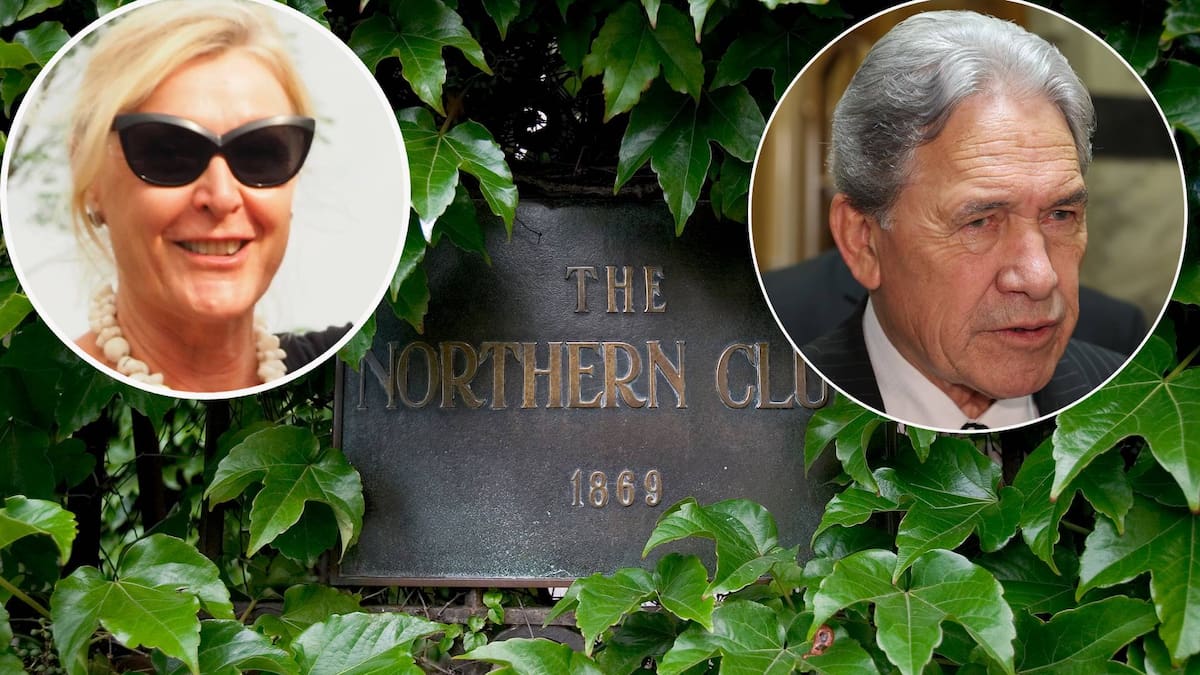
Collins’ letter to Winkelmann claimed Peters had said the judge “referred to him as ‘Winston’ when she called him a liar”.
After the incident blew up in the media, Judge Aitken was referred to a Judicial Conduct Panel over her alleged actions that night.
At a hearing this year, she strenuously claimed she did not recognise Peters when she made the comments and did not realise she had stumbled upon a political event.
A decision, released yesterday, found her actions were a “serious breach of comity” but did not reach the threshold of her being removed as a judge. The panel found “as fact” the judge did not recognise Peters or know he was the Deputy PM when she made the comments that night.
New details about the case are revealed in the decision under the heading, “Was the complaint (and/or its pursuit) politically motivated?”, including revelations about the December 12 letter.
Attorney-General Judith Collins. Photo / RNZ / Samuel Rillstone
The panel decision says the letter only came to the attention of prosecuting special counsel Tim Stephens, KC, and Judge Aitken’s lawyer David Jones, KC, during the panel hearing on January 23 this year – more than a year after it was sent by Collins.
It’s understood that on receiving the letter, Stephens contacted Peters about its contents and that “Peters denied making that statement”.
The letter also came to the attention of the panel, which directed Stephens and Jones to attend an interview with Collins via Microsoft Teams “to identify the source of the statement”.
During that interview, it’s understood Collins maintained that Peters told her Judge Aitken said his name when the judge disrupted the party fundraiser in November 2024.
However, Peters had “disavowed” the statement when he spoke to Stephens a few days earlier.
“The Attorney subsequently spoke to Mr Peters about why he had said he had not given the Attorney the information recorded in the [letter],” the panel decision says.
“Mr Peters told the Attorney the reason was that he could not remember doing so.”
NZ First leader Winston Peters.
Jones opted not to call Collins or Peters to give evidence before the panel hearing to explain the apparent discrepancy between her letter and the NZ First leader’s disavowal.
Judge Aitken contended there was no need for the “tension between the two positions” to be determined by the panel, saying: “It is the fact of Mr Peters’ comment being in the letter and his subsequent disavowal which is relevant.”
The panel did not agree. It found the situation “very unsatisfactory”.
“It is not possible in such circumstances for the panel to resolve the difference in recollections between the Attorney-General and Mr Peters as has been relayed by counsel.”
Peters’ comment was potentially relevant to a claim of political motivation “if he did in fact say that the judge said that ‘Winston’ was a liar”, the panel wrote.
“Mr Peters is recorded as having denied that he said that or that he does not remember saying that. What was in fact said cannot be resolved without hearing from Mr Peters and the Attorney-General but Mr Jones did not wish for either of them to be called.”
The panel said it did not rely on what Peters was alleged to have said to Stephens or Collins as it was “untested hearsay” that revealed nothing more than a “difference in recollection as to what was said”.
The panel noted that whatever Collins “may have believed” when she wrote her December 12, 2024, letter, she did not convey this in her complaint to the Judicial Conduct Commissioner six days later on December 18.
By that point the commissioner had initiated a statutory process and did not refer to the letter in his decision to refer the case to a Judicial Conduct Panel or other material filed as part of that process.
“Consequently the statement attributed to Mr Peters has had no bearing on the panel’s conclusions.”
David Jones, KC. Photo / Michael Craig
In his closing address, Jones referred to Peters’ disavowal, saying that in these circumstances “it was perfectly legitimate to allege political mischief was afoot”.
“It plainly was, particularly given no witness proximate to the judge on the night gave any evidence remotely supporting the content of the letter,” Jones said.
“The Attorney, as the senior law officer, had acted on what Mr Peters had told her and communicated that to the Chief Justice, the highest ranked judicial officer in the country.
“It is difficult with respect to imagine a more direct political involvement with matters to do with the consideration of a judge’s conduct.”
Jones told the panel there was no evidence to suggest the contents of Collins’ letter were true, which he said “supports the political mischief submission”.
District Court Judge Ema Aitken. Photo / RNZ, Dan Cook
“The fact that the head of the judiciary and the Attorney-General have laboured under the misapprehension that this had been said by Judge Aitken has endured for over a year. It is submitted that political mischief can only be a neutral term in these circumstances.”
However, the panel said it was confident any alleged political motivation had “not infected” the panel process.
Its findings were made on the basis of fact and its consideration of evidence and witnesses, “not on the basis of disavowed information”.
The panel also referred to a letter received by New Zealand First chief of staff Darroch Ball responding to allegations against the party of political mischief.
The letter said the party had deliberately decided not to comment publicly on the incident and had been unable to correct media reports or defend the party’s reputation.
“In the result the whole process had likely come to the detriment of its public image.”
Jones told the panel the response was “disparate and disparaging” and “impossible to responsibly address”.
After weighing the evidence, the panel said Judge Aitken had not satisfied panel members there had been any “political motivation or mischief” on the part of New Zealand First.
While the panel concluded the judge’s behaviour at the Northern Club was “a serious breach of comity”, it stopped short of removing her from her post as a District Court judge.
Peters declined to comment when approached by the Herald, saying doing so would be a breach of comity, which requires different branches of government to act with mutual respect and avoid publicly criticising one another.
The Herald has approached Collins.
Lane Nichols is Auckland desk editor for the New Zealand Herald with more than 20 years’ experience in the industry.