
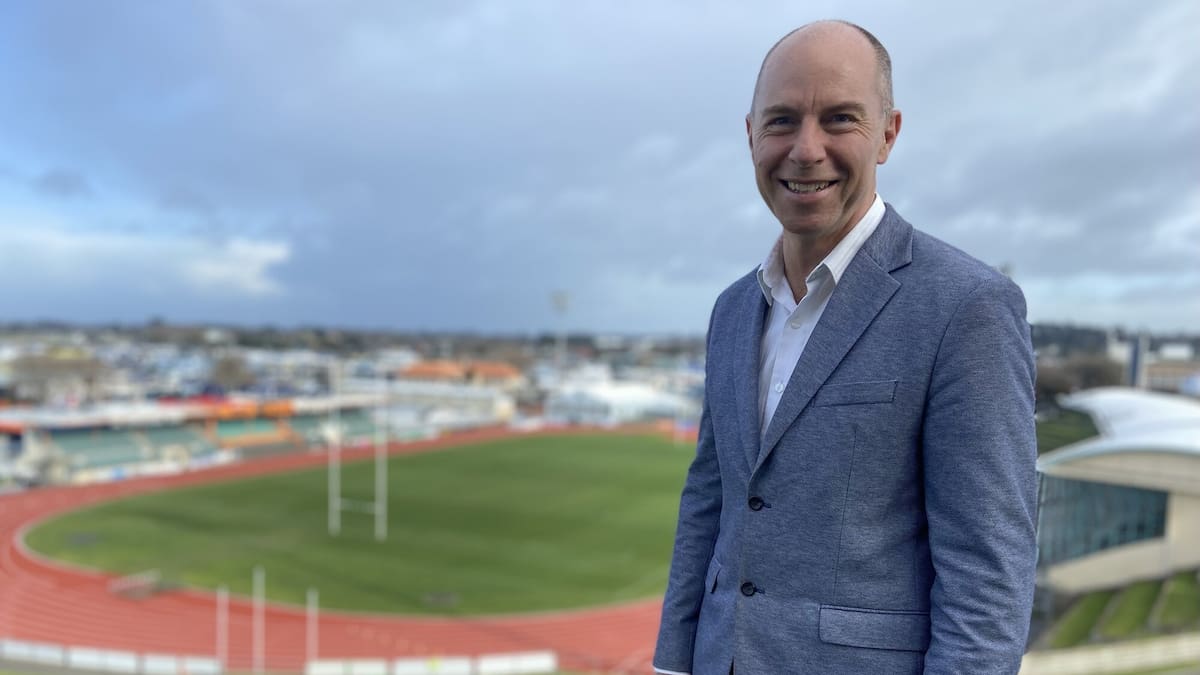
Tripe told the Chronicle he saw an opportunity, regardless of the outcome of the Government’s simplification of local government proposal, to “think about what we call ourselves and who we are”.
The region reaches from southern Hawke’s Bay to just north of Taumarunui and down to Levin, which Tripe said was “just ludicrous”.
“I think Whanganui and our neighbours have got to a point of maturity where we can stand alone from Manawatū,” he said.
“They will always be our friends, they will always be our neighbours but we can part ways with them.”
Tripe said other regions in New Zealand had a clear, unique identity, whereas this region was “mixed and varied”.
He said the way statistics and data were collected from the region was problematic.
“We want to be able to talk about this region and sub-region specifically, not the Manawatū-Whanganui Region,” he said.
“Our house prices, our health indicators, our economic indicators are bundled in from coast-to-coast pretty much; it doesn’t reflect Whanganui.”
Mayor Andrew Tripe believes the Whanganui, Ruapehu and Rangitīkei districts have similar natural landscapes. Photo / Erin Smith
Tripe said Manawatū, Horowhenua and Tararua naturally “bundle around each other”, while Whanganui, Rangitīkei and Ruapehu have more shared commonalities.
“It’s a natural region in itself, from mountains to sea; we have got rivers, mountains, shared boundaries and a commonality in the way we think,” he said.
“We are predominantly rural and we connect through iwi and hapū, our history, our transport, and the visitation of these areas naturally aligns to those geographic boundaries, in my view.”
Tripe said he would be surprised if other districts did not have the same issues.
“It would be preferable to make the change rather than suffer over generations with this name that doesn’t reflect who we are,” Tripe said.
The Local Government Act sets out two processes that could be used to split a region, according to the Local Government Commission.
If one or more affected local authorities, or at least 10% of electors in the area, initiate a reorganisation request, a poll of electors could be held over the affected area.
A positive poll result would be required before a reorganisation plan could be implemented.
Alternatively, if all the affected local authorities were in agreement, there could be a council-led process.
The commission would become involved only at the end of the process to determine whether it met legislative requirements.
Tripe said understanding what simplification for local government looked like was needed before releasing the proposal for public consultation.
“These things take time but I’d rather get the process and work started – there’ll be an appropriate time to do that,” Tripe said.
Horizons Regional Council’s Whanganui representative Alan Taylor said discussions about reforming the region were premature.
“I don’t favour moving away from the kind of regional government that we have for the responsibilities that the regional council holds now, because they are significantly river catchment-based.
“The kind of catchments that we have in our region are similar – they are different in other regions.
“The regional basis and grouping of those rivers together makes a lot of sense.”
Taylor disagreed that there was a lack of identity for the region.
“I think the region is quite well-defined at the moment … whether it is wise to group some territorial authorities as separate entities within that? As an individual, I’d be a bit concerned about that,” he said.
He said trying to split up the similar iwi affiliations could be problematic.
However, the Tararua District may feel economically and culturally isolated and could fit better within Hawke’s Bay or the Wairarapa area, he said.
Palmerston North Mayor Grant Smith agreed there was a “distinct difference between Whanganui and the wider Manawatū” but said any restructuring would depend on the simplification of local government outcome.
“It is very much around communities of interest … in my opinion, you have got to have numbers,” Smith said.
“The problem is this Government will be all around the numbers and economy – that probably means we will be together for a little while longer.”
Palmerston North Mayor Grant Smith agrees there are distinct identities in the region. Photo / NZME
Taylor said it was wise to keep the “big sister city” close instead of creating more boundaries, noting Palmerston North ratepayers contributed to Horizons’ mole restoration projects in Whanganui.
“It would not be a good thing for Whanganui. So many people go through to Palmerston North for entertainment and retail business,” Taylor said.
“Neither of us are huge cities by global standards, in any respect, why intensify the boundaries between them?”
Tripe said the idea of splitting the region had been discussed several times recently.
“There was no negative feedback at all, I think people are overwhelmingly positive and even people from Palmerston North understand that as well,” he said.
“Anecdotal evidence would suggest that there’s a strong appetite for it to happen.”
Fin Ocheduszko Brown is a multimedia journalist based in Whanganui.