
Here are some highlights of Darracott-Cankovic’s conversation with Herald national desk editor Hannah Brown.
What fears and questions are your patients typically grappling with?
They’re fearful of the dying process and what it might entail in terms of suffering, pain and distress.
Others have a fear of what comes after dying – which can range from judgment day and guilt and whether they led a life that was good enough – or it can be a fear of no afterlife.
“One of the most common fears is how those left behind will cope. People don’t want their families to suffer,” Dr Fi Darracott-Cankovic told the Herald. Photo / Sylvie Whinray
One of the most common fears is how those left behind will cope. People don’t want their families to suffer.
Can you talk me through the new therapy from start to finish?
My permit from Medsafe is for a very specific protocol: two therapists pair up for an individual patient, the patient is assessed, we do preparatory sessions, and then we have an all-day psilocybin session with an integration afterwards – bringing meaning to the experience.
Each patient can have up to three cycles of it within the permit. One to three treatments.
First there’ll be a detailed informed consent sheet the patient will read to find out more about what the therapy entails, then we’ll move into a screening process including a medical assessment, and we’ll look at psychiatric history.
There’ll also be a psychological screening process to make sure people have adequate support around them to embark on something like this.
At this point I’ll be joined by a second therapist who will stay with us through the rest of the arc of treatment. We’ll have two preparation sessions, where we build a sense of trust. It’s really important for the patient to feel a sense of safety and connection to us.
In those early sessions we’ll also explore their expectations for treatment, and any fears and concerns that they might have.
A big emphasis on preparation then?
Yes, and we also talk about what the medicine day will look like and encourage them to think about an intention for that day. It might be directly around their fear of dying, or something looser – like “how do I access love?”
We also emphasise that something will probably come up from their subconscious on the day.
There’s often a fair amount of trepidation, but they have commented it’s also an opportunity for hope.
Dr Fi Darracott-Cankovic has prepared a space at Dove Hospice in Auckland to be conducive to psychedelic therapy, with patient access to a Japanese contemplative garden outside. Photo / Sylvie Whinray
We also really look at consent. That’s because it’s hard to consent to something when you don’t know quite what it will be, and in an altered state of consciousness you’re not used to.
We especially talk about consent for touch. It’s really important for the patient to make their decisions about consent while they’re in an ordinary frame of mind.
It’s known that touch can be incredibly supportive during a psychedelic experience – typically that means holding a patient’s hand – but consent needs to be given in advance.
Talk us through what happens when they take the drug – on dosing day.
It only happens once we’re all in agreement that the patient feels suitably prepared.
It’ll be an all-day session, done in Dove Hospice – in a room set up to be conducive to the psilocybin setting, so it’s more like a comfortable home with beautiful artwork and subdued lighting, flowers, and the participant will be invited to bring in personal meaningful items: photos, taonga, anything that will bring them comfort.
We explore people’s musical preferences and tastes and that helps us curate music for the day. I have a music therapist on the team – it’s like two therapists plus music.
Patients have told us it’s often a very meaningful, often sacred experience and we’ve worked with Māori and other indigenous perspectives. We may open with a karakia or poem and we will offer aromatherapy and a guided meditation to start.
People can wear headphones and eye shades, to encourage them to go deeper within so they’re really immersed in a world, rather than being distracted by the room – but all these things are optional and never mandatory.
Researchers around the world will be taking interest in Medsafe’s decision to grant a single New Zealand doctor permission to use mind-altering psilocybin – derived from magic mushrooms – in her care of the dying. Photo / 123rf
When everyone’s in a nice calm, centred, connected state, the patient will be offered the psilocybin capsule and it’ll be a matter of them lying back with the music, the two therapists will sit alongside, and our role is to be supportive and be there for the patient – but in an unobtrusive way.
We’re not going to be asking questions or directing the process, but they’ll know we’re right there with them, just holding the space, offering support at any point.
Then after six to eight hours approximately, as the medicine is wearing off, we’ll offer them some food and drink, and we’ll have art materials on hand if the words aren’t flowing easily.
Once they’ve returned to a baseline state of being and there are no ill effects felt and they feel ready to go home, we’ll send them home with their companion, and we’ll provide aftercare advice and contacts in case anything emerges.
A week later there will be a follow-up therapeutic session with both therapists, and the aim of those is to explore the content of the session, the visions, the emotions, we look at meaning-making and how they can really bring that meaning into everyday life: perhaps through time in nature, mindfulness meditation, movement and dance, through art, there are a number of different ways people can integrate what happened.
What are they typically seeing and experiencing?
The music often is very, very rich and that itself can be very evocative for them, so there’s that sense of deep immersion into the music, they can feel merged with the music.
People may well have visions – they may be immersed in the forest, ocean, having rich experiences in nature.
They can feel a sense of support and contact with ancestors, loved ones.
Dr Fi Darracott-Cankovic has been leading a ketamine-assisted therapy programme at Dove Hospice for three years. She says many of her patients have found it transformative, but research shows the effects of psilocybin therapy could be even more enduring. Photo / Sylvie Whinray
Can they bring their partner to the medicine day?
At the moment they will have a nominated support person who knows all about the therapy, and will transport them. Towards the tail end of the session it would be okay for them to come in.
Some say psilocybin is most effective in nature – can they access nature?
One day we’d love to offer this therapy in nature. At the moment there’s a beautiful Japanese contemplative garden and patients have access to that.
What does the room feel like during a psilocybin therapy session?
I find as a person, a human sitting alongside, it’s very moving. It can be a huge cathartic emotional experience with themes of love, peace, connectedness, a mystical beautiful experience.
But there often is also contact with some really difficult emotions – so there can be expressions of grief, fear, anger. We welcome everything in this type of therapy. We’re not trying to suppress; we’re allowing things to come up for release.
Why do you have two therapists there at all times?
It’s partly pragmatic because you just can’t leave someone. How would you go to the bathroom?
But more than that, one of the tenets is to never leave the patient on their own. It’s been the model for many of the trials.
It’s also for safety. With two, you’re accountable and transparent.
These are relationships – and a lot of the healing comes from the relationships. This way, you have different ones at play, and what we all hold as humans is differently useful for people at different times. It also means deeper and wider expertise.
We’re a really new cohort of therapists doing this in this country. We don’t have extensive elders and practitioners in the field.
What do you mean by that? Which countries have elders and what do they offer?
Before psychedelics became illegal there were a number of researchers who gained a lot of experience working with psychedelics in the US and Europe. That’s partly how we know how effective they are – the work they did from the 50s to the 70s.
And it’s important to acknowledge that psychedelics have been used for a long time by indigenous populations for healing and ceremonial purposes, and there are countries where those traditions are still alive. I’ve had the incredible opportunity to train with indigenous Peruvian medicine people of the Andes.
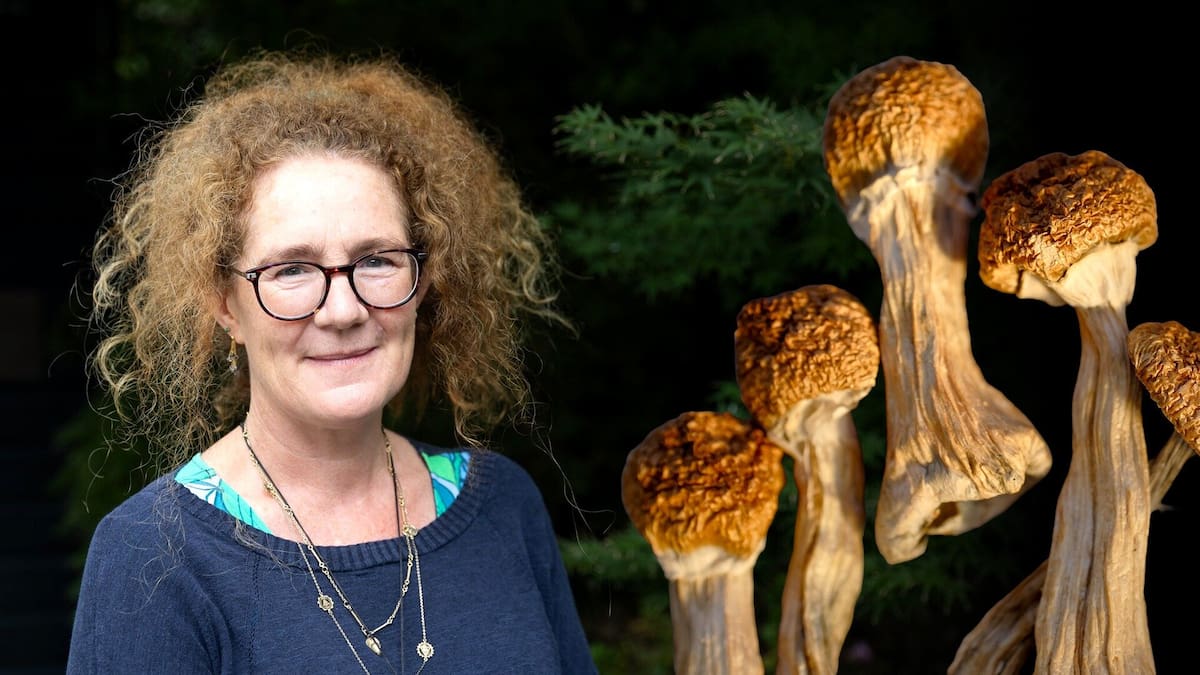
Dr Fi Darracott-Cankovic (inset) is the first person in the country licensed to prescribe the psychedelic drug psilocybin – derived from magic mushrooms – specifically for end-of-life care. NZ Herald composite photo
They use these medicines with deep reverence and understanding and experience.
Where do you get your psilocybin?
There’s no one producing pharmaceutical-grade psilocybin here.
I’m using a company in Australia called Natural Med Tech – I really like their ethos. They use a more natural, eco-friendly process than some others who favour a pharmacological synthetic production. And they’re very well-priced.
How will people access this therapy?
Patients will come through Dove Hospice – people can refer themselves to Dove.
The cost is high. We’re budgeting $9000 for a round of treatment – that’s about half the cost you’re looking at in Australia. And that’s not including the cost of travel and how daunting that could be. The main cost is the hours of therapy from two therapists.
My vision is that we won’t have to charge patients for it at all – and the handbrake to that at the moment is we don’t have funding. I’m hoping we’ll attract some philanthropic donors.
I do have a first patient – next month. I know her well and it feels like a good case to start with.
Could people just go out and get psilocybin and do it themselves? With their partner or a good friend?
Because the cost of this therapy is high, and access is very limited, I can understand why people could be drawn to do it themselves with trusted loved ones.
But people at end of life can be physically or psychologically vulnerable, and we’re confident that we are providing safe psilocybin and a robust process.
Why psilocybin? Why do you like working with that specific drug?
What Medsafe looks at is the level of evidence that the therapy works. And there’s good evidence that psilocybin is an effective drug for end-of-life care.
There’s less evidence for MDMA – there is a trial going on in Auckland at the moment for MDMA for advanced cancer, but it’s not finished.
What research is out there, for those who are interested?
One of my dear colleagues is a clinical psychologist called Margaret Ross in Australia. There was a really amazing documentary made about her work called The Edge of Life – it’s beautiful.
She released a paper recently on exactly what we’re going to be doing: end-of-life psilocybin work.
The research paper is called Psilocybin-assisted psychotherapy for depression and anxiety associated with life threatening illness.
Roland Griffiths did another very influential randomised, double-blind trial in 2016 which showed how effective and sustained psilocybin therapy can be at reducing depression and anxiety for people with life-threatening cancer.
Once our psilocybin therapy is underway, we’ll be working with the University of Auckland to gather data on outcomes.
Psychiatrist Cameron Lacey received the first Medsafe licence in New Zealand to work with psilocybin. His work is in treatment-resistant depression. The move came two years after a similar decision in Australia. Photo / Elimbias Health
Where does New Zealand sit globally in this area?
It’s new here. I have a lot of support and mentorship from people in the States.
And there’s a lot of research. It’s actually one of the fields within palliative medicine that has been studied a lot: facing mortality. It’s an area where people have suffered hugely, and this therapy really offers a new hope, and beautiful scope to bring meaning, peace and help people.
Canada has been delivering a compassionate programme for terminal patients for four or five years – they’re a leading country in this area.
Medsafe starting to approve it here puts us at the cutting edge of legal psilocybin therapy globally.
You’ve worked with other drugs for end of life too, haven’t you?
I’ve been leading a ketamine-assisted therapy programme at Dove Hospice for the last three years. It’s a two-hour experience rather than the longer experience you get with psilocybin.
It’s been transformative for some of my patients, and allowed them to access peace, love, loss of their fears, and helped them to be more present in life and really appreciate their living, rather than being so stuck on the dying.
It’s been beautiful work, but psilocybin offers a longer session, and it’s a natural medicine.
I’ve worked with MDMA on a research trial at the University of Auckland. But one thing at a time!
What happens with a terminal diagnosis sometimes is people get stuck in a place where their thoughts about impending death become all-encompassing.
Psychedelic experiences can really give them that perspective: “I am still here.”
Research shows the effects of psilocybin therapy can remain for six months to two years.
In many cases your patients would have died by then?
Not necessarily. All the amazing advances we’re seeing in oncology treatment means people can be diagnosed with a terminal stage 4 cancer, but they might still have five or 10 years to live.
Yet we can find they’re really struggling on the inside and not enjoying what’s left of their life. That’s where I question the tens of thousands of dollars spent per month on these amazing treatments – but what is that worth if they’re paralysed on the inside?
Contrast the cost of giving people life, with the cost of giving people meaning and quality of life.
As medicine becomes more sophisticated there are going to be more people in this group.
How do you support someone through a difficult or frightening psychedelic experience at the end of life?
That is the crux of all the training and the experience. There’s not a one-size answer to that, but we’ve trained for it.
We have an understanding that it’s the challenging experiences that in the long term can be the most significant and healing. These are powerful medicines, there is potential for rawness and destabilisation – and there is a robust safety plan within the protocol and through Dove we have ongoing access to many types of therapy.
How long and difficult was the Medsafe licensing process?
I applied in June and got permission at the end of October. It wasn’t me on my own. It’s all been done with huge amounts of support – from the wider team at Auckland University, from international experts, we’ve had supervision, we’ve had input around cultural care and sensitivity for Māori.
Dr Fiona Darracott-Cankovic is working with a group of 10 therapists in a multidisciplinary group called the Psychedelic Assisted Care Collective. Photo / Sylvie Whinray
Also, the Government indicated they were open to looking at therapeutic uses for psychedelics at the beginning of 2025 – they had seen what Australia was doing, they had their eye on what was happening globally and there was an anticipation that this would be coming here.
I’m working with a group of 10 therapists, a multidisciplinary group – we call ourselves the Psychedelic Assisted Care Collective, or PACC.
What is it like saying goodbye to your patients after working so closely?
You do become close to someone doing this work. It’s intimate, deep work, and with that comes a closeness as humans. So saying goodbye can bring up grief, but witnessing these transformations, these almost mystical spiritual experiences – what could be more meaningful?
Has it altered your own feelings about death?
Yes it has. End-of-life work has its own psychedelic aspect even without medicine. My drive is always to ease suffering. This therapy is a beautiful tool. An incredible opportunity to help bridge some of those gaps.
Sign up to The Daily H, a free newsletter curated by our editors and delivered straight to your inbox every weekday.