
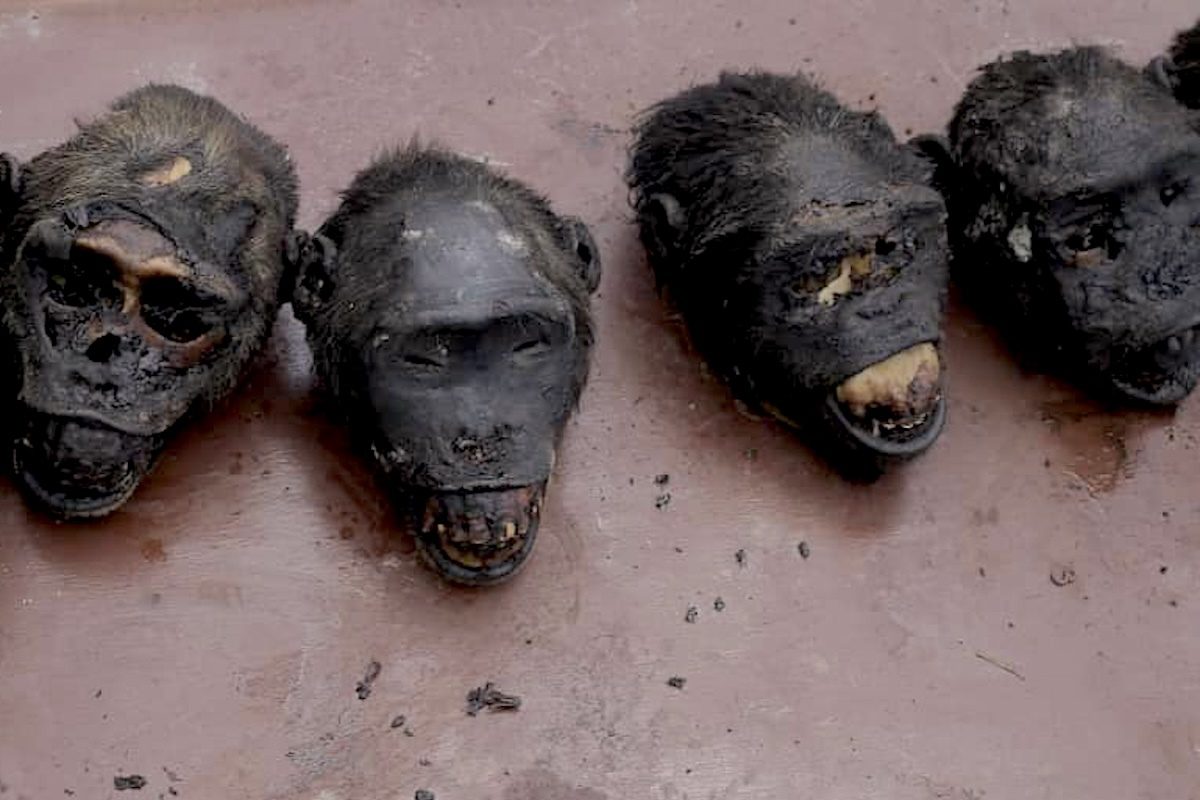
Scientists have long known that deadly diseases, from HIV to SARS to Ebola, can begin in animals and spill over to humans. But a new study is the first to quantify the risks from the global trade in wildlife, finding that nearly half of traded mammals share at least one pathogen with humans.
“It’s hard to make the leap from stories to scientific evidence,” said coauthor Colin Carlson, executive director of the Viral Emergence Research Initiative, a federally funded research program headquartered at Yale. “For decades, we’ve seen outbreak after outbreak starting in the wildlife trade, but so far, that hasn’t been enough to build a case for action. Now we can say with confidence, wildlife trade is always risky for human health.”
The research shows that the risk of a disease making the jump grows the longer that wildlife are bought and sold in markets. On average, for every 10 years an animal is in circulation, it shares one new pathogen with humans. The risk is higher when animals are traded illicitly or sold in live animal markets, where crowded conditions and poor sanitation can fuel the spread of disease.
For the study, researchers looked at thousands of species of mammals, including more than 2,000 wild mammals, from rhinos to pangolins, that are sold as pets, or for their fur, meat, or other parts. Analyzing four decades of data on viruses that can infect both animals and people, they found that among mammals not subject to the wildlife trade, just 6 percent share pathogens with humans. For traded mammals, that figure jumps to 41 percent.
Even after controlling for factors such as diet and proximity to people, traded mammals were still 50 percent more likely to share diseases with people. The findings, published in Science, make clear that the “closer and longer the contact between species, the higher the chances of transmission of pathogens,” authors write.
“The conditions that sparked the Covid-19 pandemic exist all over the world,” Carlson said. “Animals are packed together in poor health, in combinations that don’t exist in nature, spending hours a day with people who might not even wear a mask or gloves to reduce potential disease transmission.”
ALSO ON YALE E360
A Troubling Rise in the Grisly Trade of a Spectacular African Bird