
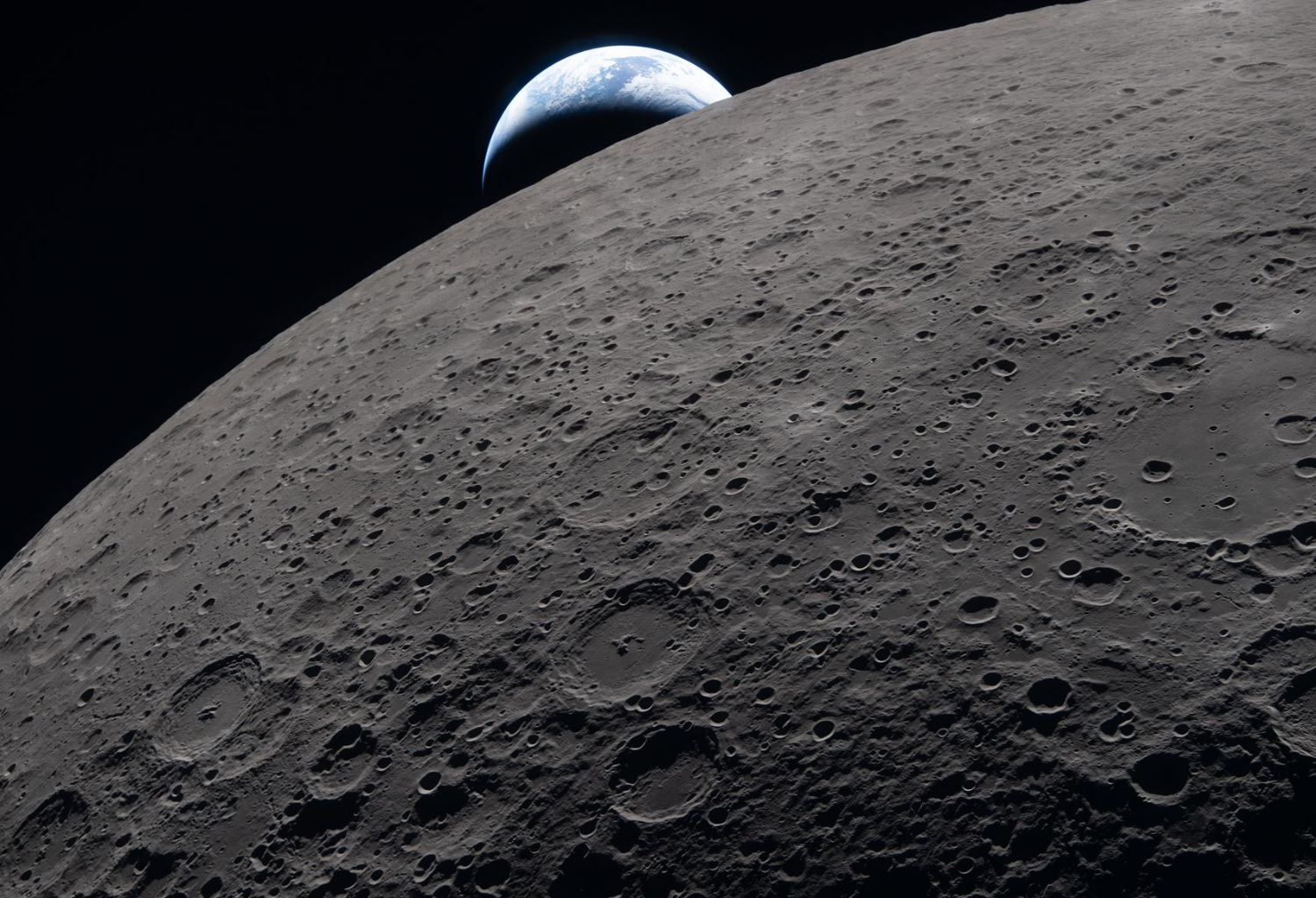
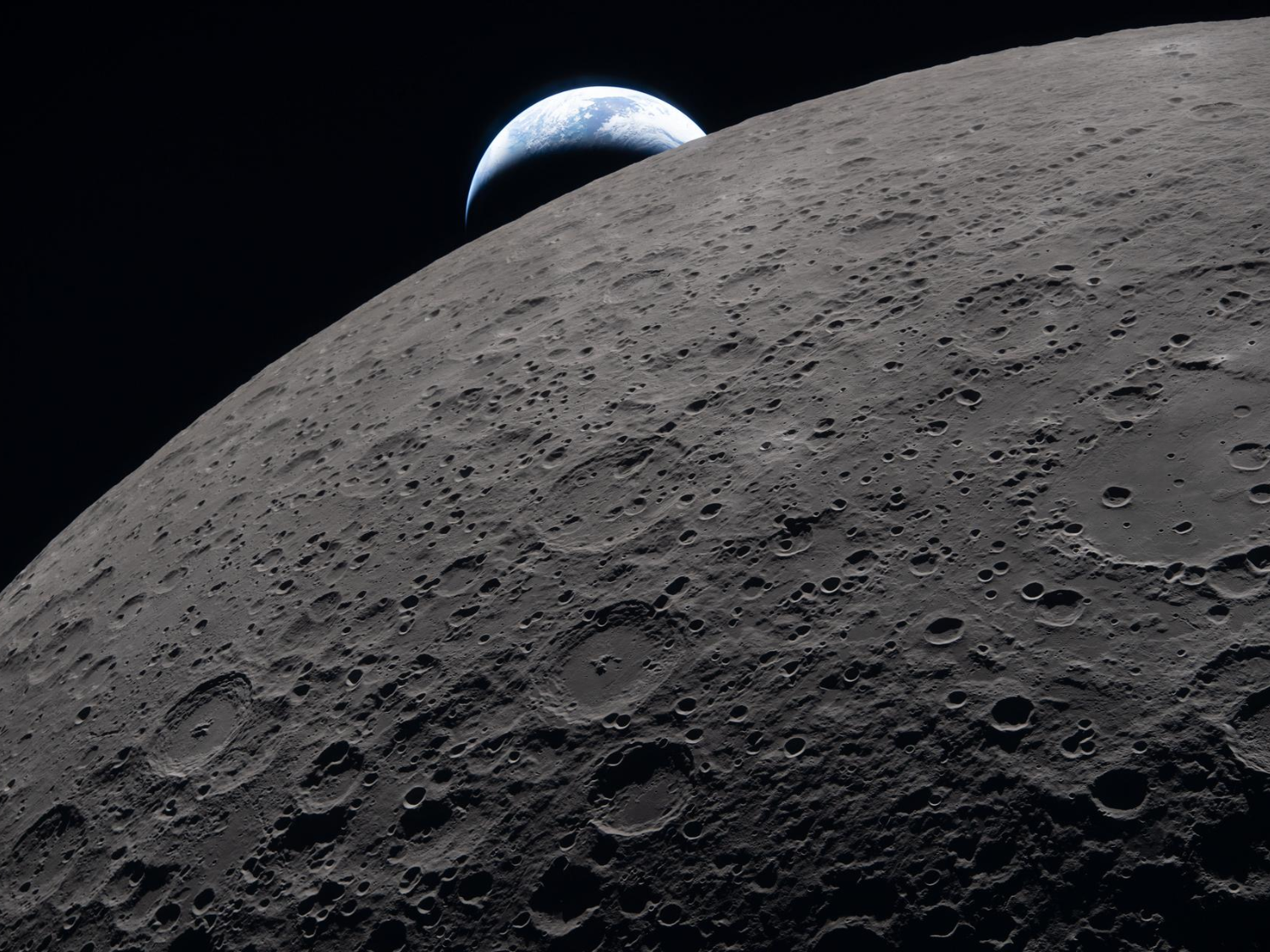
ⓘ NASA
This image was captured at 6:41 p.m. EDT, on April 6, 2026 – three minutes before the Orion spacecraft and its crew disappeared behind the Moon for 40 minutes.
Nikon has just released a complete high-res image library of all the images taken during the recently concluded Artemis II lunar flyby mission. Most of these were taken on a tried-and-tested Nikon D5 system – you can now officially download all those images.
NASA just published a full gallery of high-res images from the Artemis II lunar flyby, which captured during the crew’s close pass over the Moon’s far side. The set includes images with detailed crater fields, Earthrise shots, and a solar eclipse seen from deep space.
The interesting part here isn’t just what was captured – it’s how. The crew used a mix of handheld and onboard imaging systems. Inside the Orion spacecraft, astronauts were equipped with Nikon D5 DSLR cameras, alongside multiple zoom lenses. These are not new cameras by 2026 standards, but they’re proven, rugged, and tested for radiation resistance. Astronauts used the Nikon setup to shoot both wide interior scenes and tight lunar close-ups through the spacecraft windows. NASA specifically trained the crew to photograph key lunar landmarks using zoom lenses.
At the same time, Orion itself carries multiple external cameras used for engineering and documentation. While NASA itself hasn’t detailed every unit for Artemis II, earlier Orion missions used arrays of mounted cameras for navigation and external views. Also, NASA themselves confirmed that astronauts used an iPhone 17 Pro Max (curr. $1,319 on Amazon Renewed) for informal shots and videos, including selfies and social-style content. That should explain some of the more spontaneous interior images in the gallery.
With no atmosphere, shadows are hard-edged, contrast is high, and surface texture is very sharp – especially near the terminator line. The far-side images look particularly detailed because they were captured at low sun angles, which increases the visible depth in crater rims and ridges.
Regardless, Artemis II was supposed to be a test flight, not a science imaging mission. The photography holds relevance for documentation and training purposes, especially for future crewed landings. Still, the mission gave us something Apollo couldn’t achieve back then – high-res coverage. You can view (and download) all the images here.
 Anubhav Sharma – Tech Writer – 1516 articles published on Notebookcheck since 2024
Most of my time goes into writing – and somehow it hasn’t stopped being fun yet.
My work mainly revolves around everyday tech, gaming, watches, DIY modding, and the occasional piece on tech-policy chaos when companies and governments clash. I try to keep things simple and honest, without sounding like a product brochure.
I have a Bachelor’s degree in Computer Science Engineering and an Associate Degree in English Studies from the College of New Caledonia in British Columbia, Canada.
Away from articles and deadlines, life usually shifts to making music, taking photos, or trying to finish games that should have been completed months ago.