
Upset neighbours say a proposed gold mining operation just south of Luggate would ruin their quality of life.
Awa Koura Mining want consent to mine gold on a rural property south of Luggate between the Clutha River and State Highway6.
The alluvial mining would be done over three years on the farmland site at Queensberry before it was converted into an 8-lot rural lifestyle development.
Submitters against the application for resource consent for the mine say it would affect the environment, their lifestyles and their businesses.
Phillip and Anne-Christine Everest, of Tarras, said a mining operation would ‘‘completely upset and ruin our quality of life’’.
‘‘We are not opposed to gold mining in general, but very much condemn it when near people’s homes and their lifestyle activities.’’
Roderick Harold and Philippa Mary Fee, who own a home directly across the river from the proposed mine, said they were worried about the effects of dust and noise on their property.
They were concerned that the company said it planned to ameliorate dust, but provided
no detail on how that would be done.
They were also concerned about noise from the operation.
Mr Harold, a former lawyer, told the ODT the acoustic report relied on projected averages rather than what residents would experience on the ground.
‘‘You talk about bulldozers, excavators, scraping and bashing stone 10 hours a day next door,’’ he said.
‘‘To suggest sound will be only 40 to 50 decibels is disingenuous. We have no idea how loud it will actually be.’’
He said residents were not opposed to development in principle, but were frustrated by what they saw as a lack of transparency.
‘‘This is why our opposition is based on not being given enough information,’’ he said.
‘‘There’s been no public meetings.’’
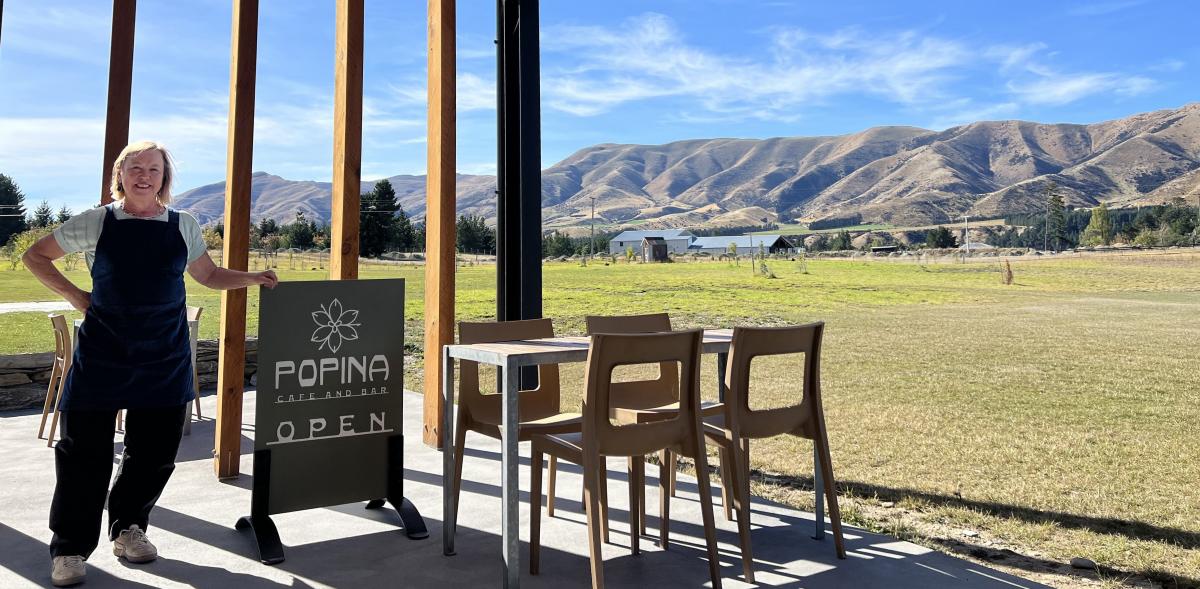
Brenda Jessup, who started Popina, a hospitality business immediately across from the site of the proposed mining activity, said the entire activity would fundamentally upset the business.
The cafe and restaurant had been open just six weeks and had already received ‘‘huge excitement from locals’’, she told the Otago Daily Times, describing it as built around the area’s peaceful rural character.
Ms Jessup, who previously lived in Wānaka for 25 years and had owned the land for a decade, said she had heard nothing directly about that mine.
She and neighbouring landowners had been approached about subdividing the surrounding land around two years ago, which they supported at the time.
‘‘Two-hectare properties are a good way to restore land. People are growing food, trees, habitats for the land,’’ she said.
‘‘But this just feels like total double dipping.’’
She said the business had been designed around a slow, landscape-focused experience, which she now feared would be undermined.
‘‘We want our business to stay sustainable. But that means we have to sustain our staff, our land and ourselves.
‘‘The whole principle is wrong.’’
Another submitter, Simon Stebbings, of Luggate, said the economic benefits of the project appeared to be overstated relative to the scale of the mining and called for more independent assessments on addressing noise impacts, ecological effects on indigenous flora and fauna in two Department of Conservation reserves within 75m of the proposed mine site, water use and the rehabilitation of the site.
A resident, who declined to be named, living roughly 250m along the river from the proposed site, said they had no recollection of receiving any direct notification or council correspondence about the mine proposal.
They said they had lived in their home for seven to eight years, in a property now about 12 years old.
‘‘None of these people would allow a mine 200m from their homes. Because it’s not their homes they think it’s all right — it’s our homes,’’ the resident said.
‘‘It will destroy the life we have here.’’
Following public notification 22 submissions were made, largely from people living relatively close to the proposed operation.
The company says it expects to extract 1890 ounces of gold over three years — which would fetch nearly $10million at today’s prices.
An attached economic report said the project was expected to directly add an average of $2.57m a year to the local economy once the mine was operational with an average of four staff.