
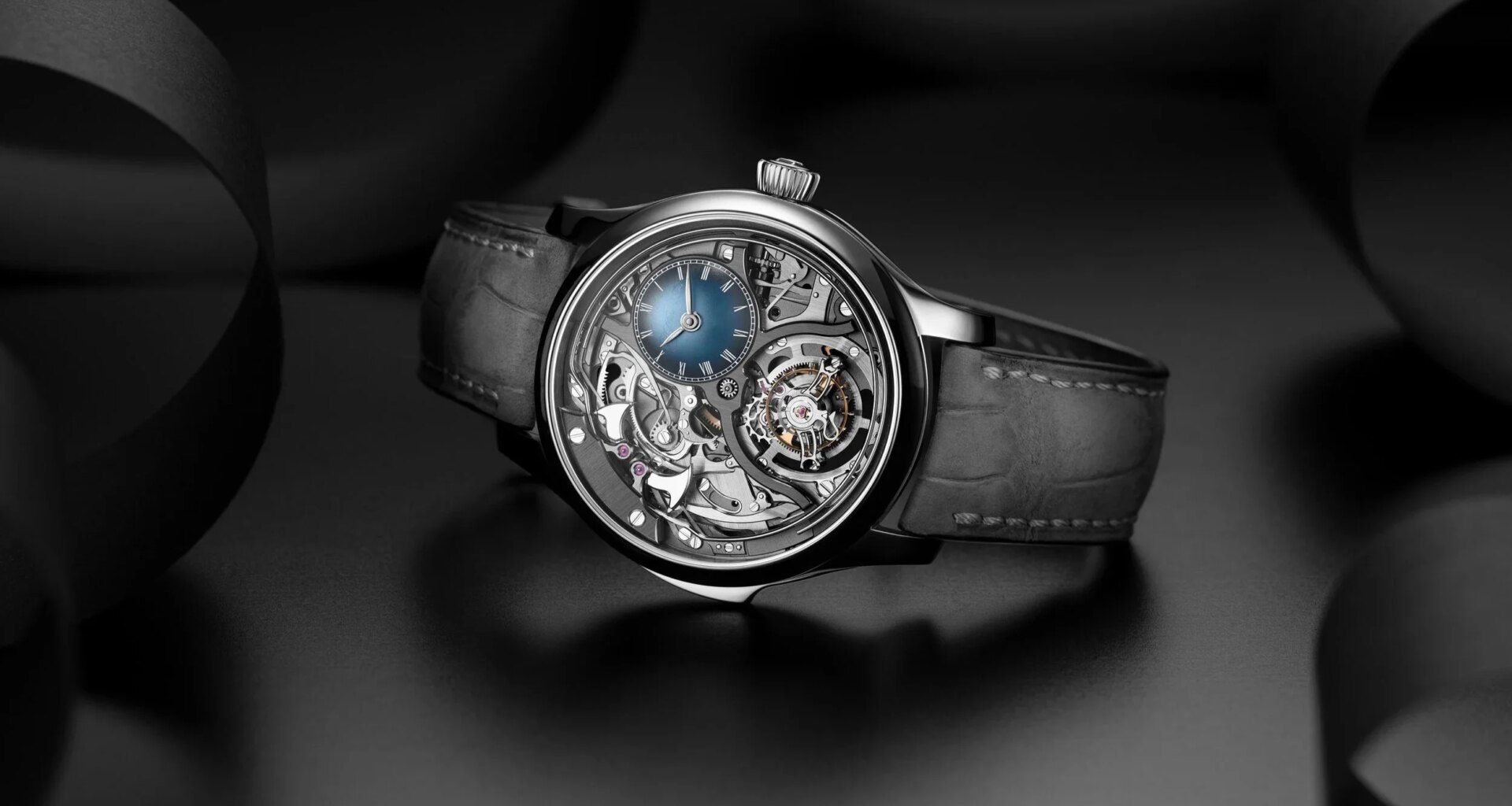
The tourbillon adds another layer. In most watches, the tourbillon is the main feature, but here it is just another detail- a fabulous one though. Positioned at 6 o’clock, it’s a flying construction with no upper bridge, which keeps the view unobstructed. As I said, this watch has a lot of negative space, which really helps with visibility. More importantly, the tourbillon uses a cylindrical hairspring, a detail that’s both technically significant and increasingly rare. Unlike a flat hairspring, the cylindrical version rises vertically around the balance staff. This reduces positional errors, but it’s also much harder to produce. Each one is shaped by hand, a process that takes significantly longer than a traditional spring. Yes, you read that right: it is made by hand.
Thus far we have mostly focused on the complications not really covered the main function of the watch: telling the time. At 2 o’clock, there’s a small interruption: a domed blue fumé subdial. It’s the only solid surface on the dial and acts like a tiny reminder of Moser’s other watches with their beautiful dials. You’re getting the best of Moser in this watch, with both the complications and the dial artistry.