
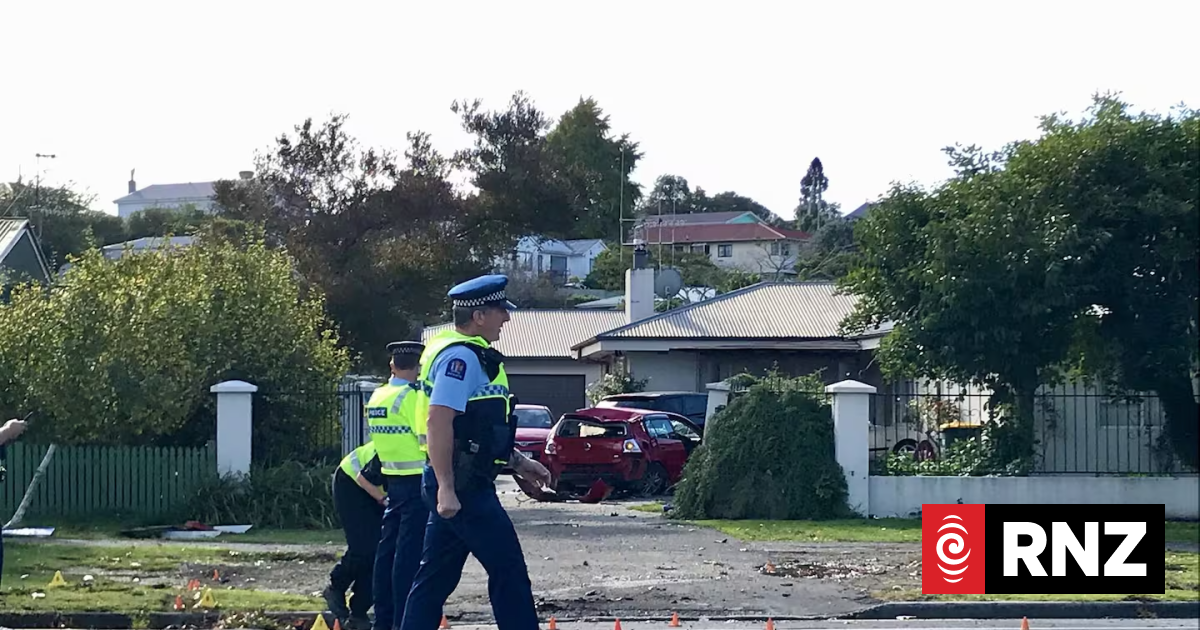
First published on 
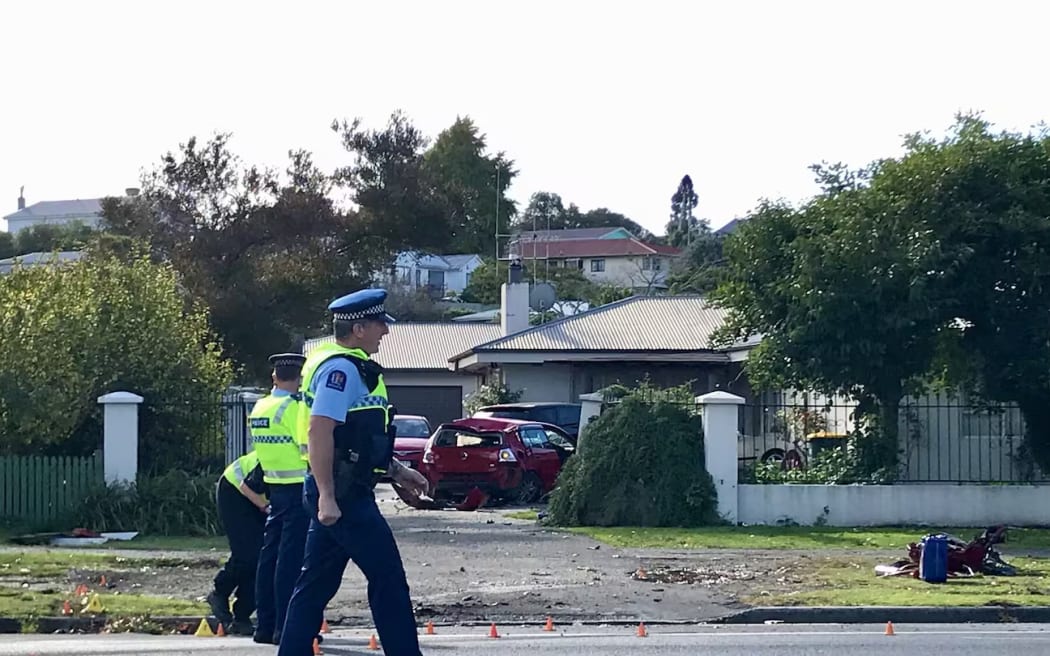
The man’s car pictured in the driveway of a Whatawhata Road property in Hamilton after he crashed into a ute, a pedestrian and then the property’s iron gates.
Photo: Open Justice / Belinda Feek
A man who careered straight through an intersection, fatally striking a pedestrian and crashing into multiple vehicles, had seen a doctor days before the incident, concerned he might have a seizure.
The 27-year-old, who had a history of suffering seizure-type events, told police after the collision that he “must have blacked out”.
The driver, whose name is suppressed, had been to see Dr David Dewes, revealing he had not been sleeping and was worried he was going to have a seizure.
On Tuesday, Dewes gave evidence in the Hamilton District Court on day two of the man’s trial before Judge Arthur Tompkins.
The man is defending charges of dangerous driving causing the death of Adrian Michael Bell, and injuring motorist Jeffrey Dawson, in the collision on 26 April, 2021.
The accused went straight through the intersection of Poaka Avenue and Whatawhata Road in Hamilton, before crashing into Dawson’s ute.
He then smashed through a road sign and into Bell, before shunting him through the iron gates of a property.
The driver then crashed into the back of two parked cars, which were then pushed into a house, causing damage.
Bell died at the scene.
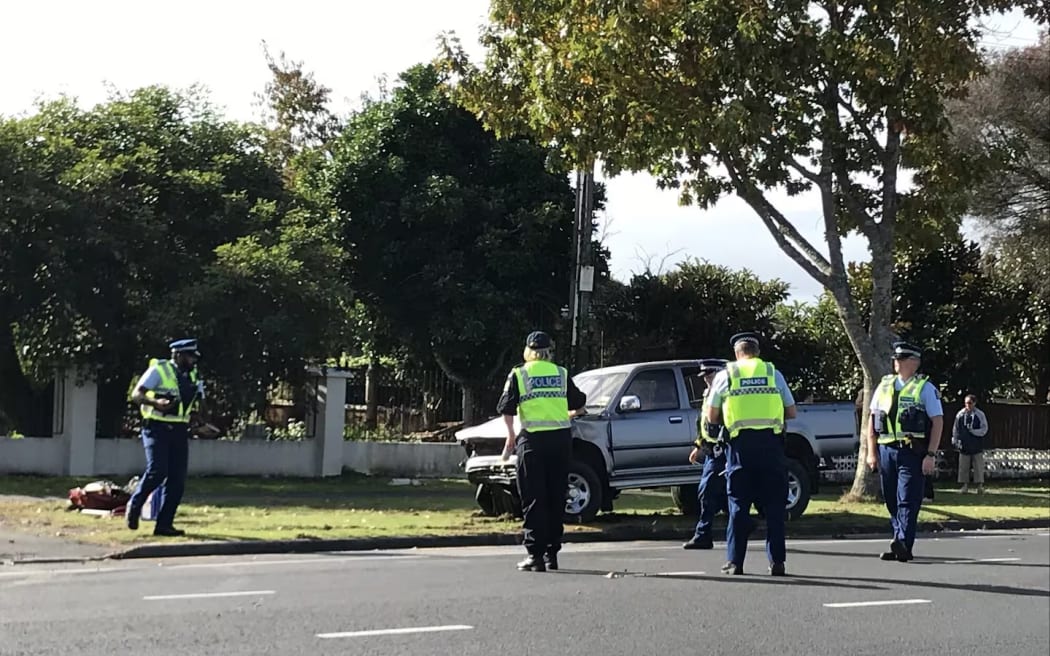
Police inspect the scene at the intersection of Poaka Ave and Whatawhata Rd.
Photo: Open Justice / Belinda Feek
While the defendant admits causing the crash and Bell’s death, he is defending the charges on the basis that his driving didn’t fall below the standard of a prudent driver and didn’t create an objectively dangerous situation.
While there are 22 witness statements, only 10 witnesses would be called at the judge-alone trial.
A ‘psychiatric’ seizure
On Tuesday, now retired GP Dewes told the court that at the appointment on 23 April, 2021, the defendant was “worried about maybe having a seizure because he hadn’t slept well and had a recent history of a hospital admission for seizures”.
Asked by Crown prosecutor Russell Boot about the appointment’s outcome, Dewes said he prescribed the man medication for rhinitis, as he was having trouble breathing through his mouth and nose.
Boot pressed him about the defendant’s concerns about having a seizure, and Dewes stated that information was gathered by a nurse during the triage process about 30 minutes beforehand.
“We discussed seizures in our consultation,” he said.
Dewes said they also discussed “somatoform disorder”, where a seizure looks like an epileptic one but is in fact “a psychiatric one, in the mind, or originating from that”.
“The easy thing for me to say is, I’m not a psychiatrist … but it is a psychogenic form of a seizure,” he said.
Defence counsel Ashleigh Beech confirmed with Dewes that the accused presented as normal during the appointment.
“Exactly,” Dewes replied.
Asked if one of the causes of a psychogenic seizure was anxiety or stress, Dewes confirmed it was.
He said he was “superficially” aware of the defendant’s anxiety disorder but because he was concerned about sleep apnoea, he focused on his sleep issues.
Asked whether they discussed him driving, Dewes said it wasn’t discussed.
Earlier discussion about driving
Cambridge neurologist Dr Peter Wright gave evidence an appointment the defendant had with Wright’s registrar colleague in early February 2019, as a follow-up to his appointment in November 2018.
It was in the November appointment that the defendant was told not to drive for 12 months, given he had been having seizure-like events.
At that stage, Wright believed the defendant’s seizures were anxiety-related.
Asked by Boot whether there was any discussion with the defendant about driving, Wright said, “Absolutely, yes, there was”.
Wright produced a letter that stated the accused was not to drive for 12 months from November 2018, a copy of which was sent to his home address.
Beech asked if it was common for people who suffer seizure events to experience memory loss, Wright confirmed they’d be left with a “patchy memory”, especially if they had lost consciousness.
“You won’t remember that,” he said.
At the time of that appointment, the defendant had not received a formal diagnosis, but the doctor couldn’t confidently rule out epilepsy.
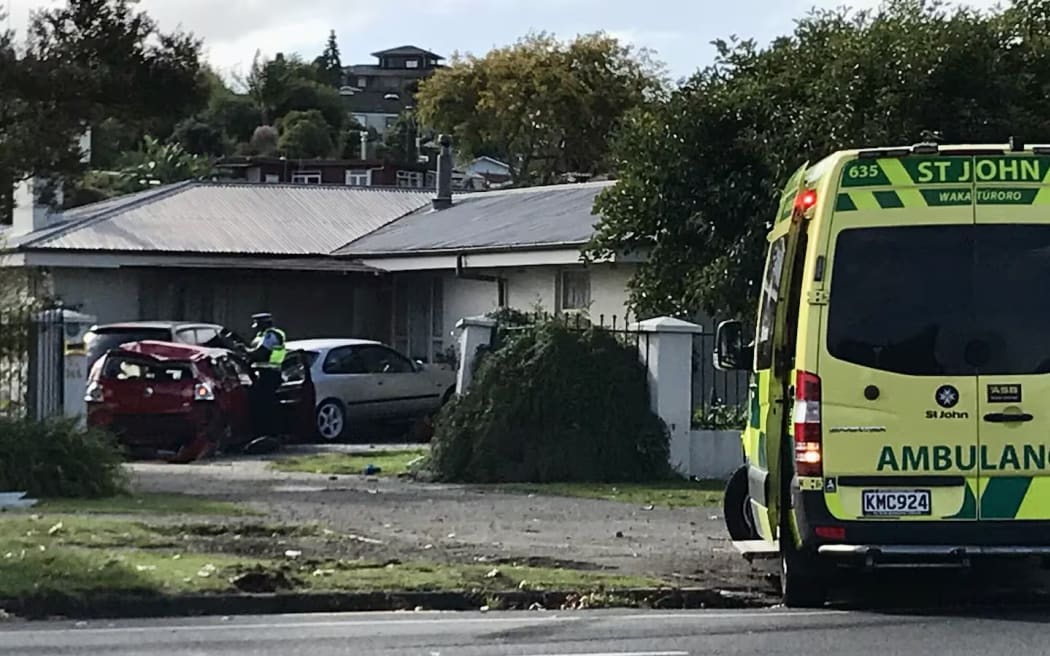
The car ploughed through the iron gates of this property and into the back of two parked cars.
Photo: Open Justice / Belinda Feek
Questioned by Beech about her client being advised not to drive, Wright said there was “no ambiguity about what was meant”.
She then said his evidence was reading a letter written by his registrar, but signed by him. His registrar was also the one who saw her client in his appointment that day.
Wright agreed, but said that was normal.
Beech then repeatedly pressed Wright about how sure he could be that her client received the letter, asking him whether he knew who put it in the post.
“You are as sure as I am,” he replied.
The trial continues.
* This story originally appeared in the New Zealand Herald.