
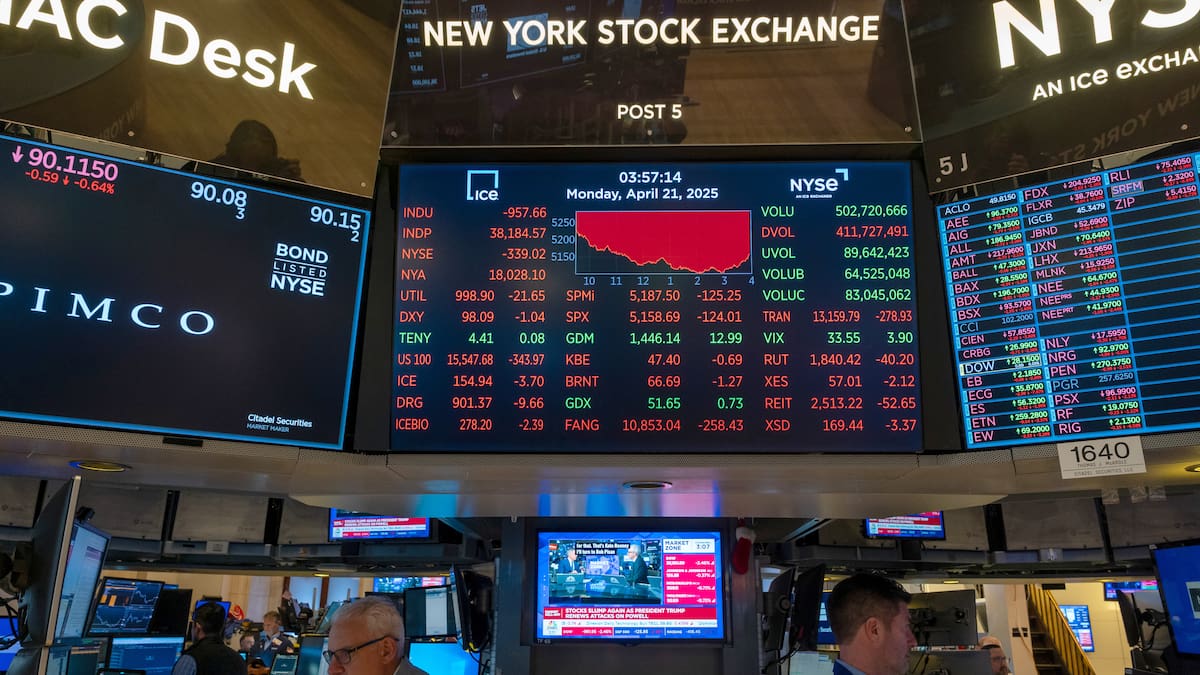
That resilience is now being tested following the announcement of a blockade of the Strait of Hormuz, one of the world’s most critical oil shipping routes. The move comes after the breakdown of diplomatic talks with Iran and it remains unclear whether this represents a sustained escalation or a negotiating tactic.
Energy prices remain volatile, with Brent and US light crude oil both trading at around US$100 per barrel – reinforcing the potential for this to evolve into a broader, energy-driven macroeconomic shock.
However, it is worth keeping this move in perspective. While prices have risen quickly (from around US$65-US$70 just prior to the war), they remain below the peaks seen during previous major energy shocks. Brent crude, for example, is still trading below levels reached at the onset of Russia’s full-scale invasion of Ukraine, the Arab Spring and the pre-Global Financial Crisis highs – suggesting that while risks have risen, markets are not yet pricing in a worst-case scenario.
There are also echoes of last year’s trade tensions. Markets were repeatedly rattled by escalating rhetoric, tariff threats and firm ultimatums, only for conditions to stabilise as negotiations resumed and partial agreements were reached. “Taco” (“Trump Always Chickens Out”) appears to be back, with this pattern of escalation followed by de-escalation helping to underpin the resilience seen across global markets.
Whether a similar dynamic plays out this time remains uncertain. The stakes appear higher, with direct implications for global energy supply, rather than just trade flows. While it is possible that the current situation follows a familiar path of brinkmanship and eventual resolution, it is equally plausible that outcomes are more prolonged or disruptive.
This distinction is important. Unlike demand-driven inflation, where rising prices reflect strong economic growth, energy shocks are supply-driven. They act as a tax on both consumers and businesses – lifting costs, squeezing margins and reducing discretionary spending power. Historically, such shocks have often slowed economic growth while simultaneously pushing inflation higher – a challenging combination for policymakers and investors alike.
Central banks, many (but not all) of which had been edging closer to rate cuts as inflation pressures eased, may now find themselves in a more difficult position. A sustained rise in energy prices is problematic, particularly if inflation expectations begin to move higher again. For markets that have been pricing in a relatively smooth path to lower interest rates (particularly in the US), this introduces a new layer of uncertainty.
In New Zealand, this dynamic could create further pressure for households already dealing with rising petrol costs. ANZ this week called for as many as three interest rate hikes over the remainder of the year – a headline-grabbing shift, but one that was in line with current market pricing. The Reserve Bank of New Zealand has previously indicated it would look through the initial impact of oil-driven inflation, but remains acutely aware of the risk of second-round effects, where higher costs become embedded more widely across the economy. For households and businesses already facing cost pressures, there will be hope that such an outcome can be avoided.
Closer to home, New Zealand equities have also participated in the recent rebound, with the market remaining within around 5% of its record highs.
However, the underlying economic picture is more mixed. While Kiwi manufacturing activity remains in expansion, recent data point to a clear weakening in consumer and business confidence, alongside softer activity indicators more broadly. Rising fuel costs are beginning to weigh on households and businesses alike, with spending increasingly focused on essentials.
The services sector is showing particular signs of strain and employment indicators remain soft, reinforcing the idea that economic momentum may be more fragile than the headline data currently imply.
For investors, this creates a more nuanced environment. On the one hand, markets have demonstrated a remarkable ability to absorb shocks and recover quickly. On the other, the risks are becoming more complex and increasingly interconnected.
Geopolitical developments are now feeding directly into inflation, interest rate expectations and economic growth – all at once. This is very different from the environment that supported global markets through much of the past year, where disinflation and resilient growth provided a relatively stable backdrop.
It also highlights an important point: markets are forward-looking, but they are not always perfectly calibrated. Periods of strong performance can sometimes mask underlying vulnerabilities, particularly when sentiment improves faster than fundamentals.
None of this necessarily signals an imminent downturn. Markets can remain resilient for longer than expected and geopolitical events can de-escalate as quickly as they emerge. However, the balance of risks appears to be shifting and uncertainty remains elevated.
For long-term investors, this reinforces the importance of maintaining a disciplined and diversified approach. Attempting to react to short-term geopolitical developments is notoriously difficult, particularly when markets can move sharply in both directions in a short space of time.
At the same time, periods like this can create opportunities. Volatility often leads to greater dispersion in returns between sectors, regions and individual companies – and that is typically where a more active approach can add value. Rather than simply following the market, active investors can adjust positioning, reduce exposure to areas facing rising risks and selectively add to companies that have been indiscriminately sold, despite strong underlying fundamentals.
By contrast, passive strategies, by design, continue to track the market, regardless of changing conditions. While this has worked well in broad, rising markets, it offers less flexibility in environments where risks are evolving and market leadership is shifting.
However, it is equally important to acknowledge what cannot be known. The path of the current conflict remains highly uncertain and how – or when – it is ultimately resolved is far from clear. Markets may continue to react sharply to new developments and sentiment can shift quickly.
The key is not to be driven by headlines, but to remain focused on underlying fundamentals and long-term objectives, while recognising that uncertainty is likely to remain a defining feature of the current environment.
As the current backdrop shows, markets can be both resilient and vulnerable at the same time. Understanding that balance – and having the flexibility to respond as conditions evolve – will be critical in the months ahead.
Generate is a New Zealand-owned KiwiSaver and Managed Fund provider managing over $8 billion on behalf of more than 180,000 New Zealanders.
This article is intended for general information only and should not be considered financial advice. The views expressed are those of the author. All investments carry risk, and past performance is not indicative of future results.
To see Generate’s Financial Advice Provider Disclosure Statement or Product Disclosure Statement, go to www.generatewealth.co.nz/advertising-disclosures/. The issuer is Generate Investment Management Limited.